Best Defense Logos in 2026: Images and Systems

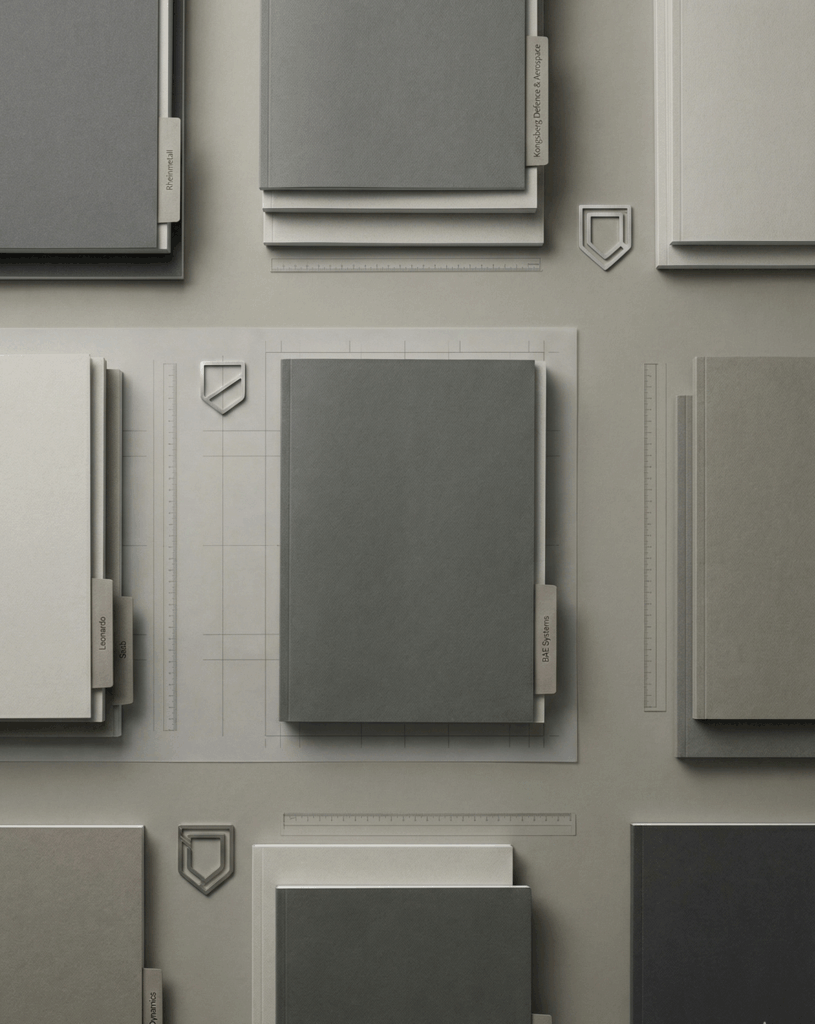
featured image showcasing stationaries of various defense brands

Brand strategist, ex advertising. 14 years experience building and pitching brands across critical industries. White belt in BJJ & Fly fishing.

Proudly serving clients in critical industries across the US

Rebel Sys black
OXOS LOGO black
FirstVitals black
Gator black
Detail PlaceMakers black

In defense, a logo is rarely noticed when it works. It becomes visible during procurement reviews, export-control audits, parliamentary inquiries, mergers, or moments of reputational stress. Increasingly, the same applies to self defense logos used by training organizations, martial arts schools, and personal safety brands operating in regulated or trust-sensitive environments.

A defense logo—whether for a prime contractor, a systems integrator, or a security provider—exists to convey legitimacy, continuity, and operational discipline. This is not marketing theater. It is institutional signaling.

This article examines defense logo design and self defense logo design as system problems rather than aesthetic exercises. We will look at how logos function as images, vectors, and illustrations inside high-stakes environments—and why generic logo ideas, logo makers, and template-driven tools consistently fall short.

Executive Summary 

  • Defense logos function as infrastructure, not decoration
  • Effective defense logo design prioritizes clarity, restraint, and system compatibility
  • Self-defense logos operate under similar trust constraints, with different audience dynamics
  • Vector discipline matters more than illustration style
  • Logos fail most often when treated as templates rather than governed systems

What Is a Defense Logo (and How It Differs from Self-Defense Logos)

A defense logo is a visual identifier designed to operate inside environments defined by regulation, risk management, and long decision cycles. It must convey authority, technical competence, and institutional stability across physical, digital, and legal systems.

A self-defense logo shares many of these constraints but applies them to adjacent domains such as self-defense training, martial arts organizations, and personal safety brands. Where military defense logos emphasize scale and permanence, self-defense logos must balance seriousness with approachability.

Both appear across:

  • Vector graphics for documentation and manufacturing
  • Logo files embedded in secure digital systems
  • Monochrome and low-contrast environments
  • Image and illustration contexts where neutrality matters

Generic logo advice fails because neither defense nor self-defense branding tolerates ambiguity, excessive symbolism, or trend-driven visual language.

What Makes a Good Defense Logo Design (and a Viable Self Defense Logo Design)

A strong defense logo design optimizes for appropriateness under constraint.

Those constraints include:

  • Extreme reproduction requirements
  • Compatibility with legacy software and documentation systems
  • Longevity measured in decades
  • Very low tolerance for visual risk

A perfect self defense logo follows similar logic. It should convey preparedness, control, and credibility—without relying on aggression, fists, firearms, or exaggerated iconography.

This is why many brands struggle after visual updates, a pattern explored in Aerospace branding mistakes.

Iconic Defense Logos (And What They Actually Get Right)

Studying iconic defense logos is less about inspiration and more about understanding how restraint, consistency, and governance operate over time. These logos are memorable because they are dependable, not expressive.

They survived board turnover, geopolitical shifts, mergers, audits, and decades of technical evolution.

What follows is not an aesthetic review, but an operational one—focused on why these marks continue to function inside high-stakes systems.

1. Rheinmetall

Rheinmetall’s logo is unapologetically industrial. The wordmark is heavy, geometric, and uncompromising, reflecting a brand rooted in land systems, armaments, and defense manufacturing.

What makes it effective is consistency. The logo behaves predictably across vehicles, documentation, and corporate materials without attempting to soften or humanize its role.

Why it matters:
In defense manufacturing, clarity and weight often signal credibility better than refinement.

Rheinmetall mockup

2. Saab (Defense Division)

Saab’s defense branding reflects Scandinavian design discipline applied to a military-industrial context. The logo is minimal, functional, and optimized for technical environments rather than promotional ones.

Its visual quietness allows Saab’s products, programs, and partnerships to take precedence. This reinforces an often-overlooked principle: in defense branding, the logo should rarely be the most interesting element on the page. That logic mirrors audits discussed in Brand Audit Checklist
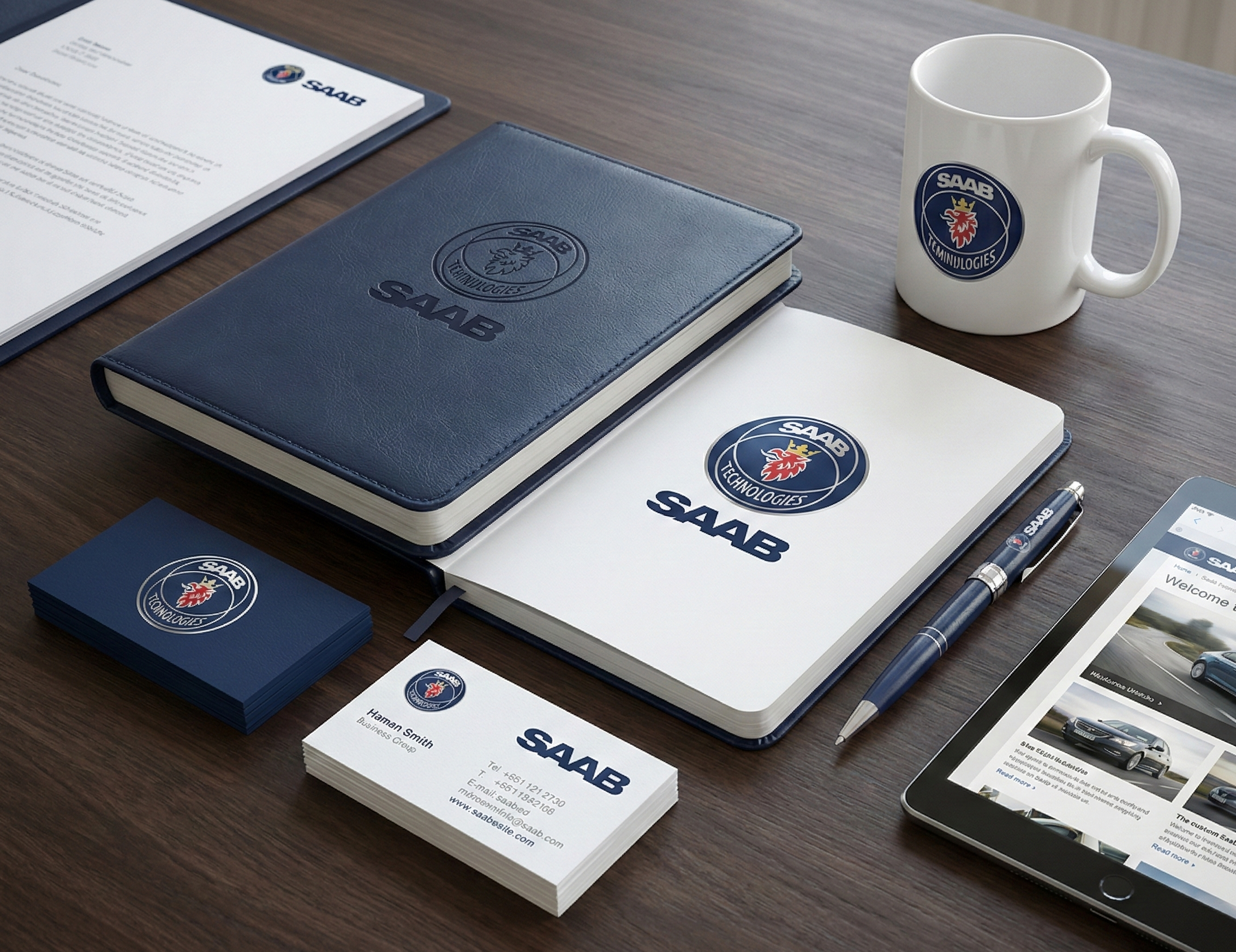
Saab mockup

3. Kongsberg Defence & Aerospace (Defense Systems)

Kongsberg’s defense identity prioritizes legibility and modularity. The wordmark integrates cleanly into a broader corporate system while remaining neutral enough for multinational defense programs.

Its effectiveness lies in how easily it coexists with partner brands and government marks.

Why it matters:
Defense logos must often subordinate themselves to larger systems without losing authority.
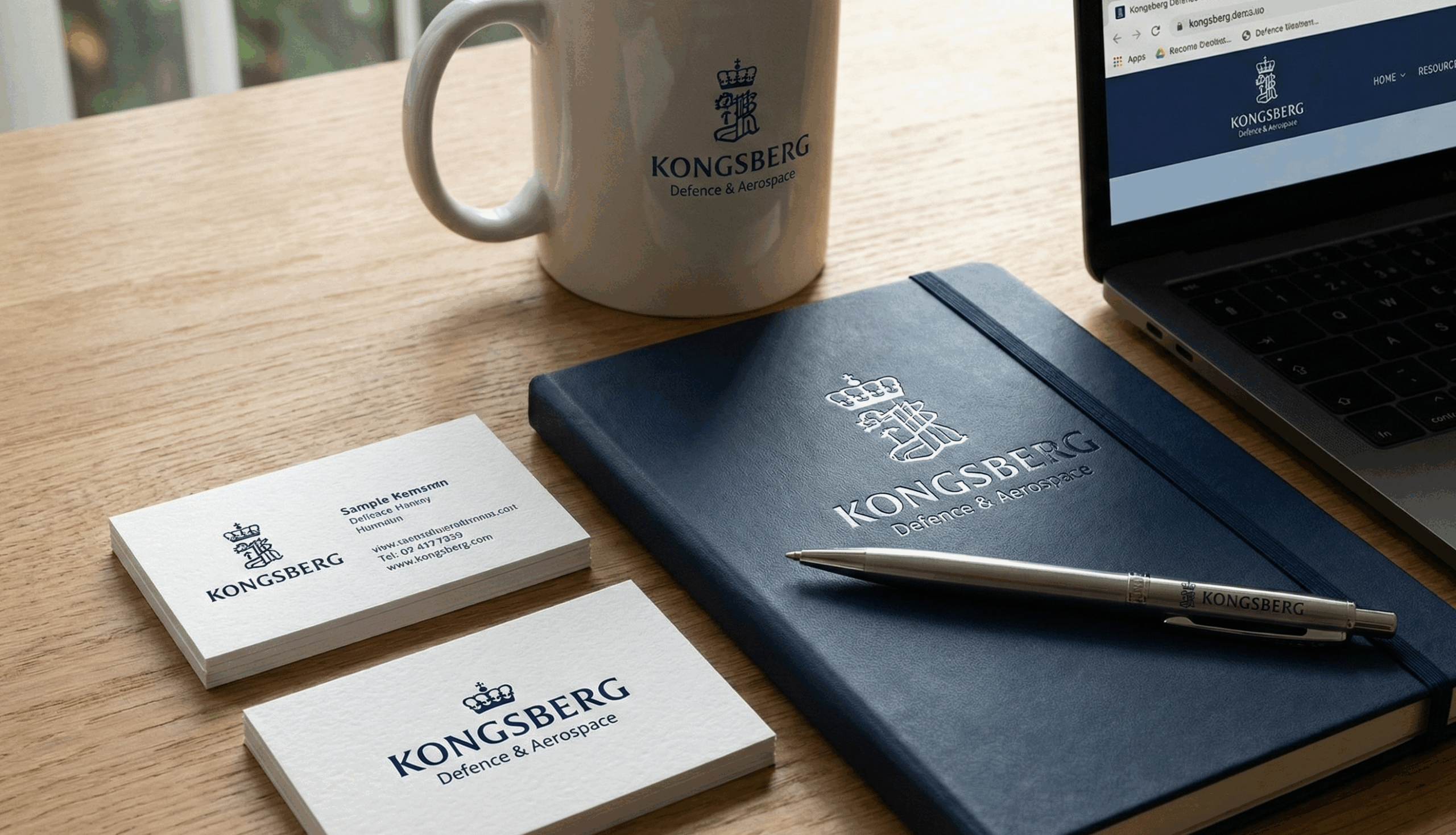
Kongsberg Defence & Aerospace mockup

4. Leonardo (Defense & Security Division)

Leonardo’s defense branding avoids national symbolism or militaristic cues. Typography carries the identity, supported by calm spacing and disciplined proportions.

The logo functions across land, naval, cyber, and electronics programs without requiring adaptation.

Why it matters:
In diversified defense portfolios, neutrality enables scale.
Leonardo logo mockup

5. BAE Systems

BAE Systems demonstrates how a defense logo can be authoritative without relying on any iconography at all. The logotype is compact, proportionally disciplined, and visually neutral—allowing it to coexist comfortably with government insignia, partner logos, and classified markings.

This neutrality is not accidental. In multinational defense environments, visual dominance can be a liability. BAE’s logo reflects the principle that credibility often comes from not standing out, echoing strategies discussed in Brand Identity tips for Defense teams
Bae Systems mockup

6. Naval Group

Naval Group’s identity balances institutional authority with modern restraint. The typography is stable, and the graphic system supports long-life platforms where branding must endure decades of service.

There is no visual attempt to dramatize naval power.

Why it matters:
In naval defense, permanence outweighs presence.
Naval group mockup

7. General Dynamics

General Dynamics’ logo is almost aggressively neutral. There is no icon, no motion cue, no symbolic shorthand. The logotype communicates only one thing: institutional presence.

This refusal to “explain” the brand visually is precisely why the logo holds up. In defense contexts, explanation introduces interpretation risk. General Dynamics avoids that entirely, aligning with critiques outlined in Visual Branding Mistakes
General dynamics mockup

8. Palantir (Defense & Security Context)

While not a traditional defense contractor, Palantir’s logo is notable for its extreme restraint. The mark is intentionally minimal, allowing the brand’s credibility to be carried by deployment and outcomes rather than symbolism.

This approach works because the company accepts scrutiny elsewhere.

Why it matters:
When a brand invites scrutiny through performance, the logo can afford to stay quiet.
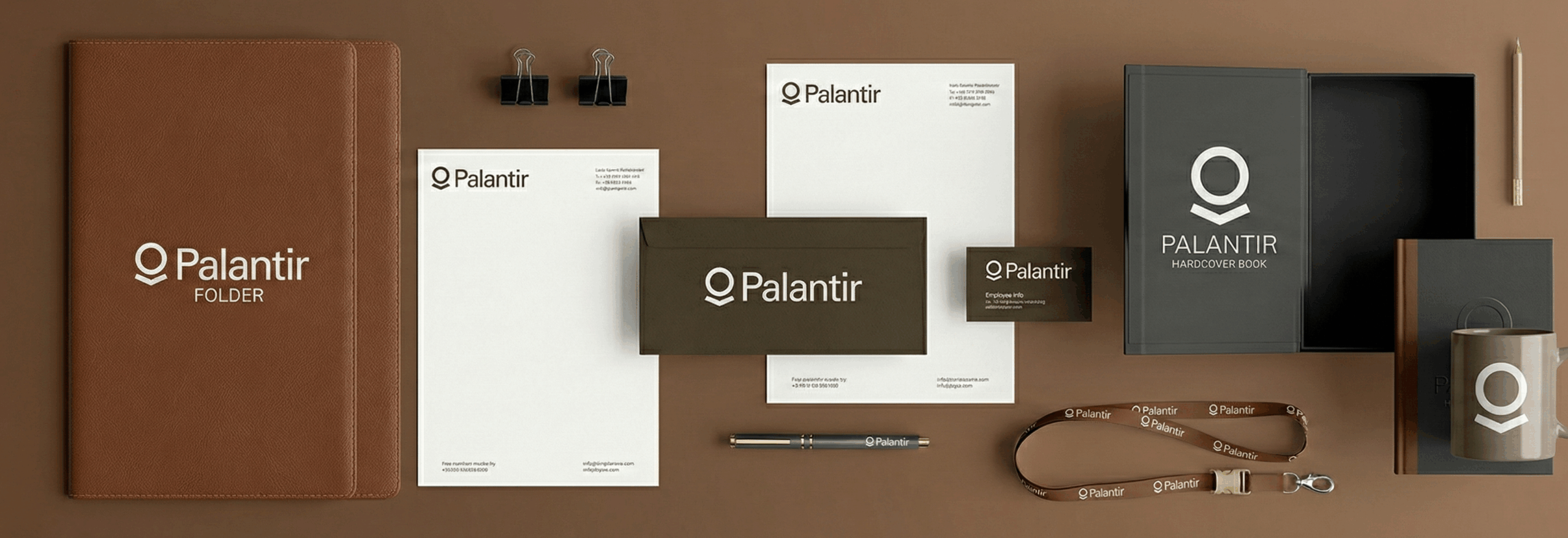

Palantir logo

Defense vs Self-Defense vs Consumer Branding

IndustryPrimary Logo GoalRisk ToleranceTypical Logo Design Approach
DefenseInstitutional trustVery lowTypographic, minimalist, system-first
Self-DefensePersonal safety & credibilityLowRestrained icons, controlled shapes
ConsumerRecognition & emotionHighExpressive, illustrative, trend-led

 Design Elements That Define Defense and Self-Defense Logos

Typography

Fonts are selected for legibility, neutrality, and longevity. The wrong font can quietly erode credibility, as detailed in The 10 Fonts That Make (or Break) Your Aerospace Brand Image.

Icons and Shapes

Icons are abstract or omitted. Literal symbols introduce unnecessary interpretation risk.

Color and Layout

Muted palettes dominate. Color is used to reinforce trust, not personality.

System Behavior

Logos must function as vector graphics, inside templates, alongside regulatory marks, and across secure systems. Illustration is secondary to performance.

In 2026, shifts in defense logo design are subtle and structural rather than stylistic. These are not trends in the consumer sense; they are responses to long-standing operational and governance pressures.

Logos as System Components

Defense logos are increasingly designed to function as part of larger systems—documentation, secure interfaces, hardware markings—rather than as standalone illustrations. Predictable behavior across vector formats matters more than visual distinction.

Minimalism as Risk Reduction

Restraint continues to dominate, not for aesthetic reasons but to reduce interpretation risk. Logos that declare less integrate more easily into regulated environments and multinational programs.

Typography Over Iconography

Precise typography is favored over figurative icons. Letterforms communicate authority without narrative ambiguity, which remains critical in procurement and compliance contexts.

Subdued, Functional Color

Muted palettes persist. Color is used to support legibility and consistency, not personality or differentiation.

Backward Compatibility

Logos are designed to perform inside legacy systems as well as modern digital platforms. Vector reliability and reproducibility outweigh novelty.

Narrative is increasingly handled around the logo—through documentation, structure, and messaging—rather than embedded within the mark itself.

Parallel Movement in Self-Defense Logos

Adjacent self-defense logos show similar discipline: restrained typography, abstract shapes, and reduced reliance on literal or aggressive symbols.

When a Defense Logo Is Working (And When It’s Not)

  • If the logo disappears into documentation, then it is likely working
  • If stakeholders debate its boldness, then it is misaligned
  • If it scales cleanly across formats, then the system is sound
  • If it requires explanation, then it is compensating

These signals align with findings in 10 Warning Signs Your Aerospace Brand Needs a Rebrand.

Common Mistakes in Defense and Self Defense Logo Design

  • Treating the logo as illustration rather than system infrastructure
  • Using logo makers, free logomakers, or DIY templates that ignore regulatory context
  • Borrowing logo ideas from industries with higher risk tolerance
  • Assuming AI-generated logos or stock photos are suitable for commercial or government use

Many of these issues surface in logo design contests and template-driven platforms.

Practical Checklist for Decision-Makers

  • Does the logo work in vector and monochrome formats?
  • Can it coexist with government and partner branding?
  • Does it avoid aggressive or literal symbolism?
  • Will it feel credible in 20 years?
  • Is it governed by brand guidelines, not taste?

2026+ Shift: What’s Quietly Changing

What’s fading:

  • Decorative illustration
  • Trend-driven logo ideas
  • Symbol-heavy marks
  • What’s gaining importance:
  • Interoperable brand systems
  • Governance and documentation
  • Logos designed for compliance, not download
  • These shifts echo broader themes in 8 Trust Signals Every Aerospace & Defense Website Must Display.

Who This Guide Is For

  • Founders building defense or self-defense brands
  • Executives managing long decision cycles
  • Designers in regulated environments
  • Investors assessing institutional credibility

Final Thought

In defense—and increasingly in self-defense—a logo is not a statement of ambition. It is a signal of reliability.

The strongest marks are not optimized for attention. They are optimized for behavior: how they reproduce under constraint, how they sit inside documentation, and how consistently they perform over time. When a logo works in defense, it is often because no one needs to comment on it.

This is why many visually strong logos fail in regulated environments. They are judged as symbols when they should be designed as infrastructure. What endures are logos built for scrutiny, repetition, and longevity—not recognition.

BBDirector specializes in branding for high-trust, high-stakes industries. Our work focuses on brand systems designed to survive scrutiny, scale, and long decision cycles.

FAQ

Yes.

Minimalism reduces interpretation risk and limits unintended symbolism. In defense contexts, fewer visual variables make logos easier to reproduce, regulate, and sustain over long time horizons.

Slightly, but restraint still signals credibility more effectively.

Self-defense logos can introduce warmth or approachability, but overt aggression or heavy symbolism often undermines trust.

They can generate images, but they cannot design governed systems.

Defense and self-defense branding requires consideration of regulation, longevity, and multi-context use—factors most logo makers do not account for.

Rarely. When change happens, it is usually structural—spacing, typography, system alignment—rather than a visual reinvention.

Stability generally carries more value than novelty.

Not necessarily. Many of the most credible defense logos rely entirely on typography.

Icons are only effective when they reduce ambiguity rather than introduce interpretation.


AI can assist with exploration, but outputs typically lack the governance, traceability, and system thinking required in defense environments.

Final logos still require deliberate human oversight and accountability.


Defense logos prioritize trust, continuity, and legibility over differentiation. Commercial brands can afford expressive risk; defense brands generally cannot.


What do you think?

More notes