

Most people hear “quantum computing” and immediately imagine a glowing sci-fi machine that solves impossible problems while sitting inside a freezer designed by a chandelier enthusiast.
Fair.
Quantum computing is complicated.
But complicated does not mean commercially useless. In fact, complicated industries are often where the best business opportunities hide, because the market needs people who can translate difficult technology into something buyers, investors, partners, and operators can actually understand.
That is where this business idea comes in.
The concept is called Wafernacle.
Wafernacle is a speculative solid-state quantum computing company built around one clear product idea:
sealed modular QPU cartridges called Wafer Rolls.
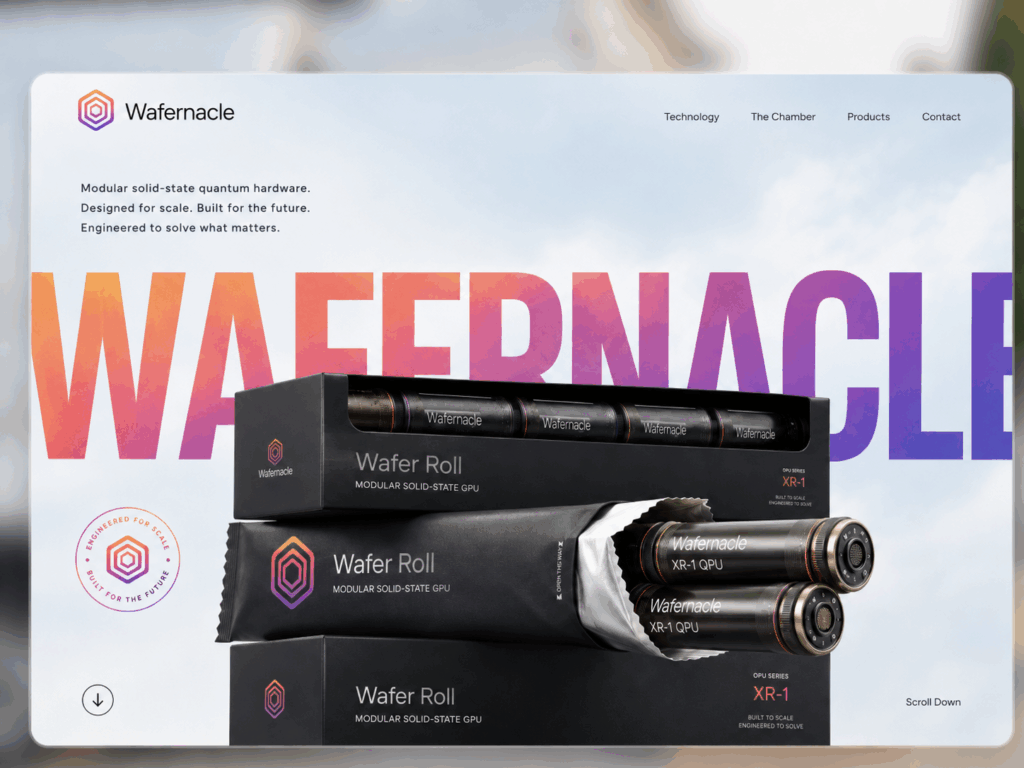
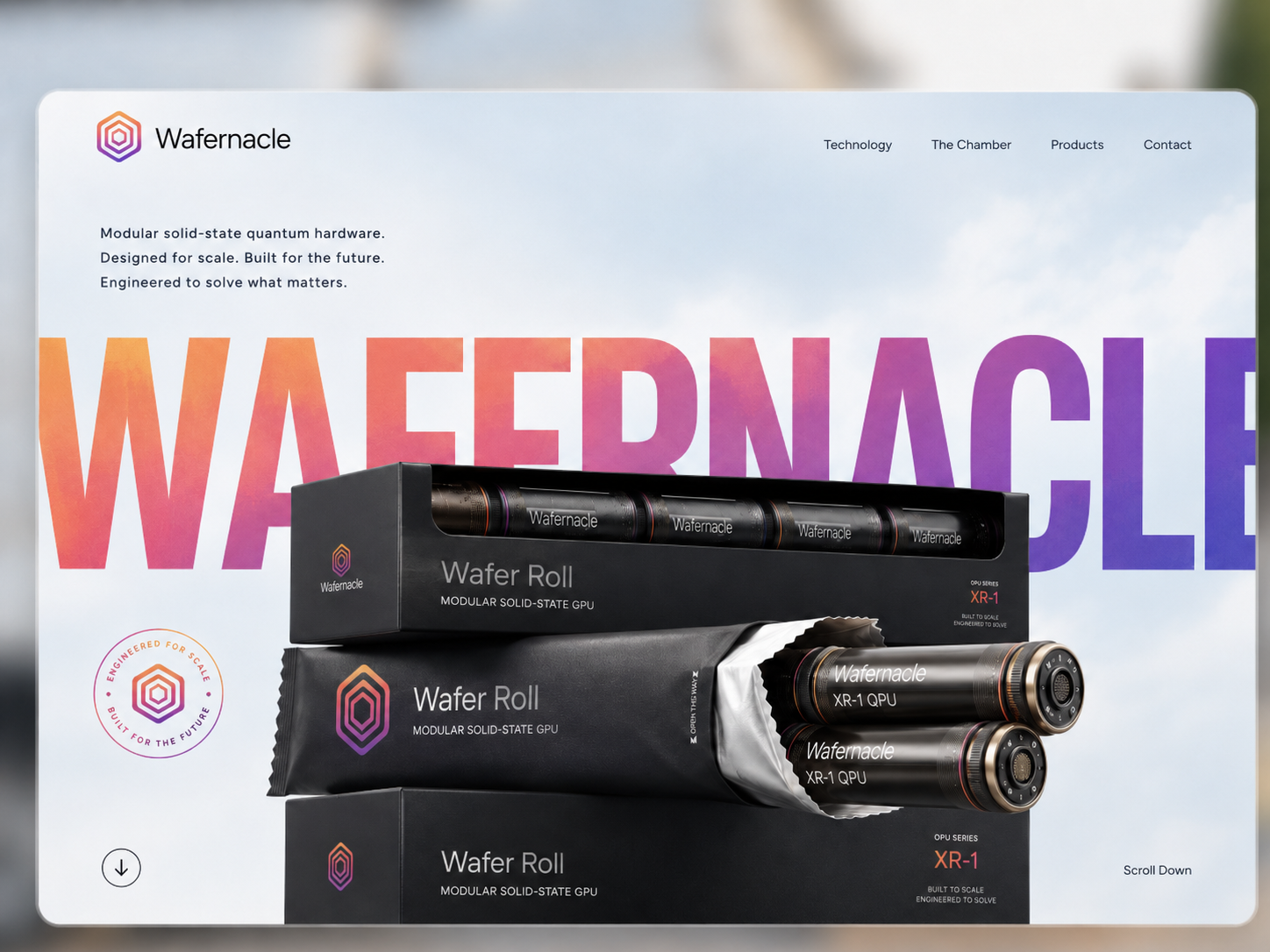
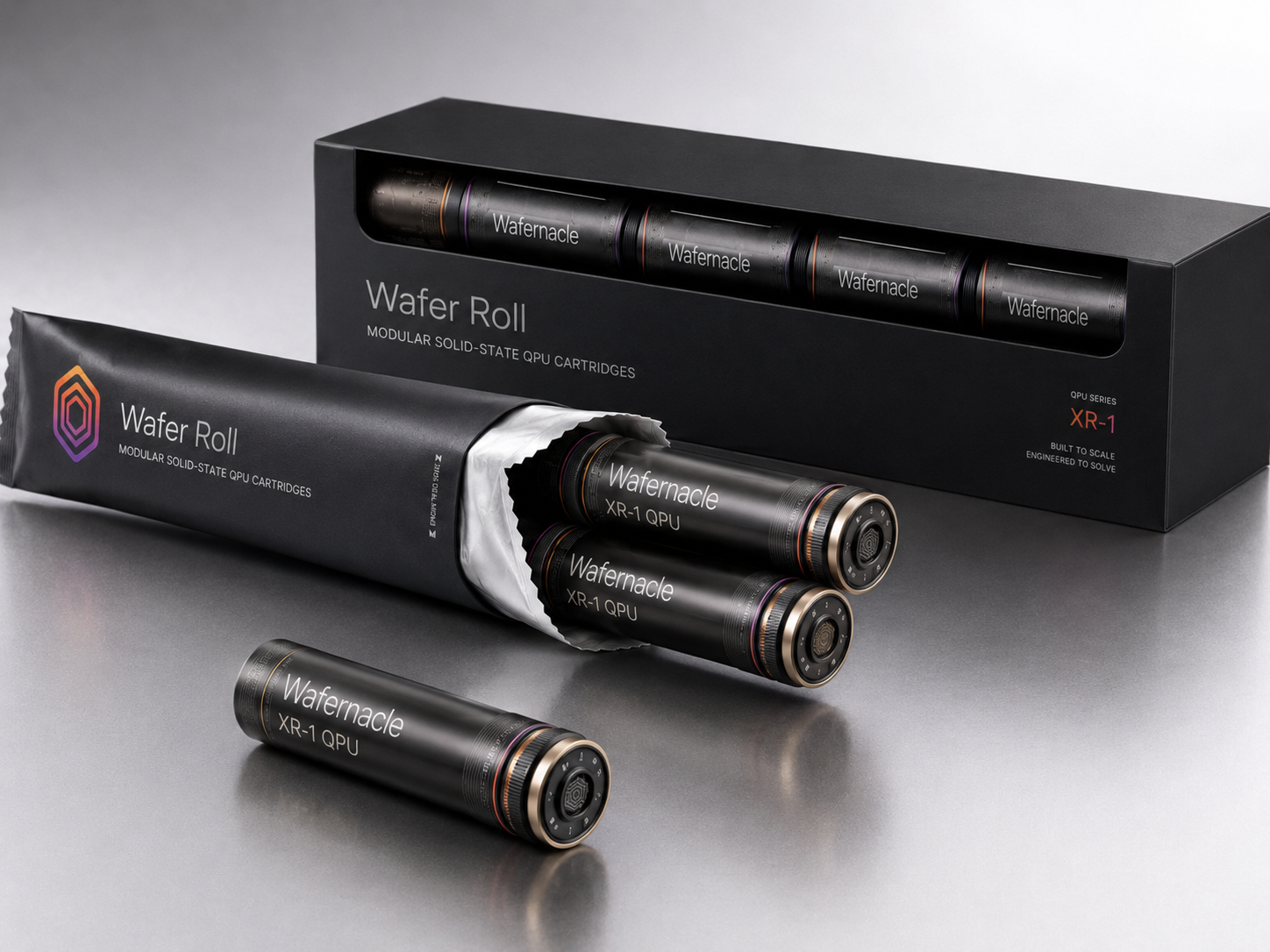
Each Wafer Roll is positioned as a protected quantum processing cartridge designed for repeatable handling, modular deployment, and scalable installation inside a larger cryogenic rack system called The Chamber.
And because operators are humans, not support tickets with shoes, the brand also includes Cryo Rolls — chilled sweet wafer rolls included as a small branded ritual for the engineers and operators working with the system.
The serious business idea is not “quantum snacks.”
Please remain calm.
The serious business idea is this:
As quantum computing moves closer to industrial infrastructure, the market will need clearer product systems, better hardware packaging, stronger commercial storytelling, and brands that make complex quantum hardware easier to trust.
That is what Wafernacle is designed to show.
Executive Summary for the Wafernacle Business Idea
Wafernacle is a brand and business concept for the solid-state quantum computing industry.
The company develops modular solid-state quantum hardware, packaged as sealed QPU cartridges called Wafer Rolls. These cartridges are designed to slot into The Chamber, a larger cryogenic quantum system built for controlled operation, calibration, and scalable deployment.
The idea is built around four commercial problems in deep-tech hardware:
- Quantum hardware is difficult to understand.
- Quantum systems are difficult to visualize.
- Quantum companies often communicate like research labs instead of commercial businesses.
- Technical buyers need trust, clarity, and a product story before they commit attention, capital, or partnership energy.
Wafernacle solves the communication problem by turning abstract quantum hardware into a tangible product architecture:
Wafer Rolls — modular QPU cartridges
Wafer Roll Pack — deployment packaging
The Chamber — cryogenic rack system
Cryo Rolls — operator-facing sweet wafer extension
The result is a business idea that combines quantum hardware positioning, semiconductor-inspired product language, premium packaging, technical credibility, and memorable brand storytelling.
This is not just a name and a logo.
It is a complete commercial concept.
The Industry Opportunity: Solid-State Quantum Computing
Quantum computing is still early, but the direction is clear: the industry is moving from experimental lab machines toward more scalable, engineered, deployable systems.
Solid-state quantum computing is especially interesting because it connects quantum computing to the world of physical materials, chips, wafers, semiconductors, and hardware manufacturing.
Instead of only thinking about quantum computing as abstract algorithms or cloud access, solid-state quantum computing forces us to think about:
quantum chips
QPU packaging
cryogenic infrastructure
control systems
rack systems
semiconductor fabrication
hardware reliability
deployment environments
modular scaling
technical operations
That is important because most major technology markets become commercially powerful once they become easier to package, deploy, explain, and sell.
This is where the opportunity sits.
A company in this space does not only need better quantum hardware.
It needs better productization.
That means clearer names, clearer hardware modules, better packaging logic, better deployment language, better buyer education, and better brand architecture.
That is the business gap Wafernacle is designed around.
The Problem: Quantum Hardware Is Hard to Explain
Technical founders often have a very understandable problem:
They can build the product.
They can explain the physics.
They can talk about cryogenic systems, qubits, QPUs, coherence, fidelity, error correction, silicon spin qubits, superconducting systems, and quantum control layers.
But when it comes to the brand, the message often becomes too abstract.
The average pitch starts sounding like this:
“We are developing a scalable solid-state quantum architecture using modular QPU infrastructure for cryogenic deployment environments and future fault-tolerant workloads.”
That might be accurate.
It is also how you lose a room full of investors before the coffee arrives.
The problem is not that the technology is bad.
The problem is that the technology has no commercial handle.
A commercial handle is the thing people remember.
It is the phrase they repeat after the call.
It is the product name that survives the meeting.
It is the visual metaphor that makes the architecture make sense.
That is why Wafernacle uses Wafer Rolls.
Instead of forcing people to imagine invisible QPU architecture, it gives them something tangible:
a sealed cartridge
a modular pack
a protected core
a larger chamber
a repeatable deployment system
Now the business idea has a shape.
And in branding, shape matters.
The Business Idea: Modular Quantum Hardware Cartridges
The Wafernacle business idea is simple:
Build modular solid-state QPU cartridges that make quantum hardware easier to handle, deploy, upgrade, and explain.
The core product is the Wafer Roll.
A Wafer Roll is a sealed QPU cartridge designed to protect fragile quantum hardware and create a more repeatable installation system.
The larger system is called The Chamber.
The Chamber is the cryogenic rack or infrastructure environment where Wafer Rolls are installed, calibrated, and operated.
This creates a clean product hierarchy:
Wafernacle
The master brand.
Wafer Rolls
The modular QPU cartridge product.
Wafer Roll Pack
The shipping and deployment kit.
The Chamber
The larger cryogenic rack system.
Cryo Rolls
The operator-facing sweet wafer product and brand ritual.
This structure makes the company easier to pitch because every part of the system has a name and a role.
Most technical products fail at this.
They have technology.
They have features.
They have diagrams.
But they do not have a product world.
Wafernacle has a product world.
That is the difference.
Why the Name Works
Wafernacle combines two words:
Wafer and Tabernacle.
The wafer part connects to:
semiconductors
silicon
chip manufacturing
solid-state systems
quantum hardware
fabrication environments
The tabernacle part connects to:
protection
containment
structure
sacred storage
a protected chamber
something valuable held safely inside
Together, the name creates a memorable technical metaphor:
a protected place for wafer-based quantum hardware.
That is a stronger naming strategy than calling the company something like QuantumNova, QubitSphere, QCore AI, or whatever else fell out of the futuristic naming blender.
The name carries the concept.
That is what good technical naming should do.
The Product: Wafer Rolls
The Wafer Roll is the hero product.
It is positioned as a modular solid-state QPU cartridge.
The business value of the cartridge format is not that it looks nice.
The business value is that it communicates:
protected handling
repeatable deployment
hardware modularity
clearer upgrades
scalable installation
serviceability
product standardization
commercial readiness
The wafer-roll packaging metaphor supports the business idea visually.
It says:
These units are modular.
They come in packs.
They are protected.
They are designed to be handled as part of a system.
They slot into something larger.
That is much easier to understand than a vague technical diagram.
And easier to understand usually means easier to pitch.
The Chamber: The Larger System
The Chamber is the cryogenic rack system where Wafer Rolls are installed.
This matters because the cartridge is not the full quantum computer.
The cartridge is the modular product unit.
The Chamber is the larger operating environment.
This gives Wafernacle two clear revenue directions:
- Sell or lease The Chamber system.
- Sell, upgrade, or service Wafer Roll cartridges over time.
That creates a business model that can support:
hardware sales
deployment packages
replacement modules
maintenance contracts
calibration services
enterprise support
research lab partnerships
cloud access models
licensing or manufacturing partnerships
The Chamber makes the business feel like infrastructure.
The Wafer Rolls make it feel modular.
Together, they make the product story easier to understand.
The Human Layer: Cryo Rolls
Now for the ridiculous part that is somehow useful.
Wafernacle also includes Cryo Rolls.
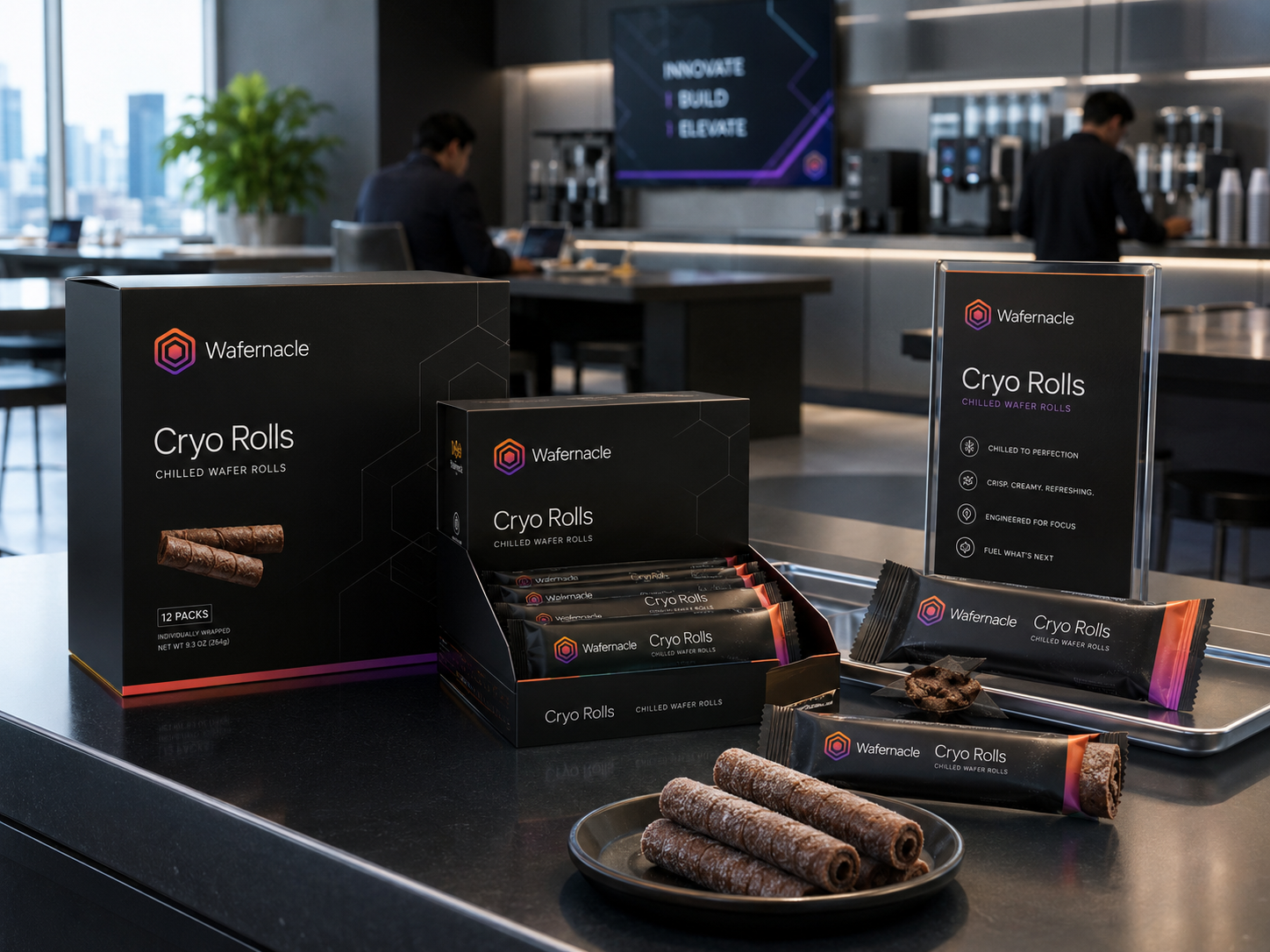
Cryo Rolls are chilled sweet wafer rolls included in deployment kits, operator packs, conference giveaways, and high-tech office canteens.
The point is not to turn a quantum computing company into a snack company.
The point is to create a small brand ritual.
The machine gets Wafer Rolls.
The operators get Cryo Rolls.
Because quantum systems need coherence.
Engineers need snacks.
This tiny human detail gives the brand personality without making it childish.
That matters because deep-tech brands often forget the human side completely.
Everything becomes racks, dashboards, diagrams, modules, and charts.
Then everyone wonders why the brand feels like it was raised by a PDF.
Cryo Rolls give Wafernacle a moment people can remember.
That is brand memory.
Target Customers
Wafernacle would target technical and commercial buyers in the quantum and advanced computing ecosystem.
Potential customer segments include:
quantum computing startups
national research labs
enterprise R&D teams
semiconductor companies
advanced computing facilities
high-performance computing centers
university quantum labs
government innovation programs
deep-tech investors
hardware accelerators
cryogenic infrastructure companies
quantum software companies needing hardware partnerships
industrial research organizations
These buyers care about trust.
They are not buying a novelty product.
They are buying:
stability
technical credibility
operational confidence
scalability
vendor maturity
integration potential
long-term roadmap clarity
That means the brand has to work harder than a normal startup brand.
It has to look credible before the technical conversation even begins.
Market Positioning
Wafernacle can be positioned as:
The modular QPU cartridge system for solid-state quantum hardware.
Or more polished:
Wafernacle builds sealed solid-state QPU cartridges designed for protected handling, repeatable deployment, and scalable installation inside cryogenic quantum systems.
The short version:
Quantum hardware, made modular.
The brand promise:
Built on silicon. Sealed for coherence. Ready to scale.
That tagline works because it connects the three key layers:
Silicon = solid-state foundation
Coherence = quantum performance requirement
Scale = commercial ambition
Simple.
Specific.
Not trying too hard.
A rare and beautiful thing in technical branding.
Revenue Model
A Wafernacle-style business could generate revenue through several channels.
1. Hardware System Sales
Sell The Chamber as a premium quantum infrastructure system to labs, research organizations, and enterprise R&D teams.
2. Cartridge Sales
Sell Wafer Roll QPU cartridges as modular units for specific applications, experiments, upgrades, or deployment configurations.
3. Maintenance and Calibration Contracts
Quantum hardware requires ongoing support, calibration, diagnostics, and performance monitoring.
This creates recurring revenue potential.
4. Enterprise Support
Offer high-touch support for technical buyers, including onboarding, system integration, operator training, and deployment assistance.
5. Research Partnerships
Partner with universities, government labs, and private research groups to test, validate, and improve the modular cartridge architecture.
6. Cloud Access
Offer access to installed Wafernacle systems through a cloud model for companies that need compute access but do not want to own physical hardware.
7. Licensing
License cartridge designs, packaging standards, control interfaces, or manufacturing methods to larger hardware ecosystem partners.
The key is that the brand architecture supports a business architecture.
That is why naming matters.
Wafer Rolls are not just cute.
They create a product line.
Go-To-Market Strategy
The Wafernacle go-to-market strategy should focus on trust, education, and technical credibility.
This is not a mass-market product.
This is a high-consideration B2B product category.
The go-to-market strategy should include:
technical whitepapers
founder-led thought leadership
investor presentations
hardware demo videos
conference presence
university and lab partnerships
enterprise R&D outreach
technical sales collateral
product explainers
case-study-style simulations
public roadmap content
operator-focused storytelling
The main goal is to make the category easier to understand without making it feel less serious.
That is the tightrope.
Fall too far one way, and you sound like a physics textbook.
Fall too far the other way, and suddenly your quantum hardware company feels like it belongs in a vending machine.
Wafernacle sits between both.
Serious hardware.
Memorable product language.
Marketing Strategy
Wafernacle’s marketing should focus on clarity and authority.
The content strategy could include:
Educational Content
Articles explaining:
what solid-state quantum computing is
why modular QPU hardware matters
how cryogenic quantum systems work
why protected handling matters
what makes quantum hardware difficult to scale
how cartridge-based deployment could improve operations
Visual Explainers
Create diagrams and animations showing:
Wafer Roll cartridge structure
The Chamber system
installation process
protected quantum core
modular scaling
upgrade paths
Investor-Focused Materials
Create pitch decks, one-pagers, market explainers, and product architecture visuals.
Technical Buyer Content
Create deep-dive materials for labs, enterprise R&D teams, and hardware partners.
Brand Campaigns
Use the Cryo Rolls concept carefully as a campaign hook.
Example:
The machines need coherence. The operators need Cryo Rolls.
That is memorable enough to work at conferences, in social content, and inside launch campaigns.
Sales Strategy
The sales strategy should be direct and relationship-driven.
This is not a “run ads and wait” business.
Potential sales motions include:
direct outreach to quantum labs
partnership conversations with hardware companies
R&D collaboration proposals
government innovation program applications
enterprise pilot programs
conference networking
strategic investor introductions
technical demo sessions
founder-led sales calls
The sales message should not start with every technical detail.
It should start with the commercial pain:
Quantum hardware is difficult to scale, deploy, and handle.
Wafernacle turns the QPU into a protected modular cartridge system.
Then the technical depth can follow.
That order matters.
Do not throw the entire machine manual at the buyer before they understand why they should care.
Brand Strategy
Wafernacle’s brand strategy is built around five pillars.
1. Protected Complexity
Quantum hardware is fragile, valuable, and difficult to operate.
The brand should communicate protection, control, and precision.
2. Modular Scale
The product story should make scaling feel more structured and less abstract.
3. Physical Clarity
The brand should make invisible or complex hardware feel tangible.
4. Technical Trust
The identity should feel serious enough for labs, investors, and enterprise buyers.
5. Human Memory
The Cryo Rolls ritual adds a small human layer that helps people remember the brand.
This is the balance:
credible enough for technical buyers
memorable enough for the market
Visual Identity
The Wafernacle visual identity uses a nested hexagon logo.
The meaning:
outer layer = The Chamber
middle layer = cartridge housing
inner layer = protected quantum core
The color palette uses a controlled orange-to-pink-to-purple gradient.
The wordmark is thin, modern, and clean.
The brand should feel:
technical
premium
minimal
precise
modular
structured
futuristic but not childish
memorable but not gimmicky
The visual system can be applied across:
business cards
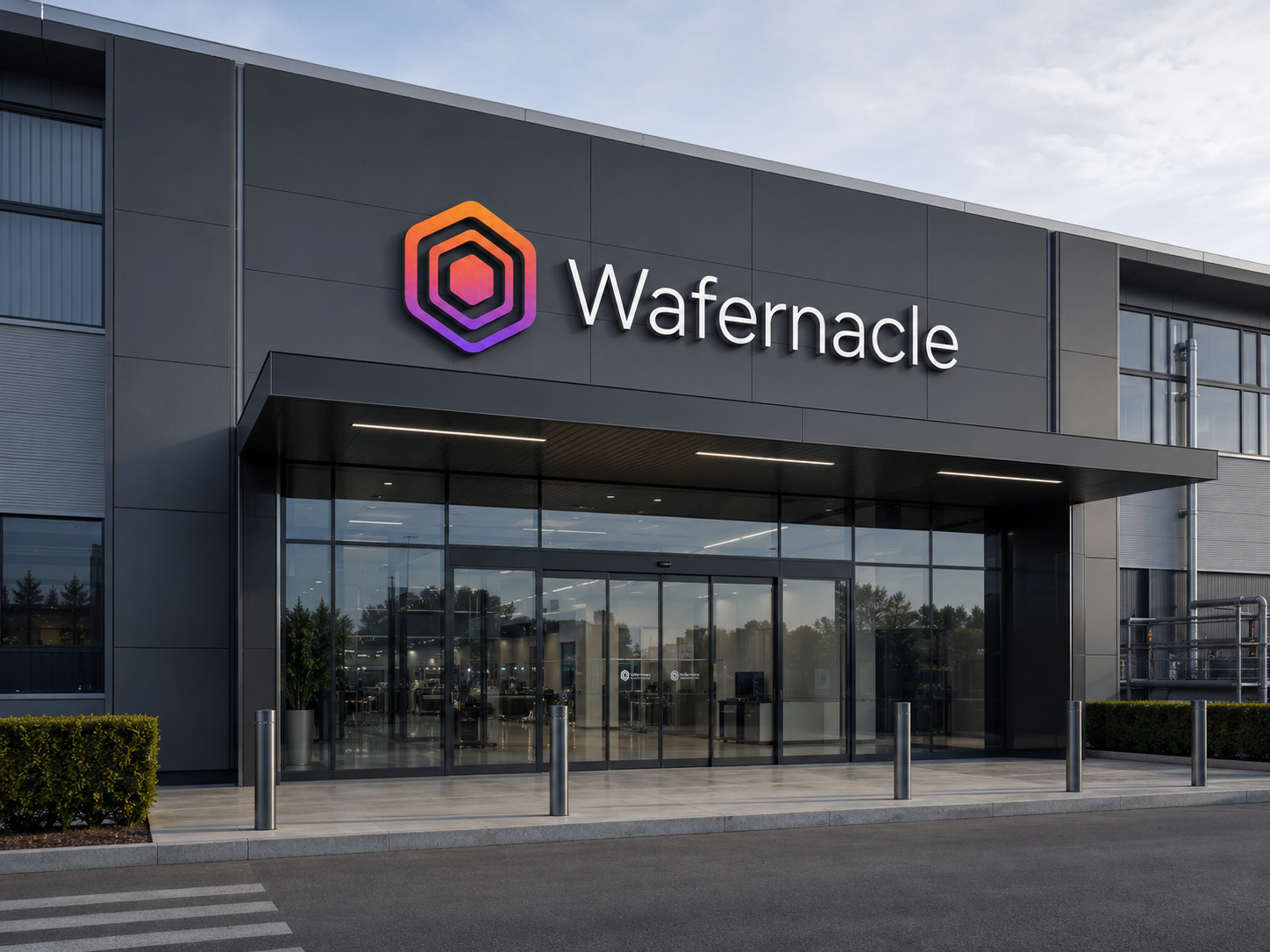
factory signage
product packaging
QPU cartridges
operator kits
landing pages
sales decks
technical sheets
conference booths
hardware labels
leather embossing
office canteen displays
That is important because a real brand has to survive more than one pretty mockup.
Operations Plan
A real company based on this concept would need to build or partner across several operational areas:
quantum hardware development
semiconductor fabrication partners
cryogenic engineering
hardware packaging
quality control
technical documentation
deployment support
calibration systems
customer onboarding
partnership management
regulatory and compliance support
technical sales
If the company begins as a brand and business concept, the first step would not be manufacturing.
The first step would be validation.
That means:
talking to quantum researchers
speaking with hardware founders
mapping existing systems
identifying deployment pain points
understanding procurement cycles
validating whether modular cartridge language resonates
testing if the brand helps buyers understand the offer faster
Business ideas become serious when they survive buyer conversations.
Not when the logo looks nice.
Although, let’s not pretend a good logo hurts.
Financial Model Possibilities
A Wafernacle-style business could use several pricing structures.
High-Ticket Hardware Sales
The Chamber could be sold as a premium quantum infrastructure system.
Cartridge-Based Revenue
Wafer Rolls could create repeat revenue through upgrades, replacement modules, testing variants, or application-specific cartridges.
Service Contracts
Maintenance, calibration, support, and training can create recurring revenue.
Research Partnerships
Government labs, universities, and enterprise R&D groups could fund pilots or joint development work.
Cloud Access
A cloud model could let customers access Wafernacle systems remotely without owning hardware.
Licensing
The cartridge format or deployment system could be licensed to larger quantum hardware companies.
The strongest business model would likely combine hardware, support, and recurring technical services.
That is where the long-term value sits.
Risk Analysis
This business idea has several risks.
Technical Risk
Quantum hardware is difficult, expensive, and slow to commercialize.
Market Timing Risk
The market may not be ready for modular QPU cartridges in the exact way the brand describes.
Credibility Risk
If the brand becomes too playful, the product could feel unserious.
Manufacturing Risk
Hardware production requires capital, partners, and deep technical expertise.
Buyer Education Risk
Many buyers may still need significant education before understanding the product value.
Competitive Risk
Larger quantum hardware companies may develop their own modular systems.
The brand strategy has to reduce these risks by staying serious, precise, and technically credible.
The Cryo Rolls extension should remain a secondary brand ritual, not the main story.
The main story is modular quantum hardware.
The snack is there for memory.
Not for the investor thesis.
AI Prompts to Build a Business Like Wafernacle
If you want to use AI to build a business and brand concept like this, do not start with:
“Make me a cool quantum logo.”
That is how you get a glowing atom and a headache.
Start with the business.
Prompt 1: Research the Industry
Act as a B2B market research analyst. Research the solid-state quantum computing industry, especially chip-based quantum computing, QPU hardware, silicon spin qubits, superconducting systems, cryogenic infrastructure, modular quantum hardware, and quantum deployment environments.

Explain:
1. What the industry does
2. Who the main buyers are
3. What technical and commercial problems exist
4. What products and services companies sell
5. What opportunities exist for modular quantum hardware
6. What risks and barriers exist
7. How a founder could identify a profitable niche

Write in plain English for an entrepreneur exploring this market.
Prompt 2: Define the Business Idea
Act as a startup strategist. Help me define a business idea for a solid-state quantum computing company that sells sealed modular QPU cartridges.

The product should be designed for protected handling, repeatable deployment, scalable installation, and operation inside a larger cryogenic system.

Create:
1. One-sentence business description
2. Target customers
3. Core problem
4. Product architecture
5. Revenue model
6. Main benefits
7. Positioning statement
8. Tagline options
9. Risks
10. First validation steps
Prompt 3: Create the Brand Strategy
Act as a senior brand strategist for deep-tech and advanced hardware companies.

Create a brand strategy for a solid-state quantum computing company called Wafernacle.

The company builds modular QPU cartridges called Wafer Rolls that slot into a cryogenic system called The Chamber.

Develop:
1. Brand positioning
2. Brand promise
3. Target buyer segments
4. Messaging pillars
5. Tone of voice
6. Emotional angle
7. Practical benefits
8. Competitive differentiation
9. Product naming system
10. Sales narrative
Prompt 4: Build the Visual Identity
Act as a creative director for a premium quantum hardware brand.

Develop a visual identity direction for Wafernacle.

The logo should represent a protected quantum core inside a modular chamber. The brand should feel technical, premium, precise, modern, and commercially ready.

Avoid generic quantum clichés like glowing atoms, random particles, blue waves, and sci-fi dashboard clutter.

Create:
1. Logo concept
2. Color palette
3. Typography direction
4. Packaging style
5. Website style
6. Product photography direction
7. Factory signage direction
8. Business card direction
9. Hardware label system
10. Investor deck visual direction
Prompt 5: Create Product Mockups
Act as a product art director.

Suggest high-fidelity mockups for Wafernacle, a quantum hardware brand selling modular QPU cartridges called Wafer Rolls.

Include mockups for:
website hero
Mac desktop preview
Wafer Roll product packaging
QPU cartridge photoshoot
The Chamber rack system
factory entrance signage
business cards
leather embossing
Cryo Rolls packaging
high-tech canteen display
conference booth
investor deck cover
technical sales sheet
operator kit
shipping box

For each mockup, explain what business message it communicates.
Prompt 6: Create a Human Brand Extension
Create a secondary product extension for Wafernacle called Cryo Rolls.

Cryo Rolls are chilled sweet wafer rolls included in operator kits, deployment packages, conference giveaways, and high-tech office canteens.

The idea should support the main quantum hardware brand without making it unserious.

Create:
1. Product positioning
2. Packaging direction
3. Use cases
4. Campaign lines
5. Operator ritual
6. Risks
7. How to keep it premium
8. How it supports brand memory
Why This Is a Good Business Idea Example
Wafernacle is useful as a business idea example because it shows how a complex technical category can become a clear commercial concept.
This is not:
“Start a quantum company.”
That is too vague.
It is:
Build a modular solid-state quantum hardware company with sealed QPU cartridges, a cryogenic rack system, and a product identity that makes the architecture easier to understand.
That specificity changes everything.
The name becomes sharper.
The brand becomes clearer.
The product becomes more tangible.
The sales story becomes easier to repeat.
The investor narrative becomes more structured.
The mockups become more believable.
The business model becomes easier to discuss.
That is the lesson.
Good business ideas are specific.
Good brands make that specificity visible.
Final Take
The future of quantum computing will not only depend on breakthroughs in physics.
It will also depend on how well companies can productize, explain, package, sell, and scale their technology.
Wafernacle is a concept built around that exact challenge.
It turns modular quantum hardware into a brand system people can understand:
Wafer Rolls for the machines.
The Chamber for deployment.
Cryo Rolls for the operators.
A protected quantum core.
A scalable hardware architecture.
A brand that feels commercially ready.
Your technology can be complex.
Your brand should not be confusing.
Wafernacle
Built on silicon.
Sealed for coherence.
Ready to scale.