Most aerospace and defense companies approach branding after they’ve built something. The engineering team has spent years developing the technology, the founders have assembled a pitch deck, and eventually someone realizes the company needs a proper identity and website.
I wanted to explore what happens when you reverse that process.
What if you started with a technology opportunity, understood the industry well enough to define a credible product, and then developed the positioning, identity, interface, website, and investor narrative around it?
That’s how The Meridian came to life.
The Meridian is an original aerospace and defense brand concept I developed around AI-enhanced geospatial intelligence. It’s designed to represent a company that combines Earth observation, satellite imagery, and artificial intelligence to help organizations understand activity across complex environments.
The project now includes a complete brand identity, an interactive website, a geospatial command-center demonstration, corporate stationery, environmental branding, and marketing applications.
There is no operational defense platform behind it. It’s a speculative brand and product-design exercise intended to demonstrate how a sophisticated technology business can be conceptualized, positioned, and communicated before development begins.
But that’s also what makes it an interesting case study.
Explore The Meridian’s live website
Finding the Business Behind the Technology
I didn’t begin by choosing a logo or deciding which shade of purple looked best against an image of Earth.
I started by asking what kind of company could realistically operate at the intersection of aerospace, defense, mapping, observation, and AI.
The geospatial intelligence industry provided an interesting starting point.
Consider how much information can be collected about the physical world through satellite imagery, aerial observation, remote sensing, maritime tracking, and other geospatial data sources.
Having access to information, however, doesn’t automatically mean understanding it.
An analyst monitoring a strategically important geographic area may have imagery from different dates, sensor readings from different systems, and multiple events requiring attention. The challenge isn’t necessarily gathering more information. It’s establishing which changes matter and how those observations relate to one another.
That’s where AI-assisted analysis becomes interesting.
Machine learning and computer vision can support tasks such as identifying features in imagery, comparing observations across time, and highlighting changes that deserve further examination.
Of course, those capabilities depend on the quality of the underlying data, model performance, integration architecture, and human oversight. AI doesn’t magically transform every collection of satellite images into reliable intelligence.
But the broader product opportunity was compelling enough to explore.
I imagined The Meridian as a platform that could bring several observation domains into one intelligence environment, allowing analysts to investigate geographic activity without constantly moving between disconnected systems.
That gave the hypothetical company a reasonably clear purpose.
The Meridian wouldn’t simply provide maps. It would help people interpret the information represented on those maps.
This is the first thing I look for when developing a deep-tech brand strategy: the relationship between what the technology does and why someone would find it valuable.
Until that relationship makes sense, designing the brand is mostly guesswork.
Why I Called It The Meridian
A meridian is an imaginary geographic line running between the Earth’s poles. Meridians have been essential to navigation, geographic measurement, and our ability to establish position.
I liked the idea of building a contemporary technology company around something so fundamental to the history of human observation.
For centuries, understanding the world meant creating increasingly accurate ways of locating ourselves within it.
Today, we can observe enormous areas of the planet from orbit, compare geographic changes over time, and use software to interpret patterns that would be difficult to examine manually.
The name connects those two worlds.
There’s also something useful about choosing a name that already carries meaning within the company’s technical domain.
The Meridian doesn’t require an elaborate explanation to connect it to geography, positioning, and observation. Those associations are already there.
From that foundation, I developed the brand statement:
Map. Observe. Anticipate.
It’s deliberately simple.
Mapping establishes geographic context. Observation introduces the continuous collection and interpretation of information. Anticipation expresses the larger ambition: helping decision-makers recognize emerging changes early enough to respond intelligently.
Those three ideas became the foundation for the website’s content and product experience.
Designing an Aerospace Brand Without Borrowing Everyone Else’s Visual Identity
Aerospace and defense companies tend to operate within a familiar visual territory.
Dark blue, metallic gray, technical diagrams, military photography, orbital lines, and typography that looks as though it belongs on the side of a fighter aircraft.
Some of those conventions exist for perfectly sensible reasons. Technical precision, authority, and reliability matter in these industries.
But an emerging defense technology company also needs a visual identity that people can recognize.
For The Meridian, I wanted something that could communicate the scale and sophistication of aerospace technology without looking interchangeable with every other company in the category.
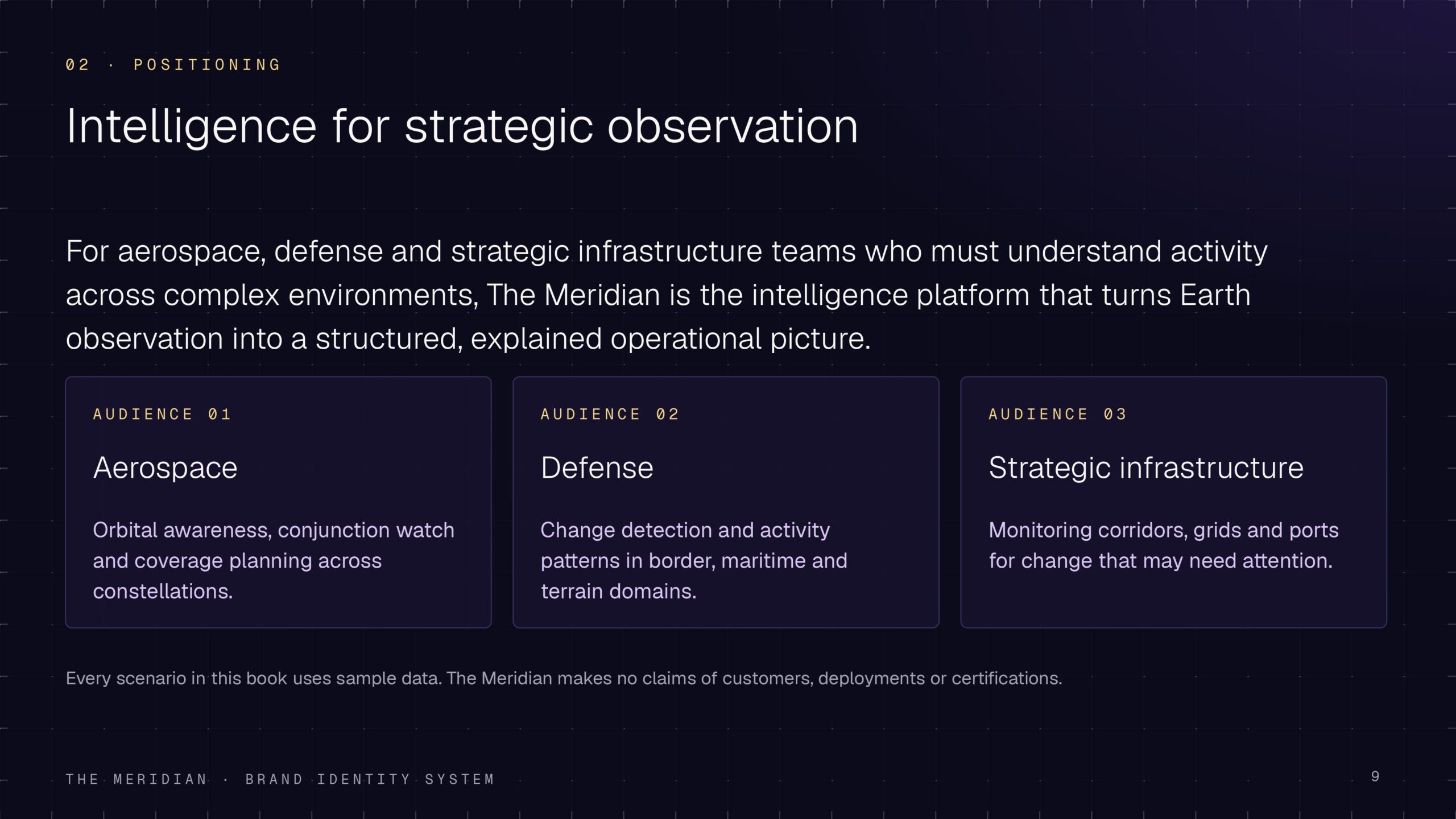
I chose three central visual elements.
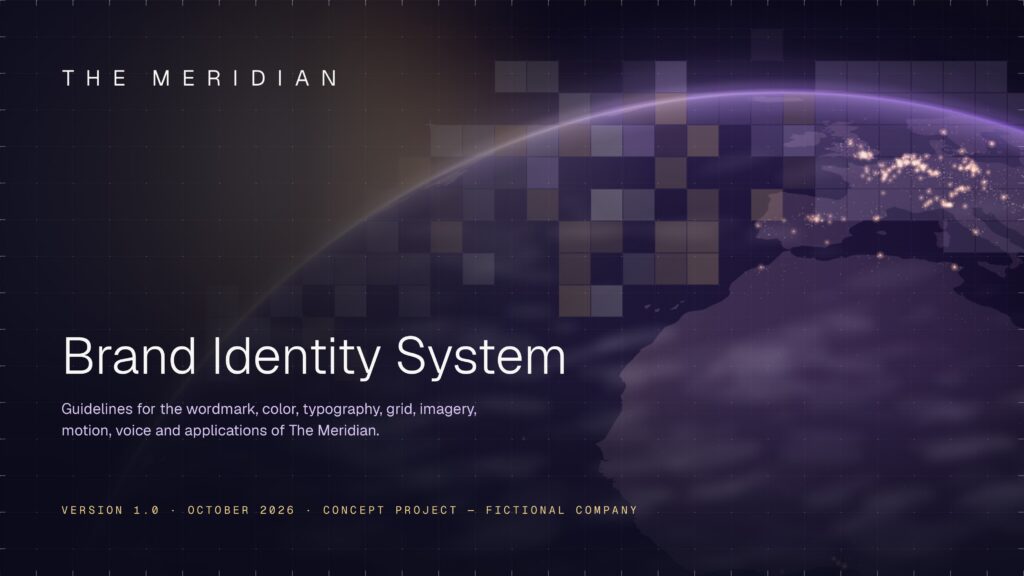
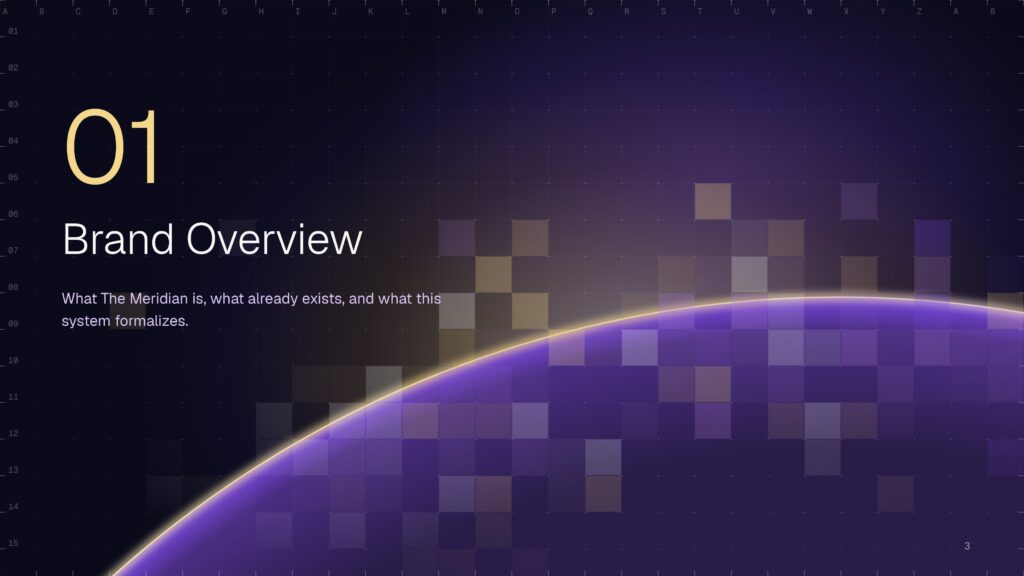
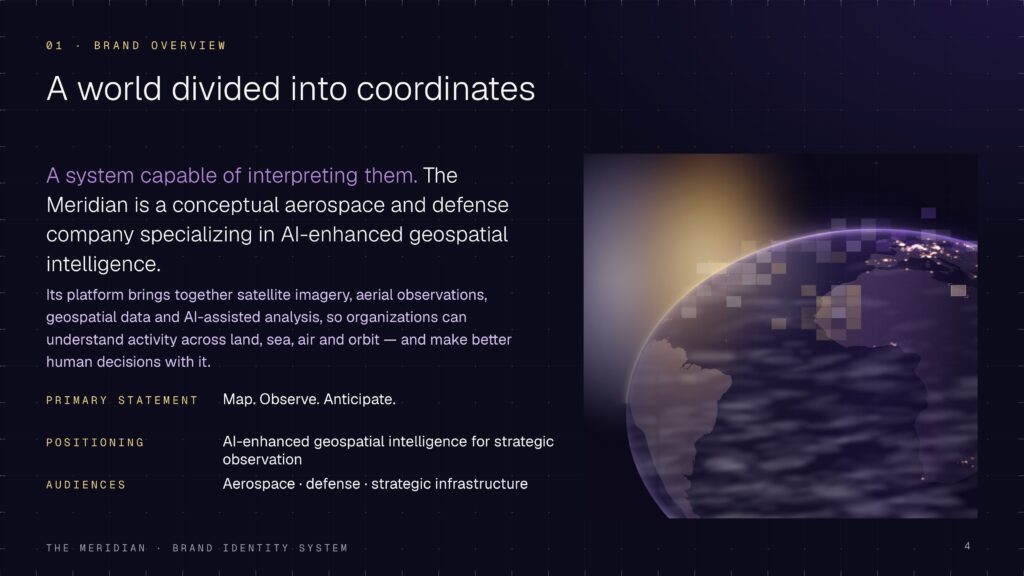
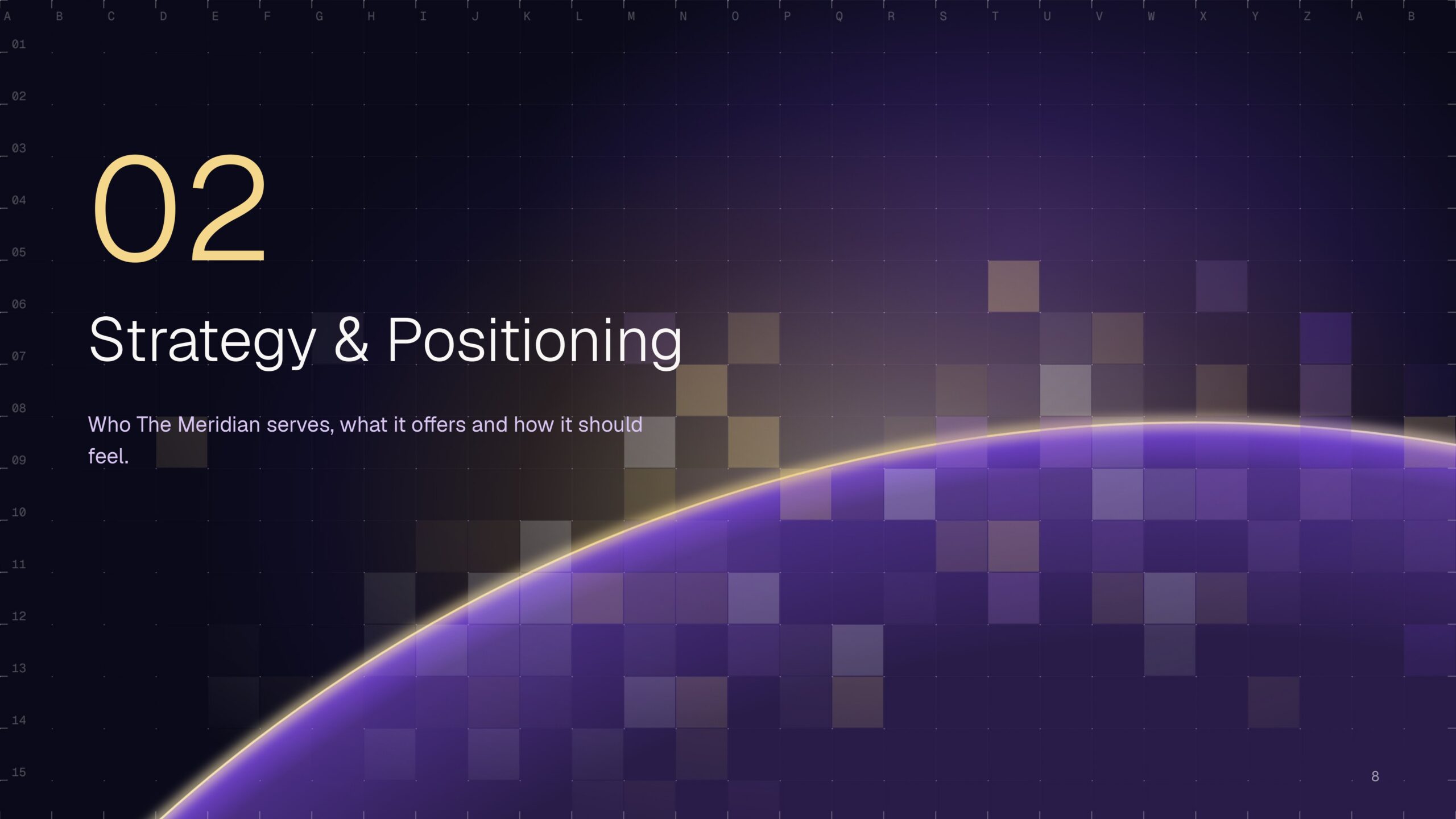
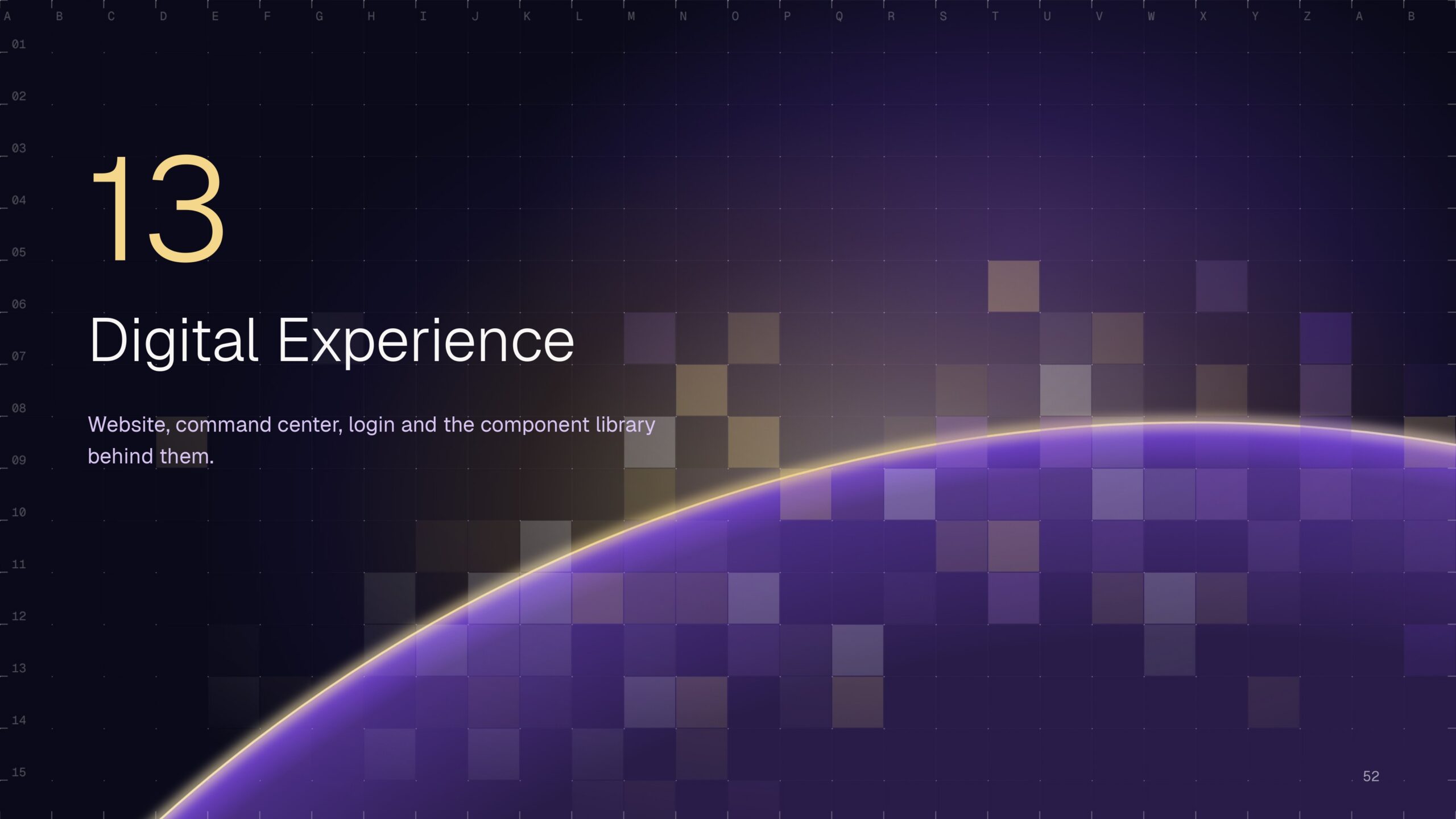
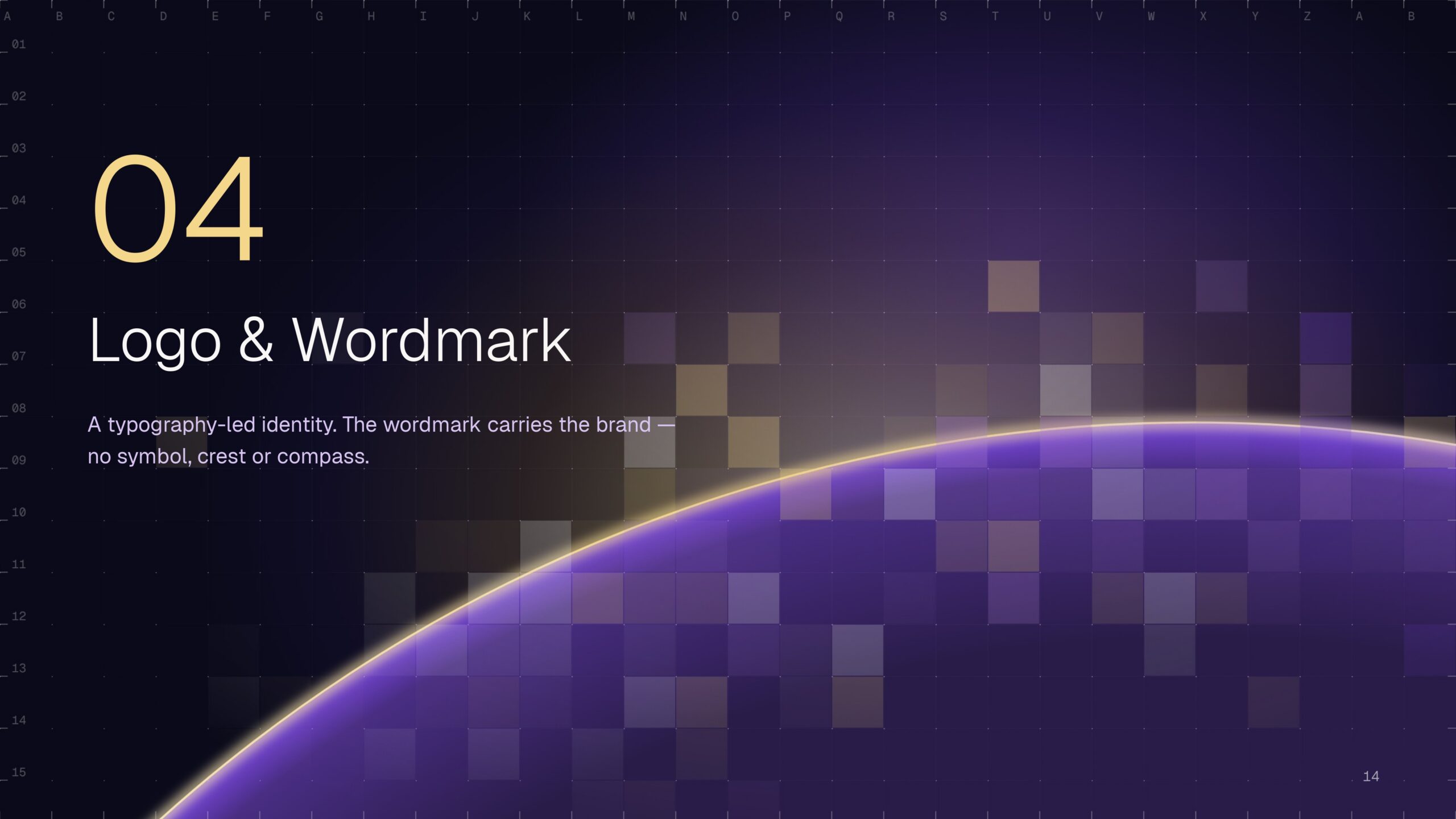
An Earth horizon as the main visual anchor
The first is a large atmospheric representation of Earth.
It connects the identity to satellite observation, geography, and the scale of the environments the proposed platform would examine.
There’s a practical communication advantage here as well.
A visitor doesn’t need technical knowledge to recognize Earth from orbit. The image establishes the industry context before they begin reading the supporting copy.
A geospatial grid representing how the platform thinks
The second element is a modular grid inspired by mapping coordinates and digital observation systems.
Selected cells can be highlighted, obscured, or organized into patterns, suggesting the process of examining different geographic areas and interpreting information.
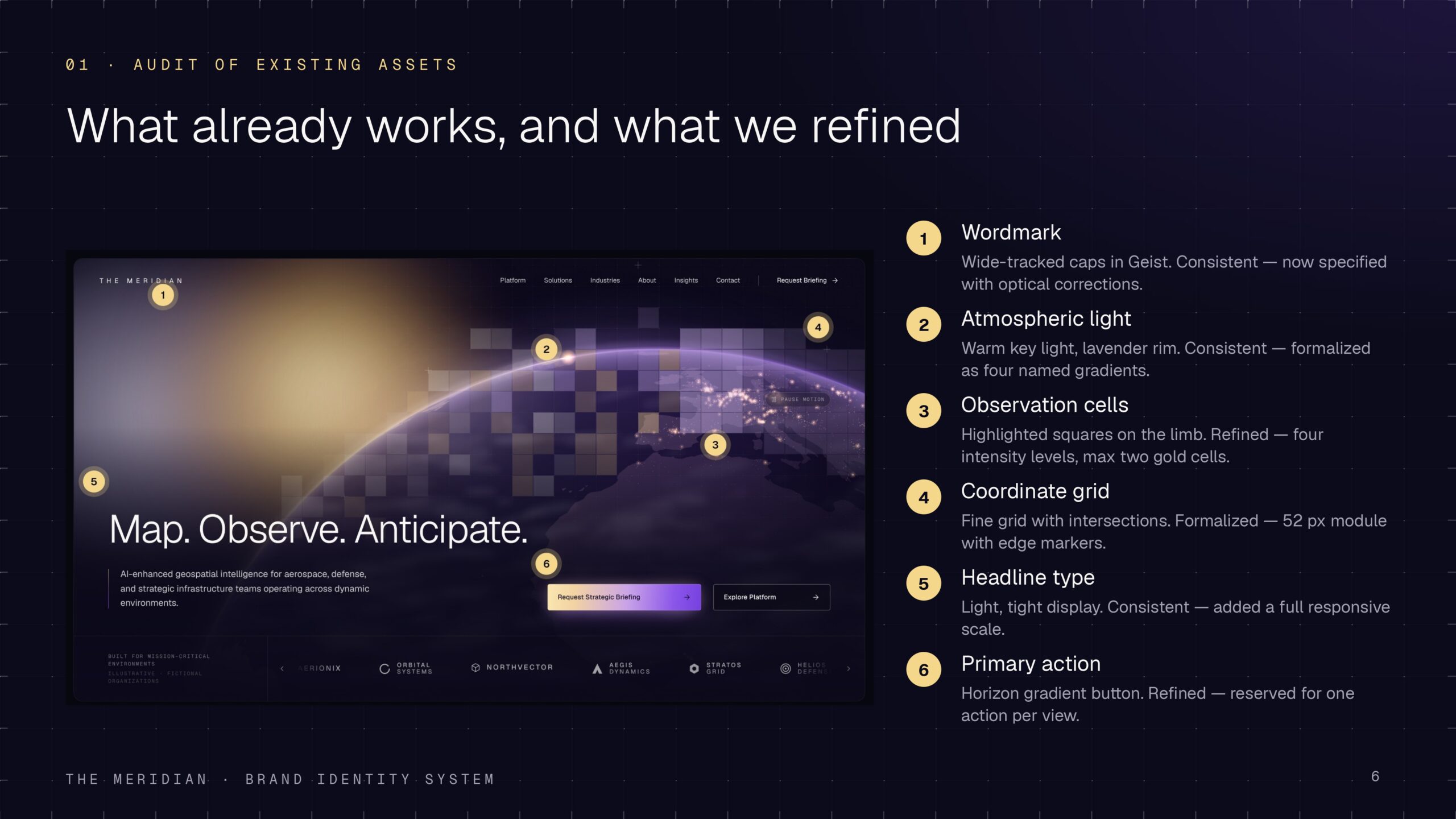
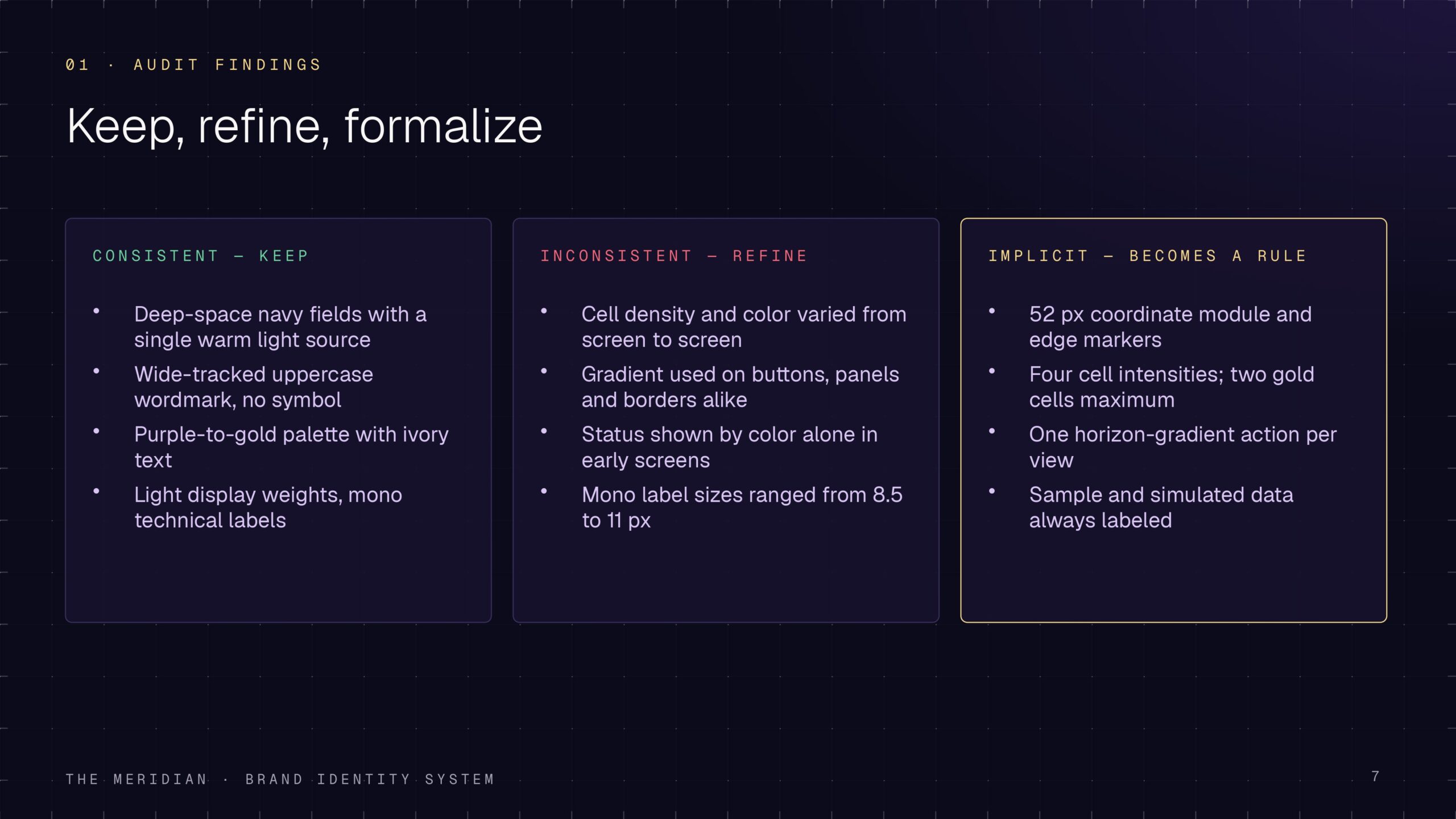
The grid became particularly useful because it could appear across the entire brand.
In the hero, it adds a layer of technical meaning to the Earth imagery. In the command center, it becomes part of the interface. In stationery and advertising, it provides a recognizable design element without requiring large illustrations.
A color palette outside the usual defense conventions
The third decision was the palette.
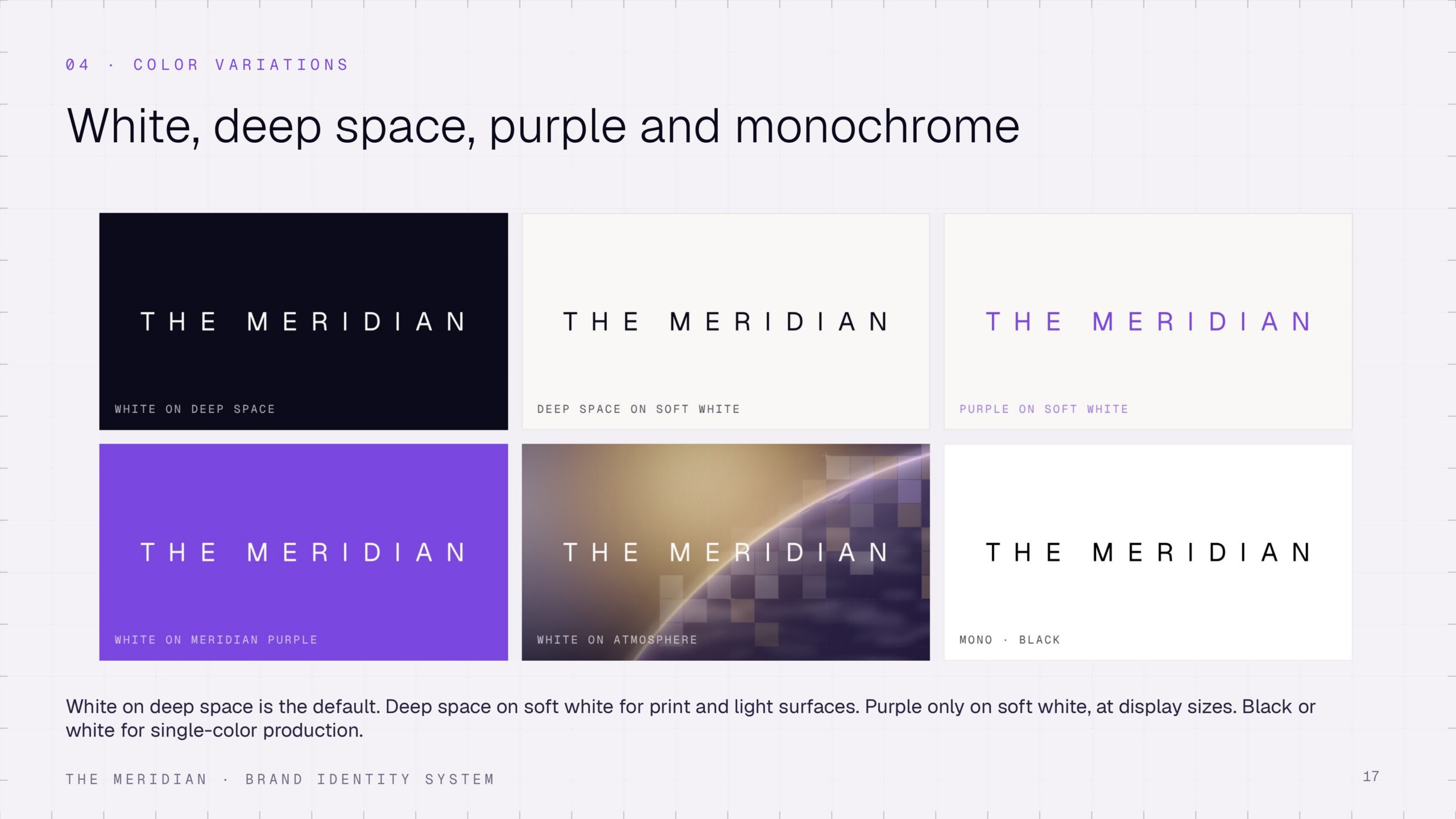
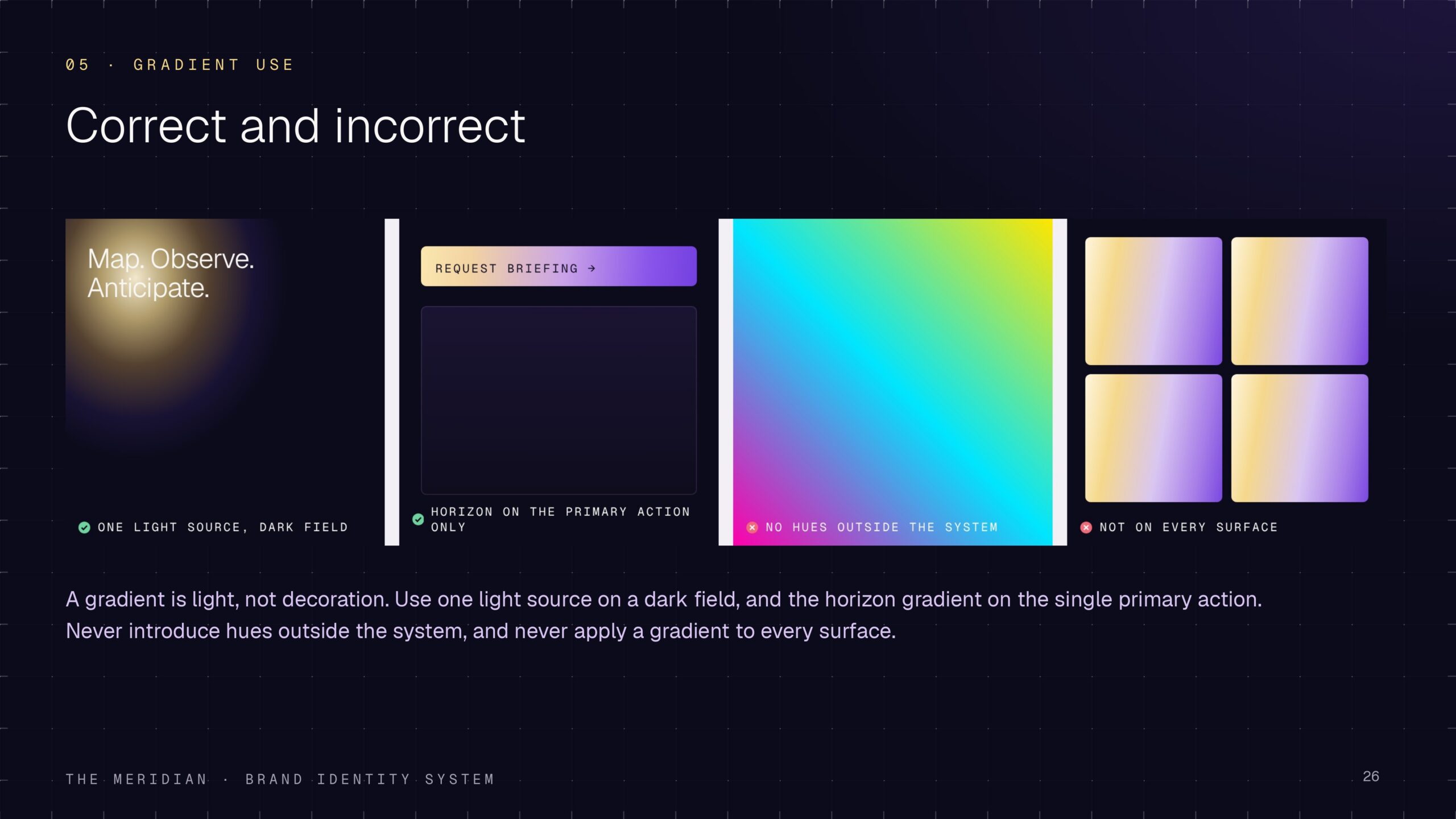
I combined warm yellow, atmospheric purple, white, and deep-space navy.
The warmer tones reference sunlight, atmosphere, and the view of Earth from orbit. The darker colors provide contrast and help the technical interfaces feel controlled and precise.
The balance between those two environments became an important part of the brand.
The website’s marketing sections feel spacious and atmospheric, while the command center is darker and information-dense.
They look different because they perform different jobs, but still belong to the same visual system.
A good identity should be recognizable across applications without requiring every application to look identical.
That thinking also informs my broader approach to aerospace and defense brand strategy, where technical credibility, audience expectations, and visual differentiation have to work together.
The Website: Moving From an Interesting Idea to an Understandable Company
Once I had the business concept and identity, the next challenge was translating them into a website.
This is where many technical companies encounter a problem.
The founders know the technology intimately, so they naturally want the homepage to explain its architecture, proprietary methods, operating principles, and competitive advantages.
Those details absolutely matter.
But visitors need enough context to understand why they should care about them.
For The Meridian, I structured the website as a progression from the broader problem to the proposed solution.
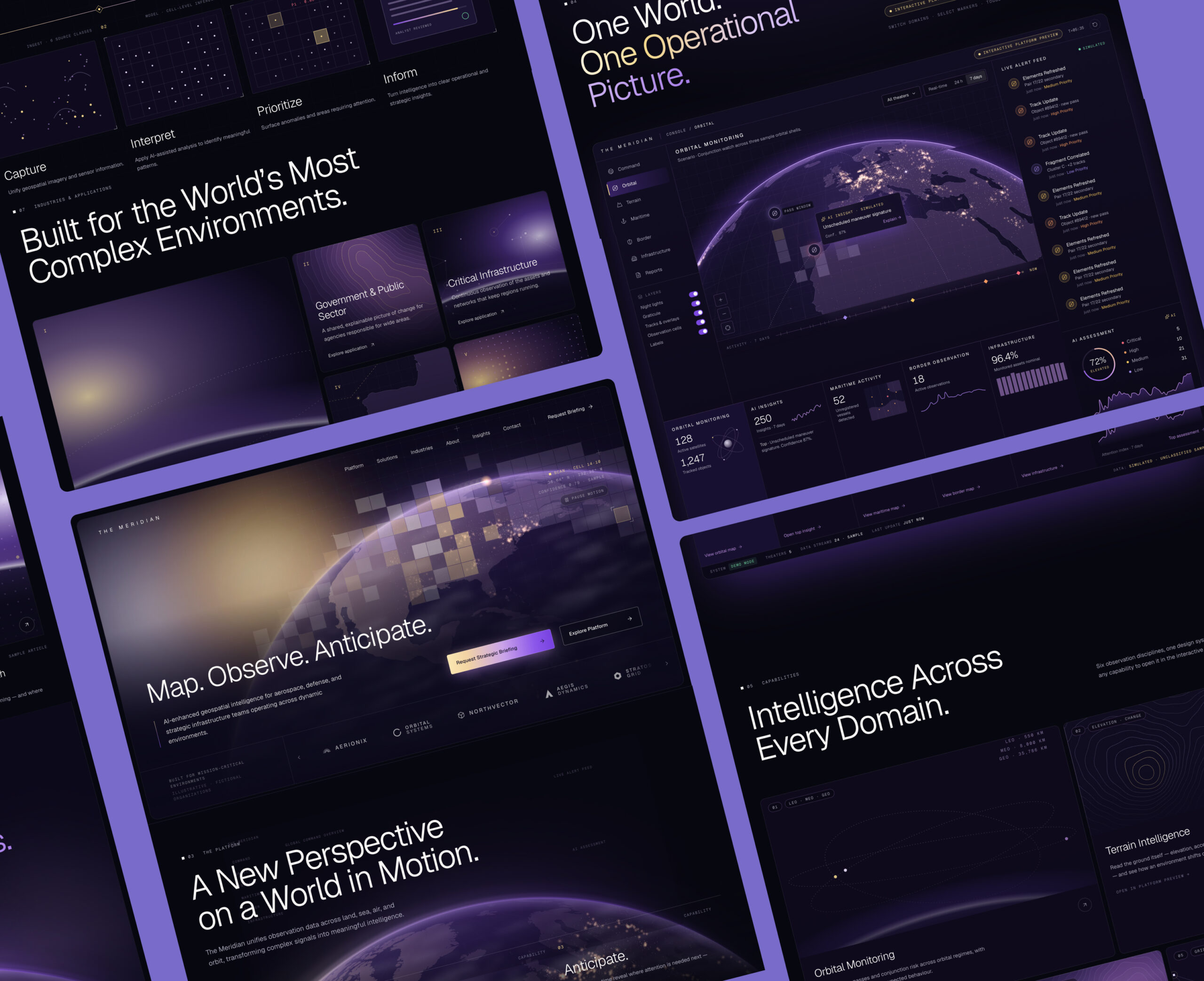
The hero introduces the company through a cinematic Earth visualization and the headline “Map. Observe. Anticipate.”
The following sections explain the idea of a unified observation environment, introduce the platform’s different capabilities, and demonstrate how information could move from observation to interpretation.
The page then explores applications across aerospace, maritime monitoring, infrastructure, and other strategic environments.
This sequence is intentional.
An investor approaching the company for the first time needs a different introduction than an engineer evaluating a technical specification.
A government procurement specialist may have an entirely different set of questions about reliability, compliance, deployment, and organizational capability.
The website should provide a clear route into the company for all of them.
I explored a similar problem in my article about how aerospace websites support commercial credibility and contract opportunities.
The important distinction is that a good aerospace website isn’t simply a beautiful representation of the technology. It should help a visitor evaluate whether the company belongs in the conversation.
For an early-stage concept like The Meridian, the first step is making the proposed technology and its intended application understandable.
For an operational company, that explanation must eventually be supported by technical evidence and demonstrated capability.
Building the Command Center Was the Real Test
The most interesting part of the website is the interactive command-center experience.
Until that point, I had a company concept, a compelling visual identity, and a narrative explaining what the platform might accomplish.
But I still needed to answer a more demanding question.
What would someone actually see when they used this software?
I began by establishing the major observation domains the proposed platform would cover.
Orbital monitoring, maritime awareness, terrain intelligence, border observation, and critical infrastructure provided a useful framework.
These are different operational contexts, but they share a common need to understand activity within a geographic environment.
That suggested a central map with domain-specific observation layers and surrounding information panels.
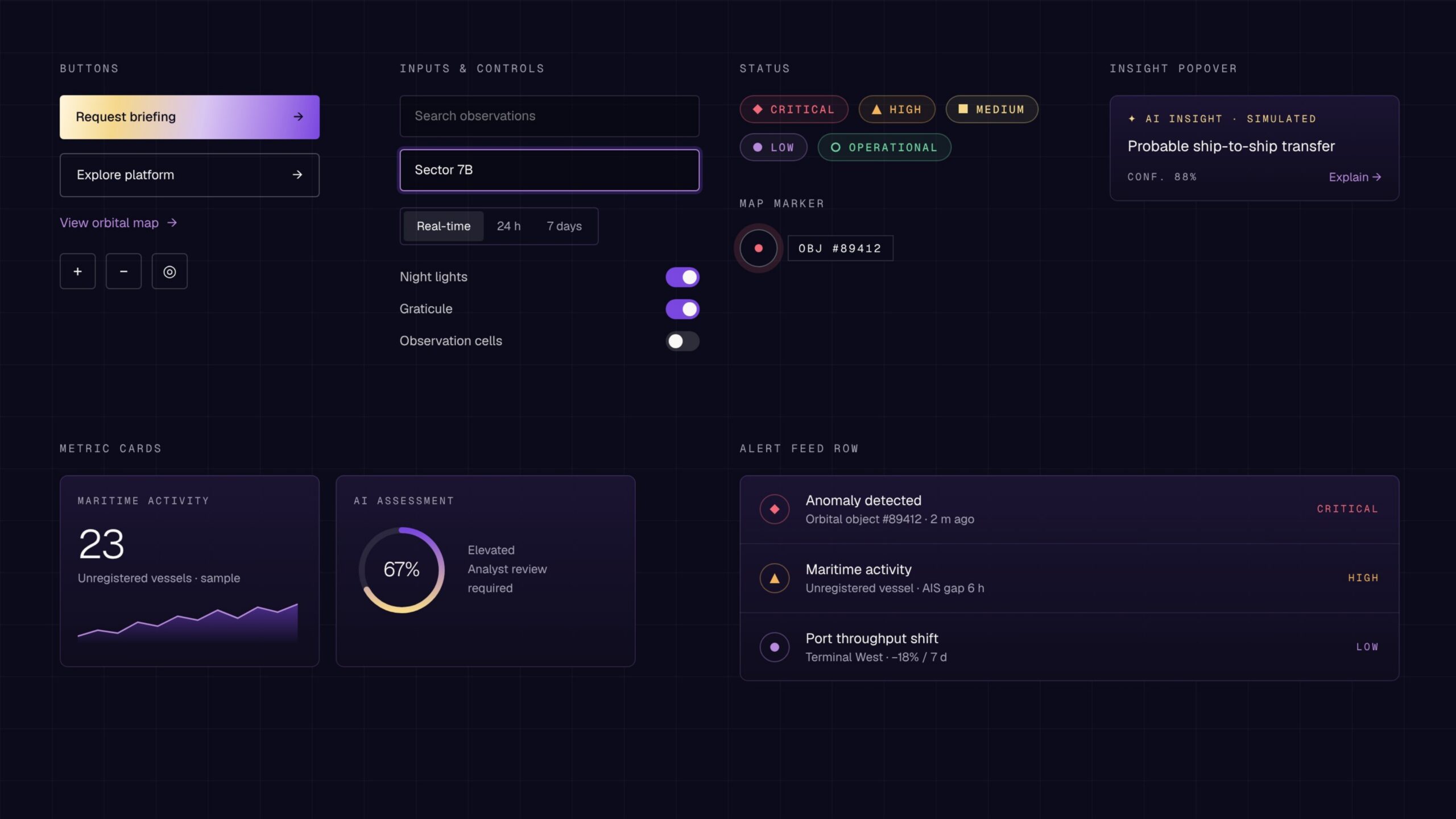
The resulting interface incorporates a geospatial visualization, activity indicators, monitoring categories, sample alerts, and AI-assisted insight panels.
Users can explore different fictional scenarios and see how the interface changes between observation contexts.
The product demonstration uses sample data rather than live operational intelligence.
Why the interface matters to the brand
A complex technology company can describe dozens of capabilities without helping people understand what the product actually does.
The interface provides another form of explanation.
For example, if a platform identifies a potentially important change in a monitored area, an analyst would need more than an isolated warning.
They might need to know where the observation occurred, when it was recorded, what information contributed to the finding, and why the system considered it significant.

Thinking through those relationships helps establish the product’s information architecture.
And that is why I consider interface design an important part of brand communication for software-led deep-tech companies.
The product experience can make the positioning tangible.
It can also expose weaknesses in the original concept.
If I can’t work out how an observation should be presented, or why a particular feature belongs in the workflow, that tells me something about the underlying product idea.
A visually convincing dashboard is relatively easy to produce today. Designing one with an understandable information hierarchy requires considerably more thought.
The Meridian became much stronger once the hypothetical product moved from a list of capabilities into something visitors could explore.
Extending the Identity Into a Complete Corporate System
I didn’t want to stop at the website.
For aerospace and defense companies, the brand often needs to exist across investor presentations, capability statements, government-facing documents, technical materials, exhibitions, facilities, and corporate communications.
So I developed a wider identity system for The Meridian.
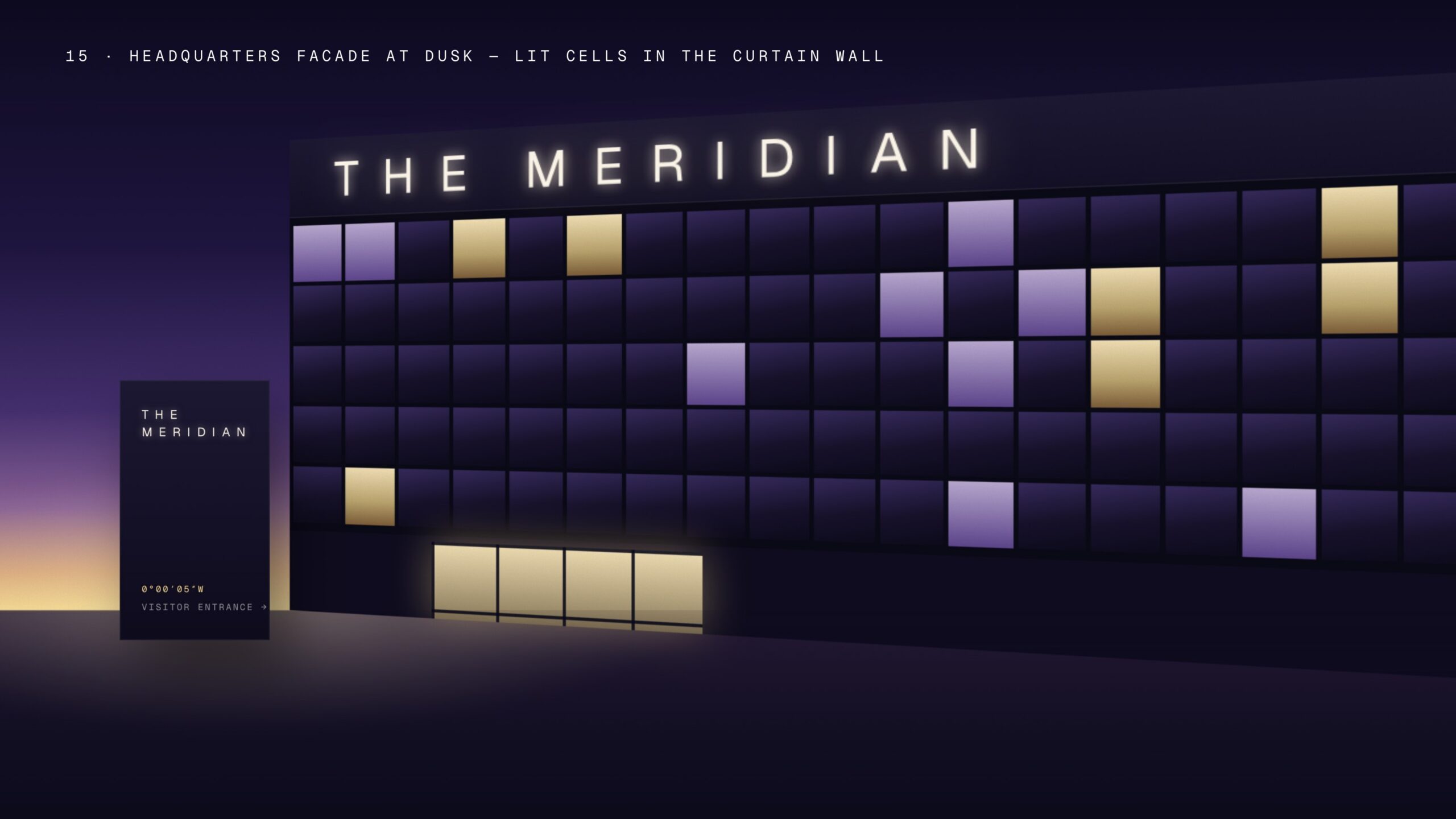
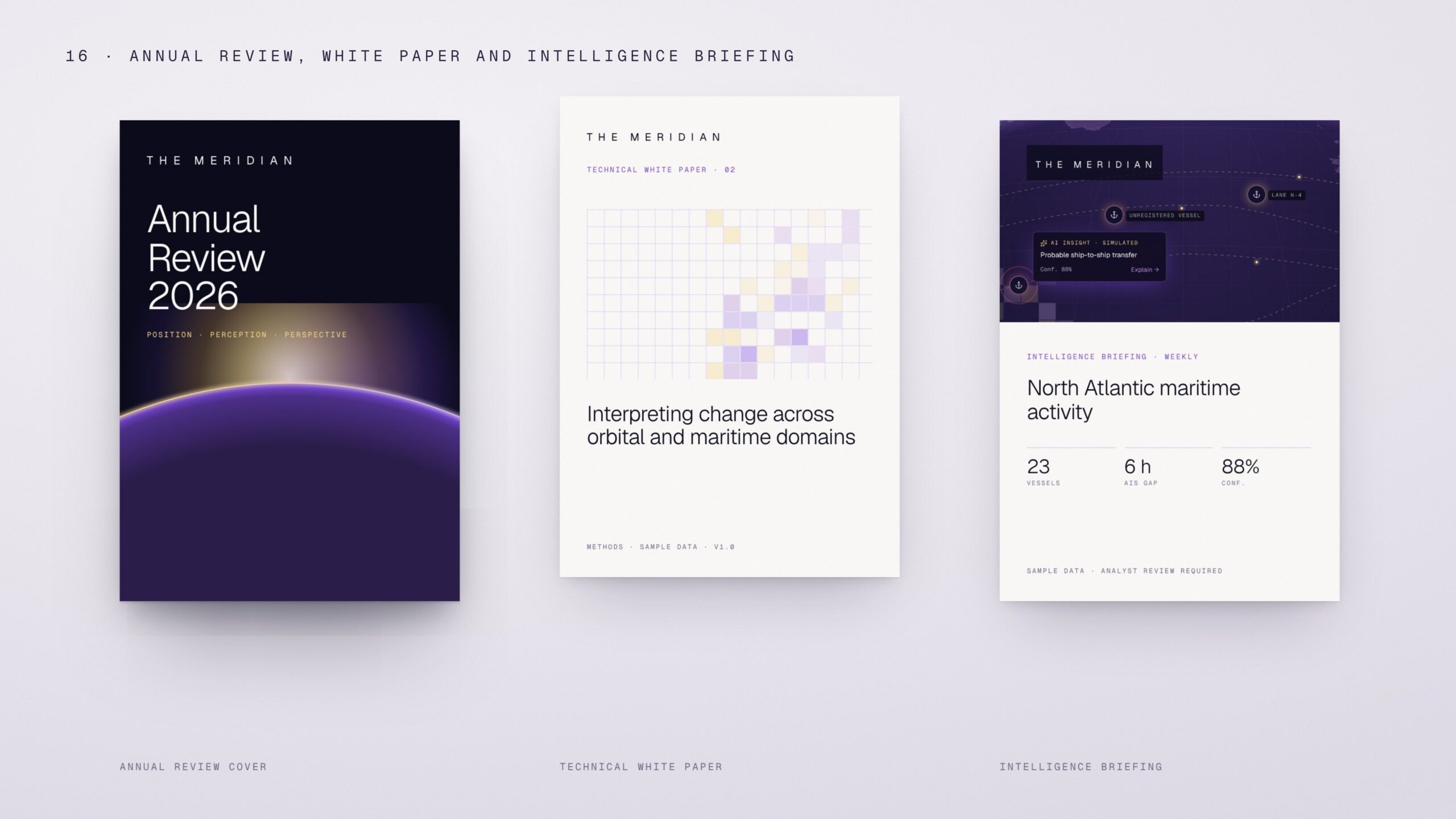
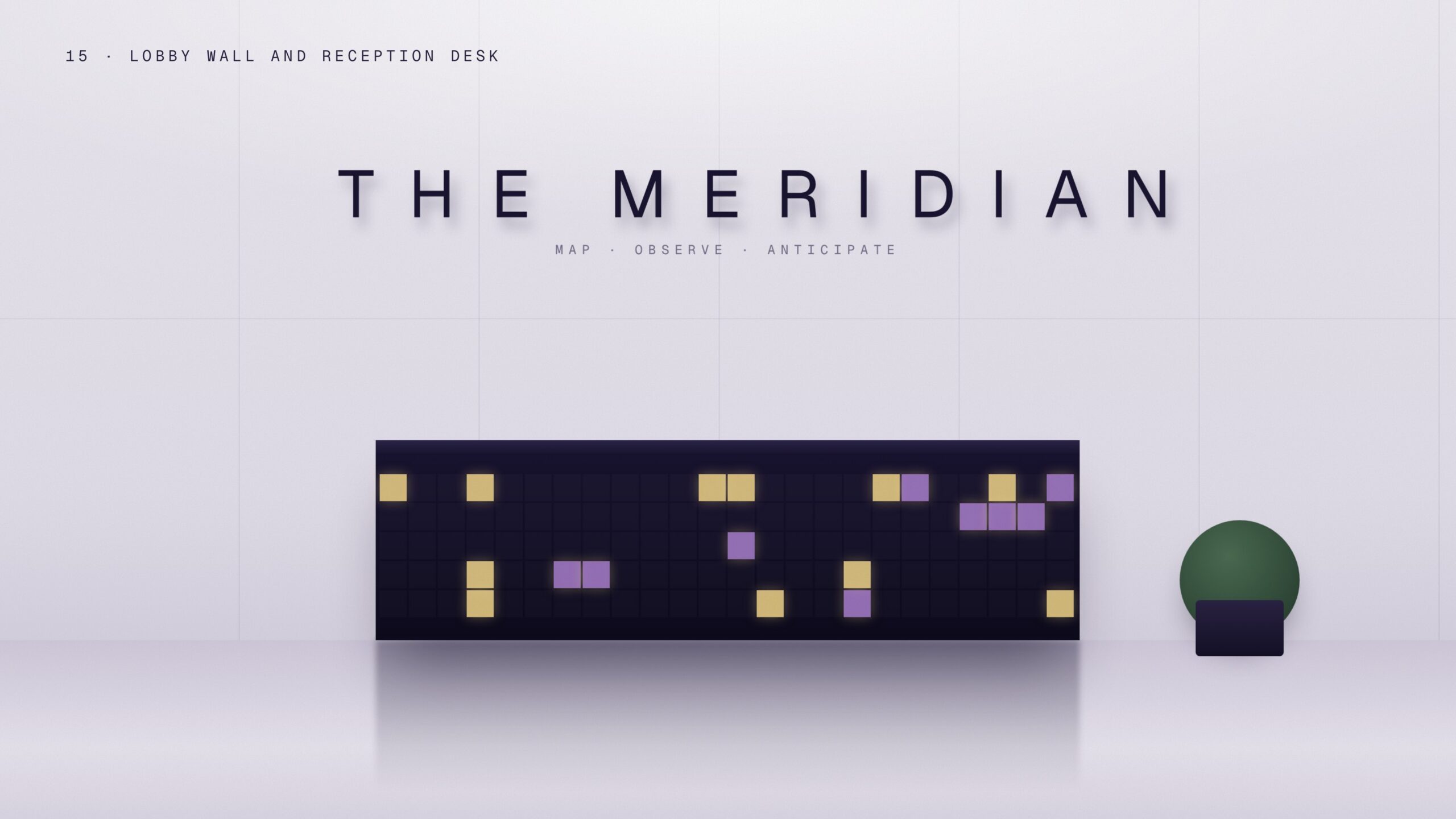
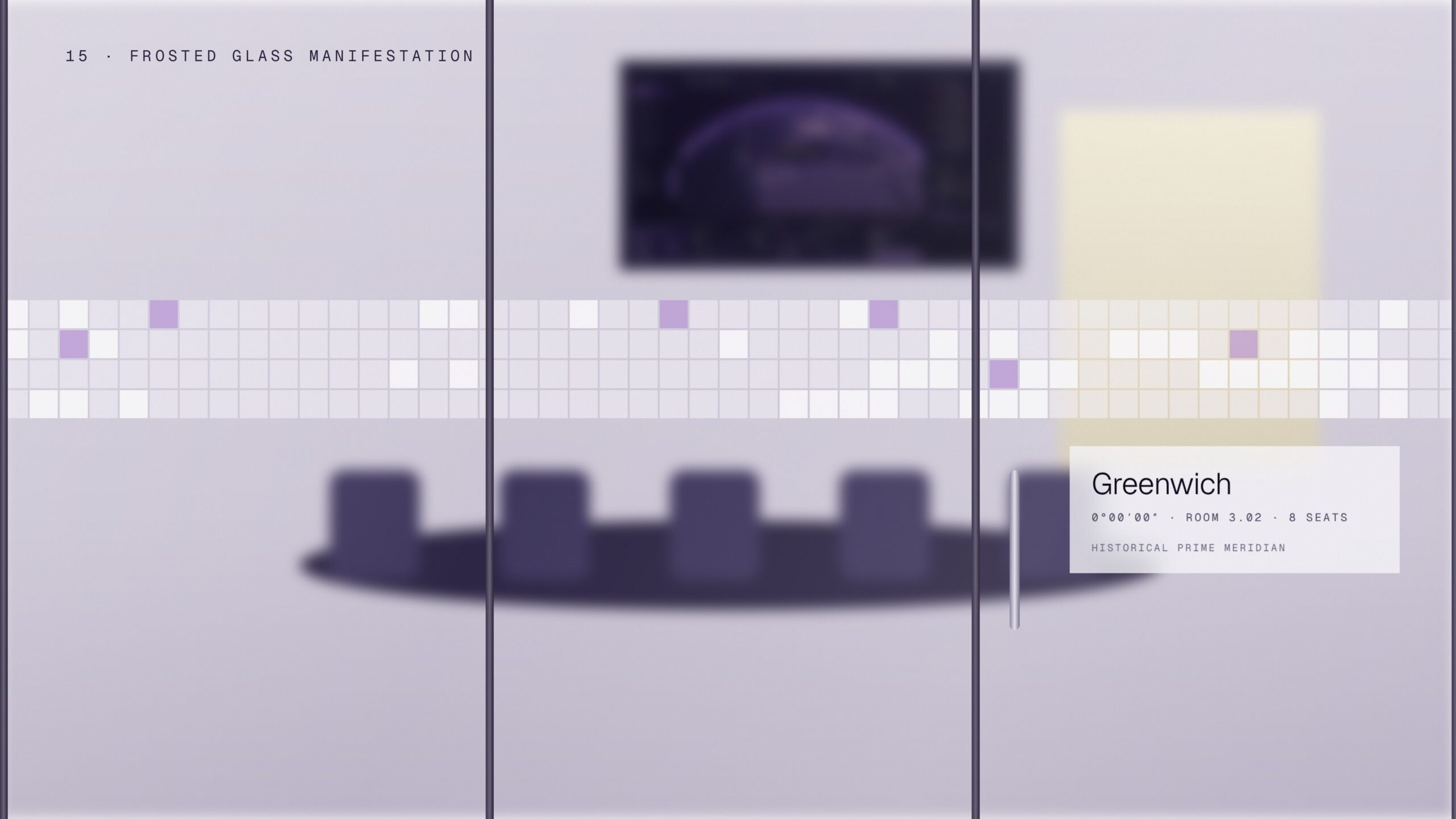
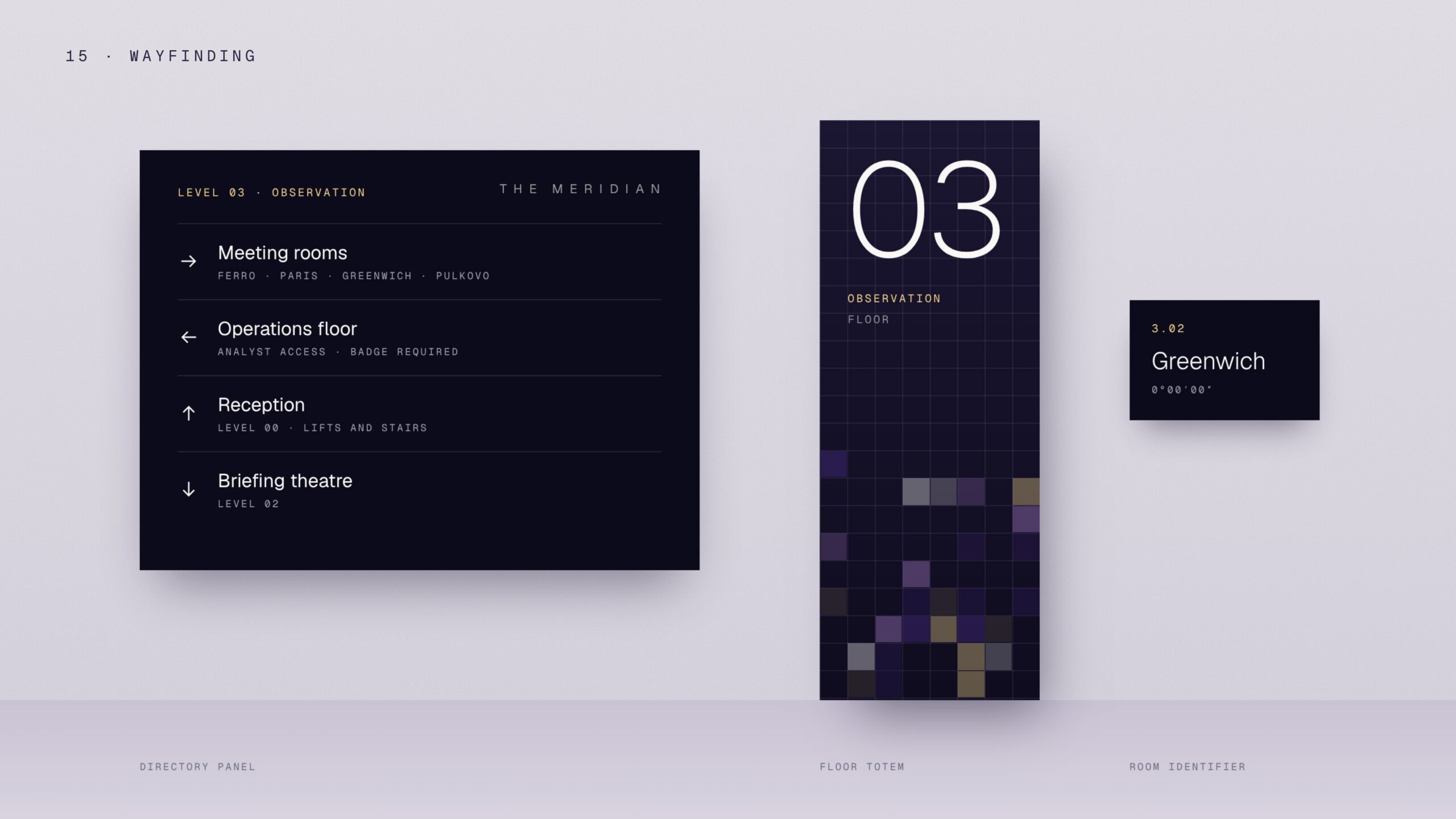
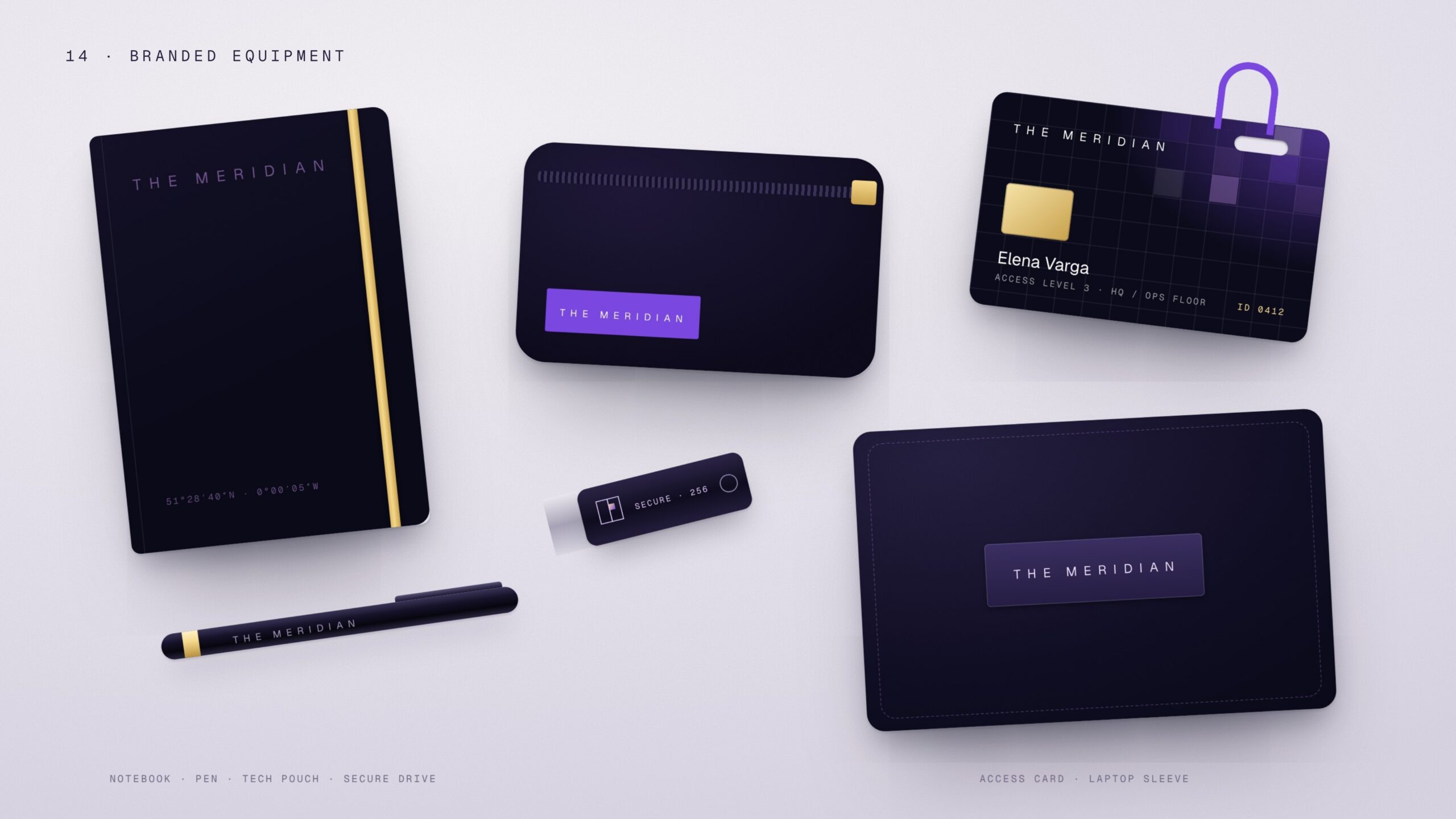
This included business cards, letterheads, envelopes, presentation folders, notebooks, technical accessories, employee apparel, headquarters signage, office environments, and outdoor advertising.
Some applications were chosen because they’re practical. Others were created to stress-test the visual identity.
Could the same design language work on an airport advertisement and a technical report?
Could the wordmark feel appropriate on the exterior of a corporate headquarters without needing a decorative symbol?
Could the Earth observation grid remain recognizable when reduced to a small stationery detail?
These questions helped refine the system.
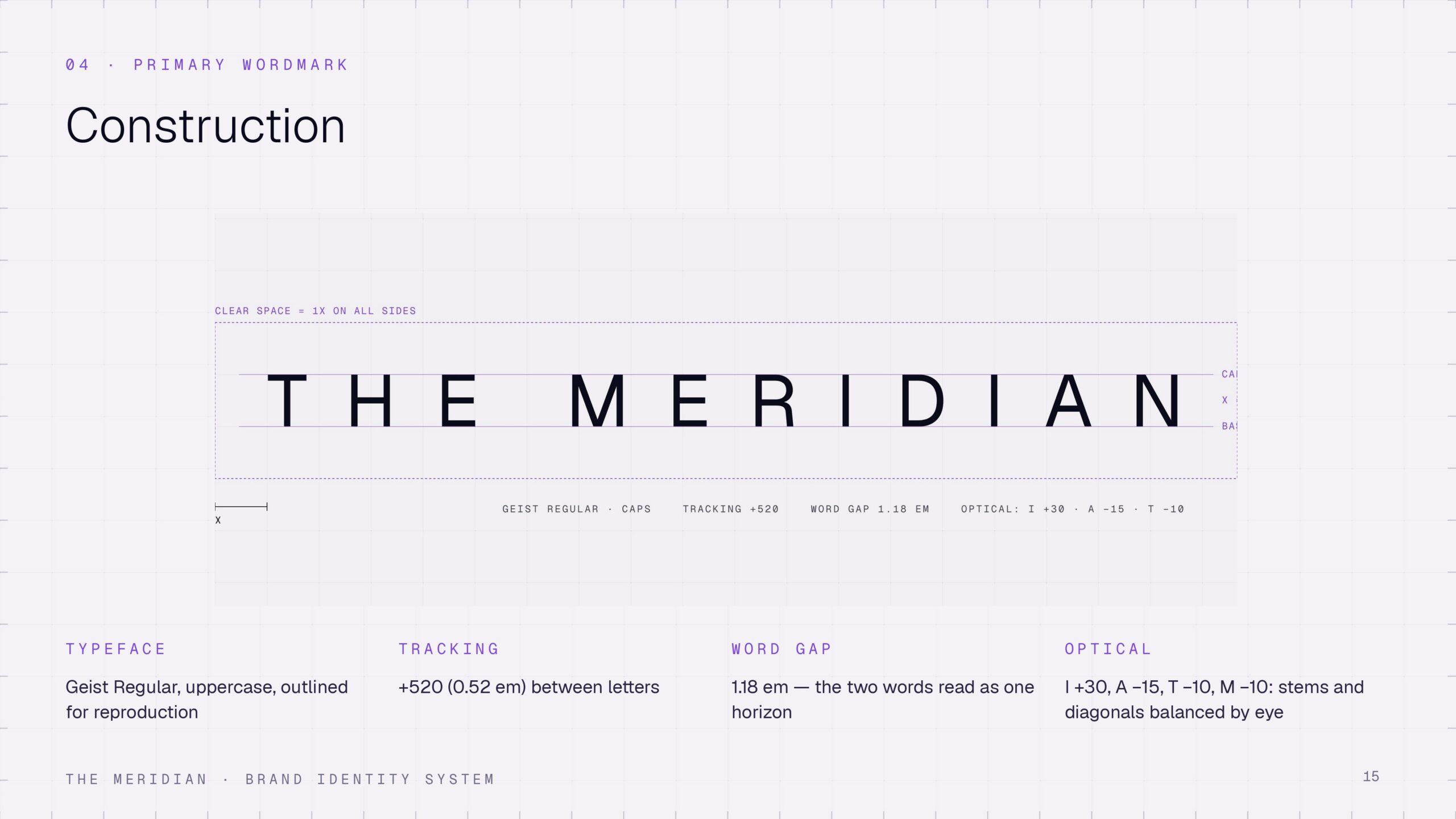
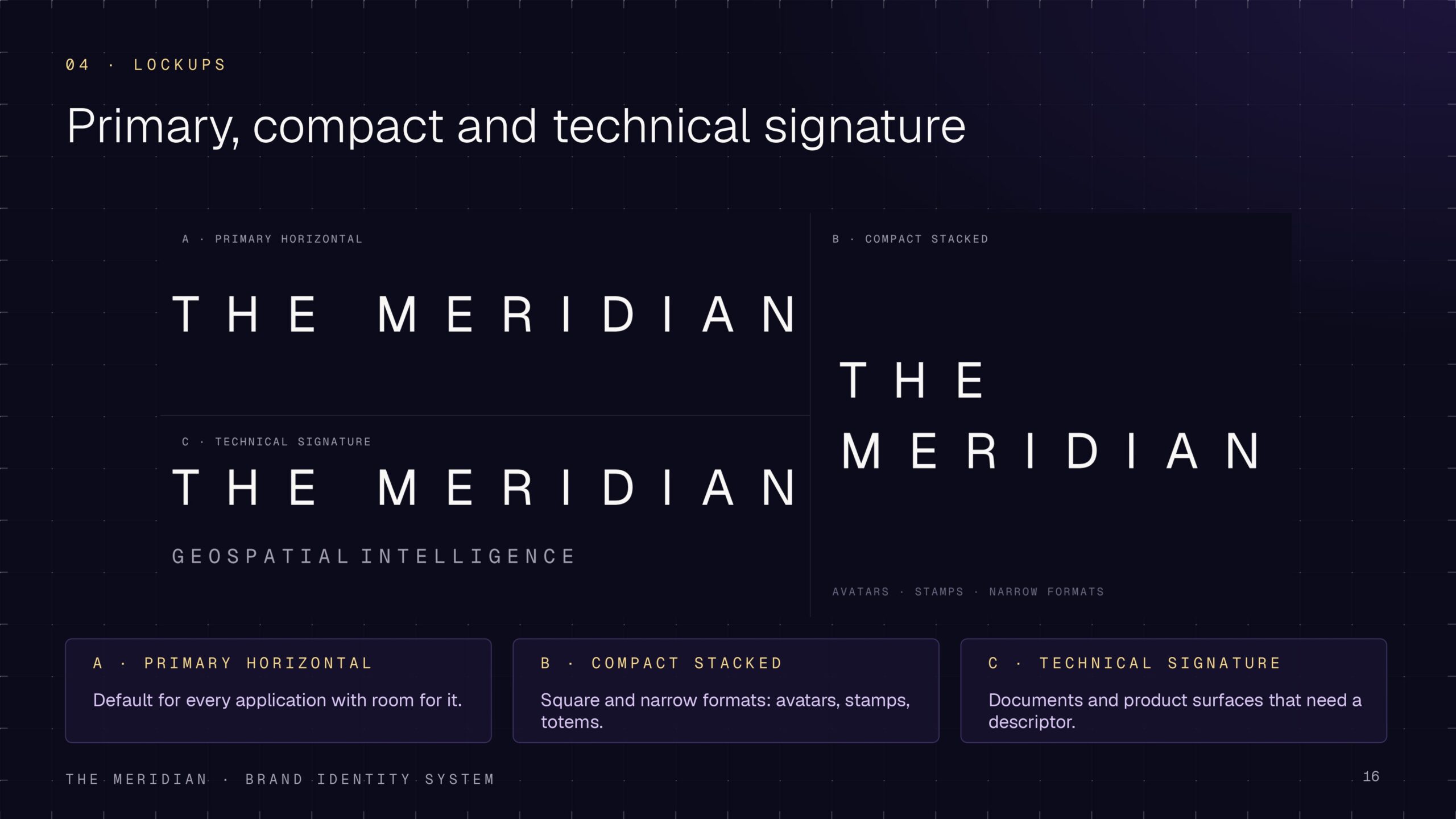
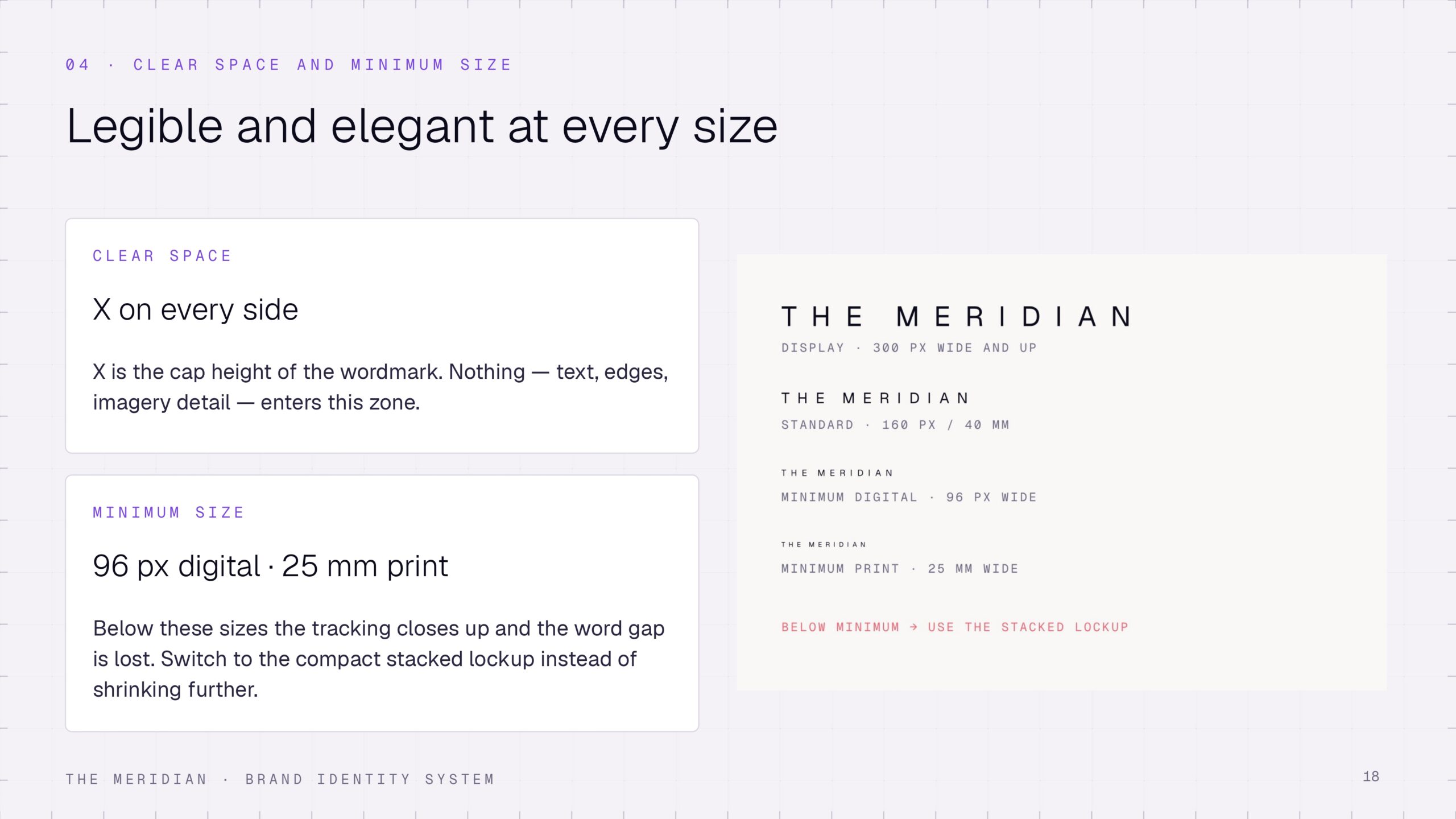
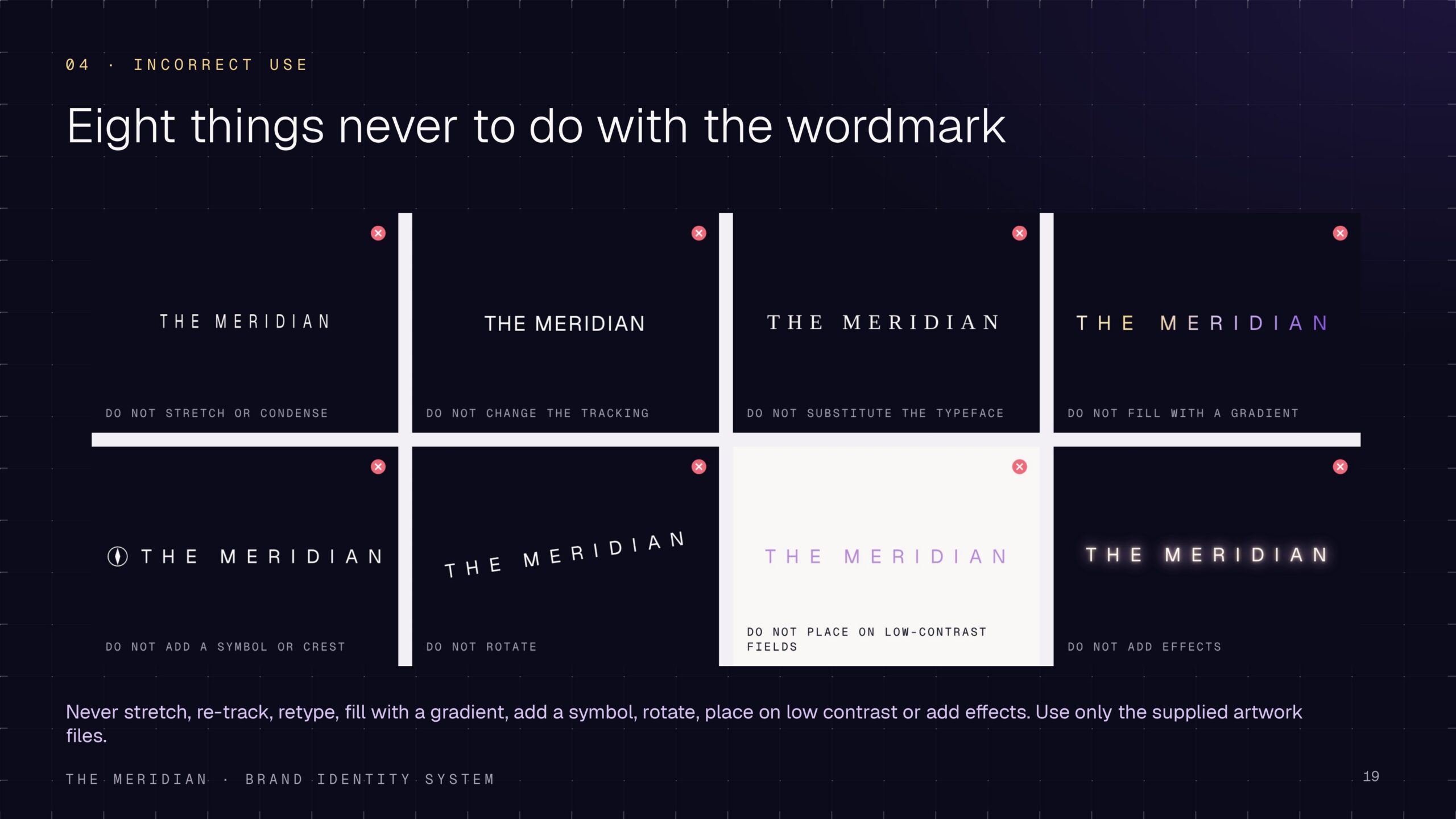
I also deliberately used a wordmark-led identity rather than building everything around a complicated aerospace symbol.
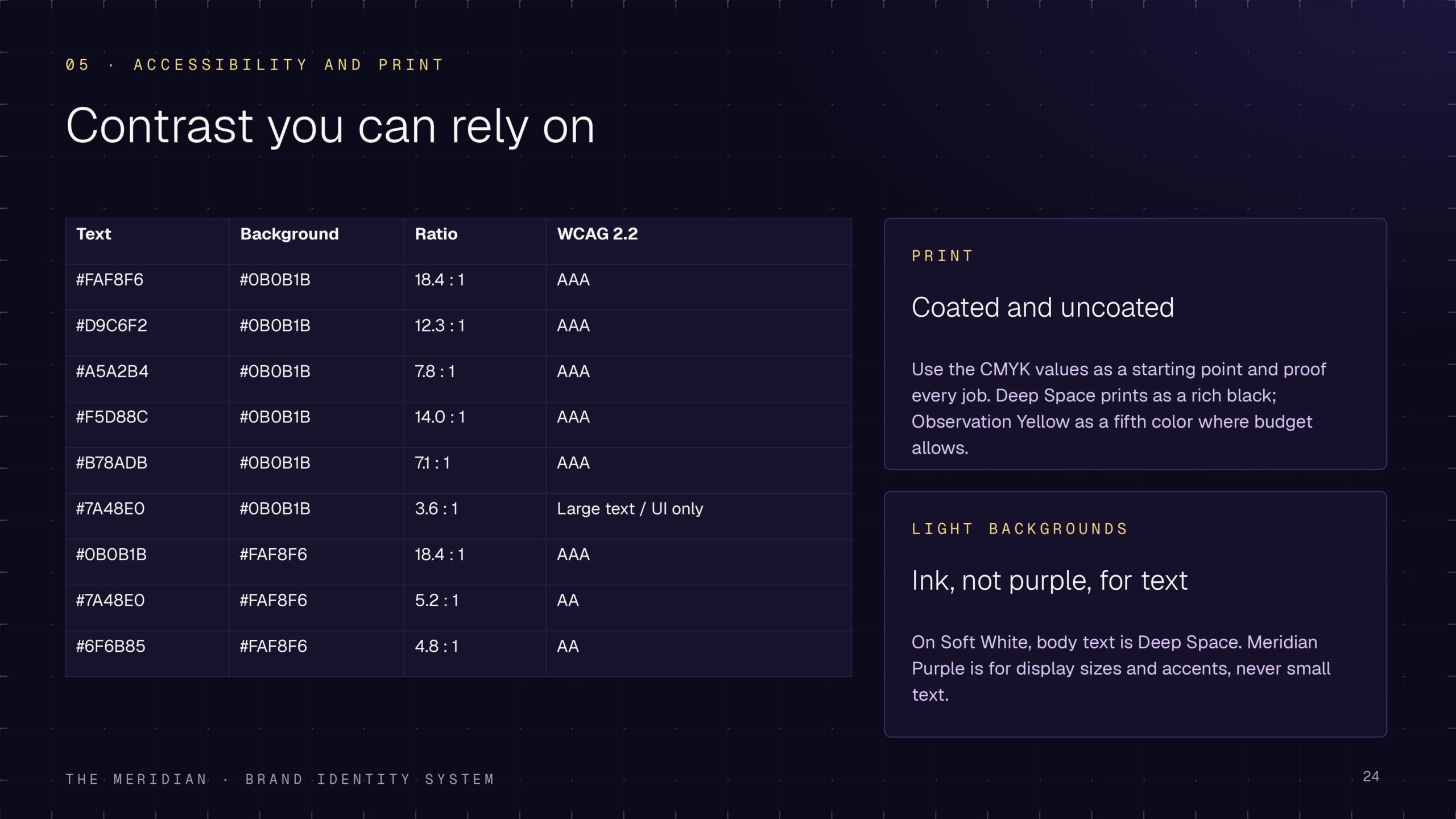
The name itself carries meaning. It doesn’t need to be surrounded by visual explanations.
For established defense businesses, corporate identity has to do more than establish recognition. It should also support consistency across documents, proposals, operational communications, and other material used during long evaluation processes.
That’s particularly important when considering the trust signals aerospace and defense websites need to communicate.
A visual identity can make those materials more coherent and accessible, but it cannot replace actual certifications, customer references, technical performance, or delivery history.
The Meridian demonstrates the design foundation. A real company would need to build verified evidence into that foundation.
What AI and Claude Code Changed About the Process
The Meridian was also an opportunity to test how far I could take a connected brand and website project using AI-assisted tools.
The work moved through several stages: understanding the technology category, developing the hypothetical business, creating the positioning, establishing the visual identity, exploring applications, designing the website, and developing the interactive platform demonstration.
I used AI to accelerate research and creative exploration, and Claude Code to help translate the design direction into a functioning website.
The advantage was the ability to move between disciplines without the usual amount of production friction.
I could explore an interface idea, see how it behaved inside the website, identify what wasn’t communicating properly, and revise it without treating each experiment as a separate development project.
That’s particularly useful when you’re working with complex technology.
Sometimes you need to see a product represented visually before you can properly evaluate how to explain it.
But there’s a distinction I think gets lost in discussions about AI-assisted design.
The fact that a tool can generate a website doesn’t mean it understands the business the website is supposed to represent.
It can create convincing aerospace imagery without knowing whether the imagery accurately relates to the technology.
It can generate charts without understanding what the numbers mean.
It can build a sophisticated interface without knowing how the target user would actually work.
The responsibility for those decisions still sits with the person directing the work.
AI makes it easier for me to explore and execute ideas. My experience in brand strategy, presentation design, and complex B2B communication helps determine what those ideas should communicate.
For clients, that combination means we can explore possibilities much more quickly while still grounding the design in a coherent business proposition.
What This Approach Means for Deep-Tech Founders
The Meridian is fictional, but the process reflects a very real challenge for companies working in advanced technology.
Founders often have a strong understanding of the science or engineering behind their product but haven’t yet established how to communicate its value to people outside their immediate technical environment.
Sometimes the product is still in development.
Sometimes the company is preparing to raise funding.
Sometimes the technology works, but the website and presentation materials haven’t kept pace with it.
And sometimes the business has expanded into new applications that its original identity was never designed to explain.
These situations require more than a visual refresh.
They require someone who can understand the underlying technology, establish a clear commercial narrative, organize