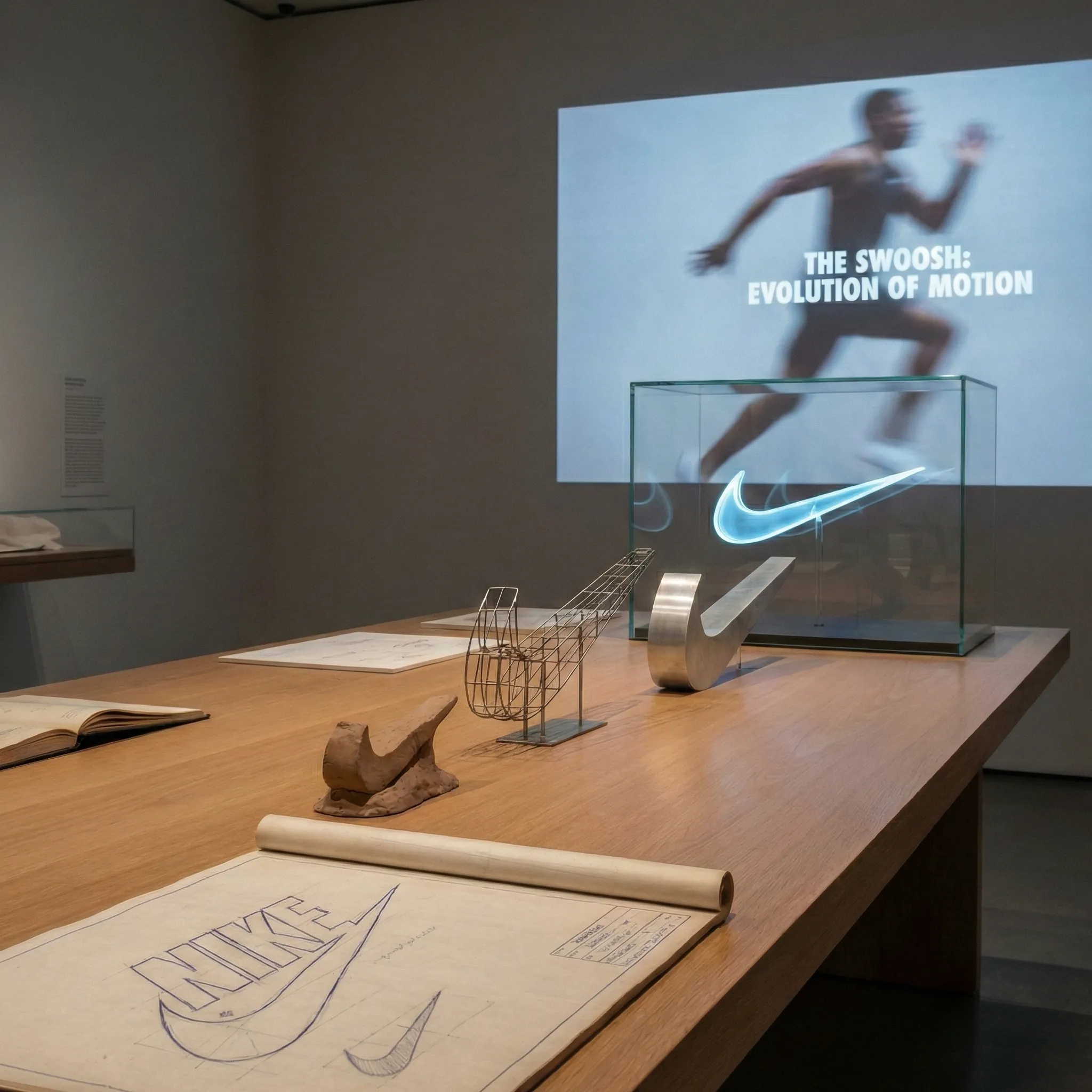
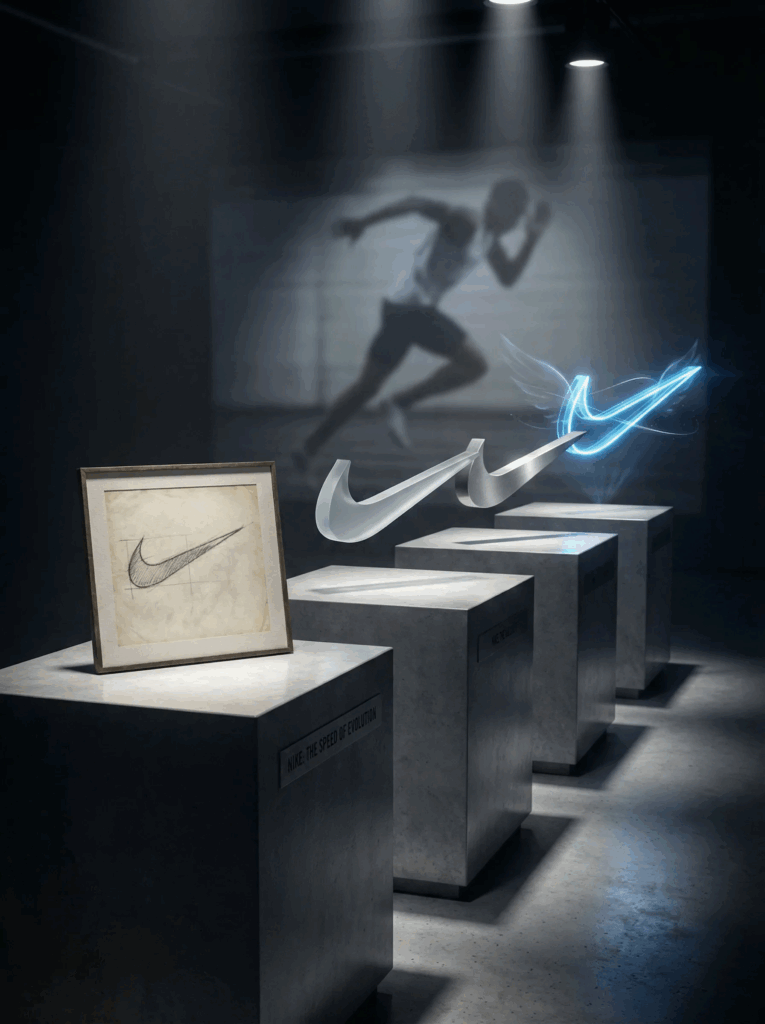


Carolyn Davidson: The Design Student Behind the Nike Swoosh Logo
The origin story is almost annoyingly practical: the Swoosh wasn’t born from a mystical creative thunderbolt. It was born from a job that needed doing.
How Phil Knight Met Carolyn Davidson at Portland State University
Carolyn Davidson was a design student—a graphic design student—at Portland State University (yes: a Portland State University student, a student at Portland State University, and often described as a Portland State student). Phil Knight met her through the university context. She did freelance design work because that’s what design student at Portland State people do when rent exists.
Designing the Nike Swoosh for $2 Per Hour
The early work is famously tied to “2 per hour.” Davidson was paid a modest hourly rate while developing options for what would become the Nike swoosh. The Swoosh was created in 1971—you’ll often see it phrased as 1971 by carolyn davidson, 1971 by Carolyn Davidson, or even “1971 by carolyn davidson” in blunt retellings.
Call it what it is: Davidson’s design was a breakthrough because it solved the brief. Nike needed a logo design that felt like speed. She produced a mark built to convey motion—a logo that conveyed motion—without needing words, mascots, or gimmicks.
And yes, it became now-famous. That part came later.

The Greek Goddess Nike and the Meaning of the Swoosh Logo
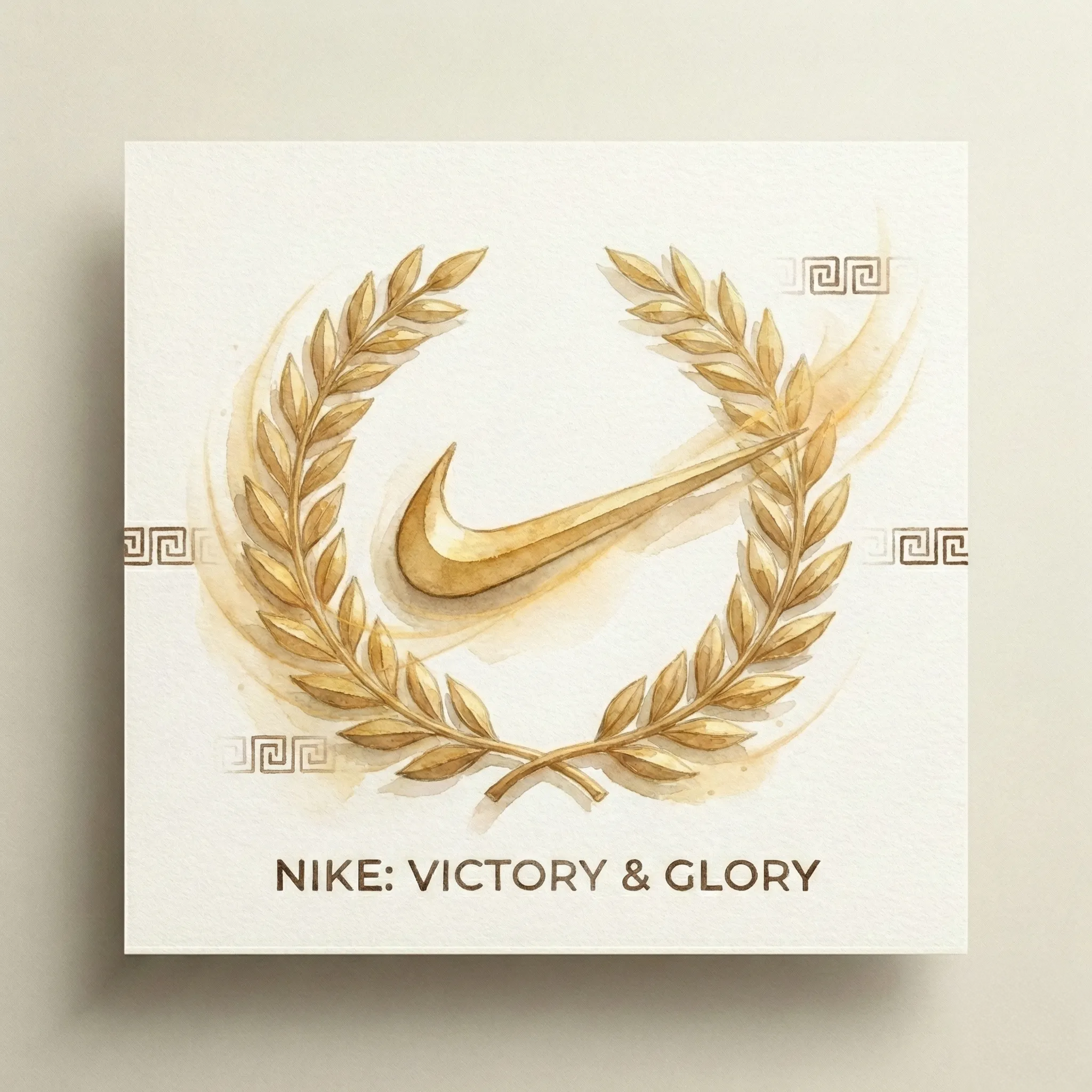
Nike didn’t just pick a name that sounded athletic. The name ties back to the Greek goddess Nike, the Greek goddess of victory. This matters, because names and symbols amplify each other when they share the same meaning.
How Mythology Shaped the Nike Brand Image
The Swoosh is often linked to the wing of the Greek goddess—a visual metaphor for flight, speed, and triumph. Whether you interpret it as a wing, a swoop, or a slice of air, the meaning stays consistent: victory in motion.
This is why the mark doesn’t need explanation. It’s not “a random shape.” It’s a symbol built for athletes and aspirational athletes—the same group, just with different sleep schedules.
Why the Swoosh Conveys Motion and Victory
The Nike Swoosh logo works because it suggests direction. It’s a clean gesture that feels like acceleration. It’s symbolizing speed without trying too hard. It’s minimal but aggressive. It’s not a logo that asks permission.
Logo Design Strategy: Why the Nike Swoosh Works So Well
Most brands don’t fail because they lack creativity. They fail because their identity can’t survive real life: manufacturing, printing, scaling, sponsorship backdrops, low-resolution screen use, and the fact that people don’t stare at your logo the way designers do.
Nike’s mark survived all of it.
Simple Design, Strong Motion, Maximum Recognition
The Swoosh succeeds as graphic design because it’s:
- Fast to recognize
- Easy to reproduce
- Strong in one color (hello, white swoosh)
- Flexible across contexts without losing meaning
This is how a mark becomes part of visual identity. The swoosh doesn’t merely decorate Nike products. It becomes a stamp of performance.
Related read: Storytelling in Branding
How the Swoosh Became One of the Most Recognizable Symbols in the World
Nike didn’t rely on the logo alone. They built a distribution engine around it: product visibility, cultural association, and repetition through sponsorships. In other words, the Swoosh didn’t become iconic because it’s clever—it became iconic because Nike kept showing it in moments people care about.
The History of the Swoosh: From Running Shoes to Global Sportswear Icon
The history of the swoosh is inseparable from early product and athlete adoption. It’s one thing to design a mark. It’s another to put it on a shoe that actually performs.
Nike Cortez, Olympic Trials, and Early Athlete Sponsorships
Nike’s early momentum is tied to running shoe culture and track visibility. People often mention the olympic trials era as part of the early brand story, when Nike was pushing credibility in performance circles.
Nike’s early models like the running shoe that evolved into recognizable staples helped move the mark from “new logo” to “this is what winners wear.” Over time, it became baked into how people talk about Nike shoes.
To tighten your brand image: Visual Branding: How to Design a Cohesive Brand Identity Across All Platforms
From Steve Prefontaine to Michael Jordan
Nike’s athlete narrative includes legends like Steve Prefontaine, a key early figure in Nike’s credibility story. Then the brand machine scaled.
And then there’s Michael Jordan—the moment the Swoosh stopped being a sports mark and became a cultural emblem. That’s when Nike’s brand image shifted from “athletic company” to “global symbol of competitive identity.”
Early sponsorship mentions also include the romanian tennis player ilie năstase—a reminder that Nike’s athlete strategy wasn’t born in the social media era. It was built the traditional way: association, performance, repetition.
Nike vs Adidas: How the Swoosh Outran the Stripes
Nike and adidas represent two different approaches to identity. Adidas has a system of stripes that reads like a uniform. Nike has a single slash of motion that reads like a verdict.
Visual Identity as Competitive Advantage
Nike’s advantage wasn’t just product innovation. It was the ability to attach one consistent symbol to many different categories while keeping the meaning intact.
This is where brand strategy meets identity: the Swoosh can live on basketball, running, football, lifestyle fashion, and even formal collaborations, and still read as Nike. That’s a distribution win disguised as design.
Why Simplicity Beats Complexity in Logo Design
Nike didn’t try to out-detail competitors. They out-repeated them. The Swoosh is the kind of symbol you can stamp on anything, anywhere, instantly.
It’s also why “simple” doesn’t mean “easy.” The most valuable marks look effortless because the thinking happened upfront.
Typography and Wordmark Evolution: Futura, All-Caps, and the Nike Identity System
A logo isn’t just the symbol. It’s also how the symbol behaves with type. Nike’s early identity often paired the Swoosh with a bold wordmark, frequently presented in all-caps, giving it an assertive tone.
Why Nike’s Typography Reinforced the Swoosh
Typography choices like Futura and Futura Bold (often referenced as futura bold) became part of the Nike identity language: modern, geometric, confident, readable from distance. The type didn’t compete with the Swoosh. It supported it.
This is how a brand image gets reinforced: the type system and mark system share the same attitude.
When the Logo Became Strong Enough to Stand Alone
Over time, Nike reached the holy grail: the symbol no longer needed the name beside it. That’s when a logo becomes an emblem of culture, not just commerce.
The Swoosh became the message.