

AI infrastructure is quickly becoming one of the most important physical layers of the modern economy, and as more companies race to build larger models, denser data centers, and more powerful compute environments, the less glamorous side of the industry is becoming impossible to ignore: heat.
Every new wave of compute brings with it a new wave of thermal pressure. AI data centers are not just bigger versions of traditional server rooms; they are high-density, high-energy, high-risk environments where cooling is no longer a facilities detail sitting quietly in the background. It is becoming part of the operational strategy, part of the economics, and in many cases, part of the business model itself.
That is the market context behind CoolAit, a pre-built AI infrastructure brand identity concept developed around liquid cooling operations, data center thermal monitoring, coolant health, rack performance, leak risk detection, predictive alerts, and operator confidence.
The concept started with a simple observation: if AI infrastructure keeps getting hotter, then the companies helping keep that infrastructure cool need to look more serious, more memorable, and more commercially ready than the average dark-dashboard SaaS brand. Cooling is not a decorative function in this market. It is the difference between operational continuity and a very expensive bad day.
But CoolAit was not built only as a software brand. The more interesting move was to expand the brand into something physical and human-facing as well: a hydration beverage and operator care system designed for the people managing those high-pressure environments.
In other words, CoolAit is built around one central idea:
Do not just keep the servers cool. Keep the operators cooler too.
The Naming Idea Behind CoolAit
The name CoolAit carries the concept directly inside it.
At the surface level, it sounds familiar because it intentionally echoes the memory of a beverage-style name. That was deliberate. The brand includes a hydration product line, so the name needed to have a playful, drinkable association without becoming a consumer beverage parody.
Underneath that, the name is built from three core parts:
Cool + AI + IT = CoolAit
That makes the name relevant to the actual market: artificial intelligence, IT infrastructure, thermal operations, and cooling intelligence. It has enough familiarity to be easy to remember, but enough technical logic to belong in the AI infrastructure and data center operations category.
This is where the concept becomes interesting from a brand strategy perspective. The name does not simply label the company; it creates permission for the entire ecosystem. It makes sense for a software dashboard, it makes sense for a data center operations platform, and it also makes sense on a hydration can sitting inside an operator kit.
That kind of flexibility matters because the strongest technical brands are rarely just “names.” They are containers for a larger world.
Why Liquid Cooling Operations Are Becoming a Serious Brand Category
For years, data center cooling was treated as something only facilities teams cared about. It was technical, necessary, and mostly invisible to the outside world. But AI has changed that equation because AI workloads are placing much higher demands on compute infrastructure, and higher compute density creates higher thermal intensity.
That shift creates a new category of operational needs around liquid cooling management, coolant flow monitoring, rack-level thermal visibility, leak risk detection, energy optimization, and predictive maintenance.
In a traditional enterprise software category, a company might be able to get away with vague claims about productivity or automation. In AI infrastructure, that does not work as well because the stakes are more physical. If a cooling loop fails, if a rack overheats, if coolant flow becomes unstable, or if operators do not respond quickly enough, the consequences are not abstract.
That is why CoolAit was designed as a brand for a more serious kind of software: the kind that helps infrastructure teams understand what is happening inside high-density compute environments before small anomalies turn into expensive failures.
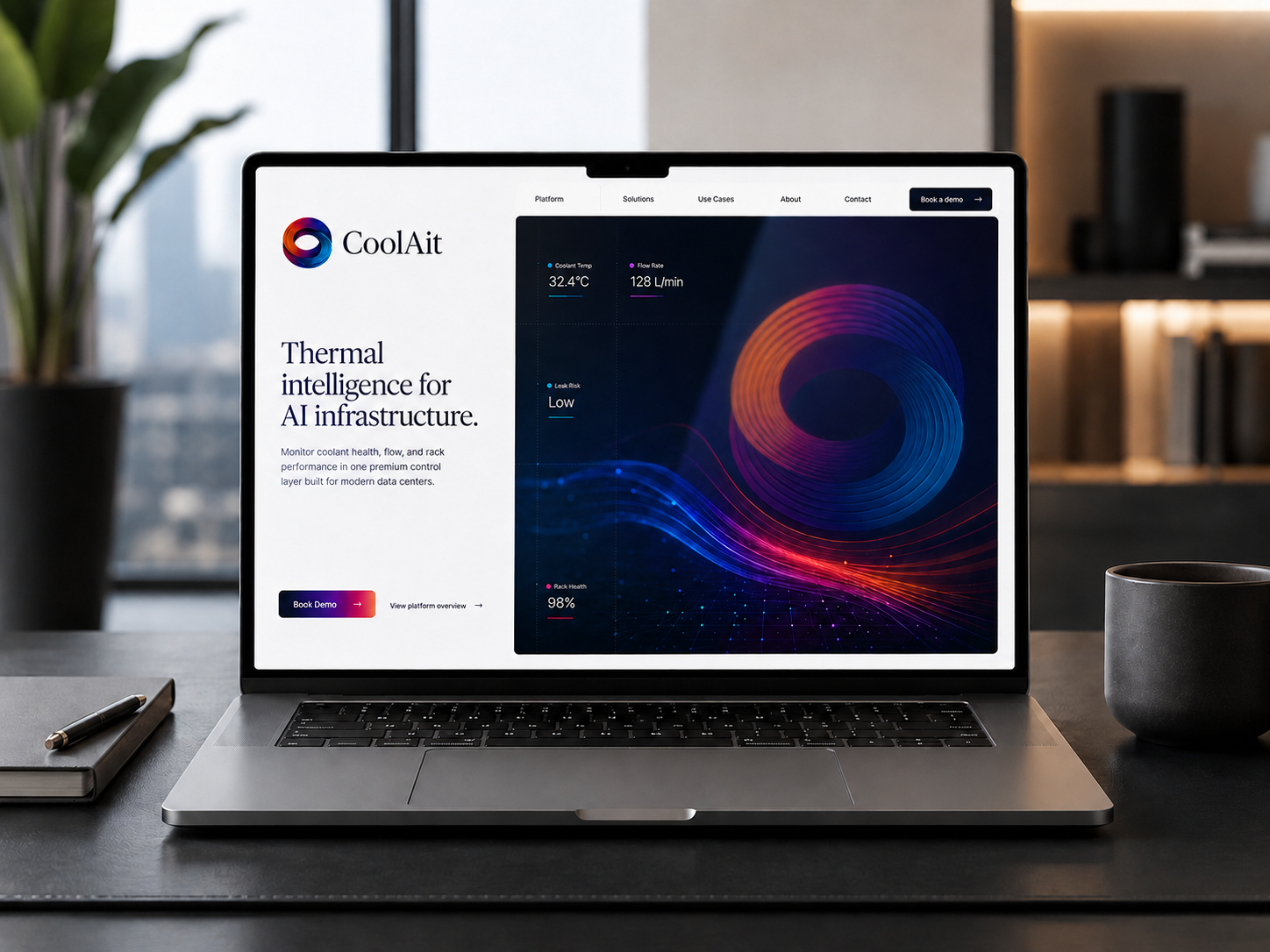
The platform direction is built around practical operational signals such as coolant temperature, flow rate, leak risk, rack health, incident severity, technician assignment, checklist-based response, and executive reporting. The goal is not to make the interface look futuristic for the sake of it; the goal is to make the product feel like it belongs in environments where clarity matters.
From SaaS Platform to Full Brand Ecosystem
The mistake many B2B technology companies make is assuming that a logo, a dark interface, and a few abstract gradients are enough to create a believable brand. In technical markets, that might be enough to look “modern,” but it is rarely enough to become memorable.
CoolAit was built as a broader ecosystem because the category itself gives the brand more room to operate.
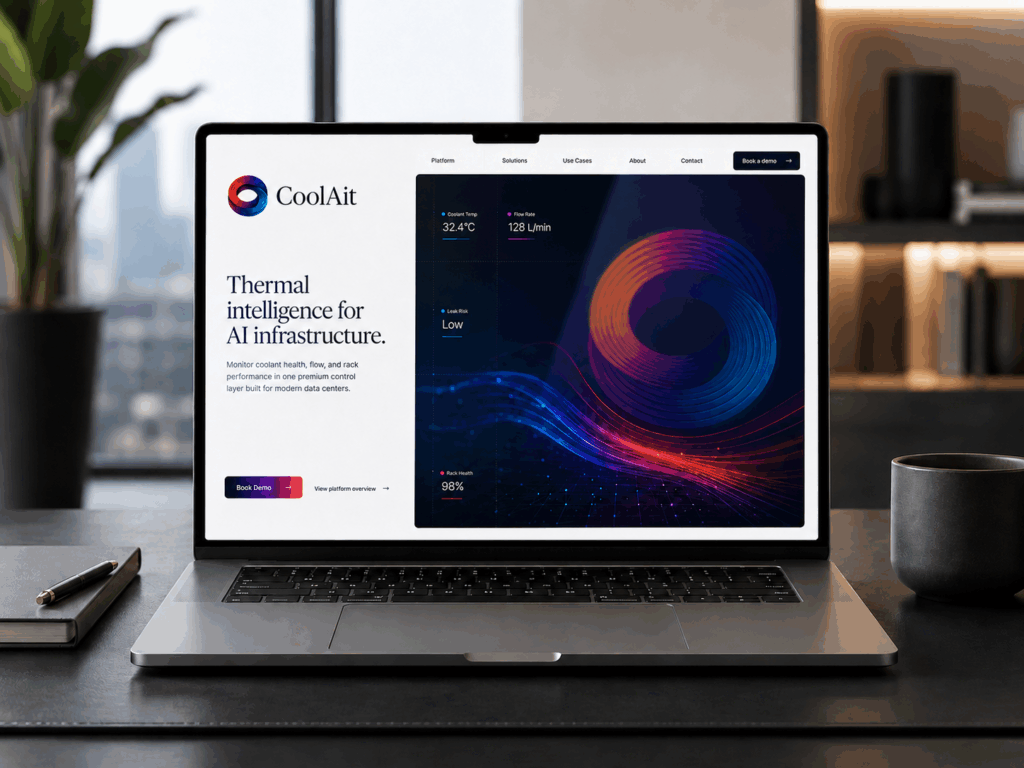
The core software platform gives CoolAit its utility. The dashboard, mobile alerts, landing page system, rack monitoring visuals, and product interface direction make the company feel technically useful and commercially grounded. These assets help explain what the platform does and how it supports cooling operations across AI data centers.
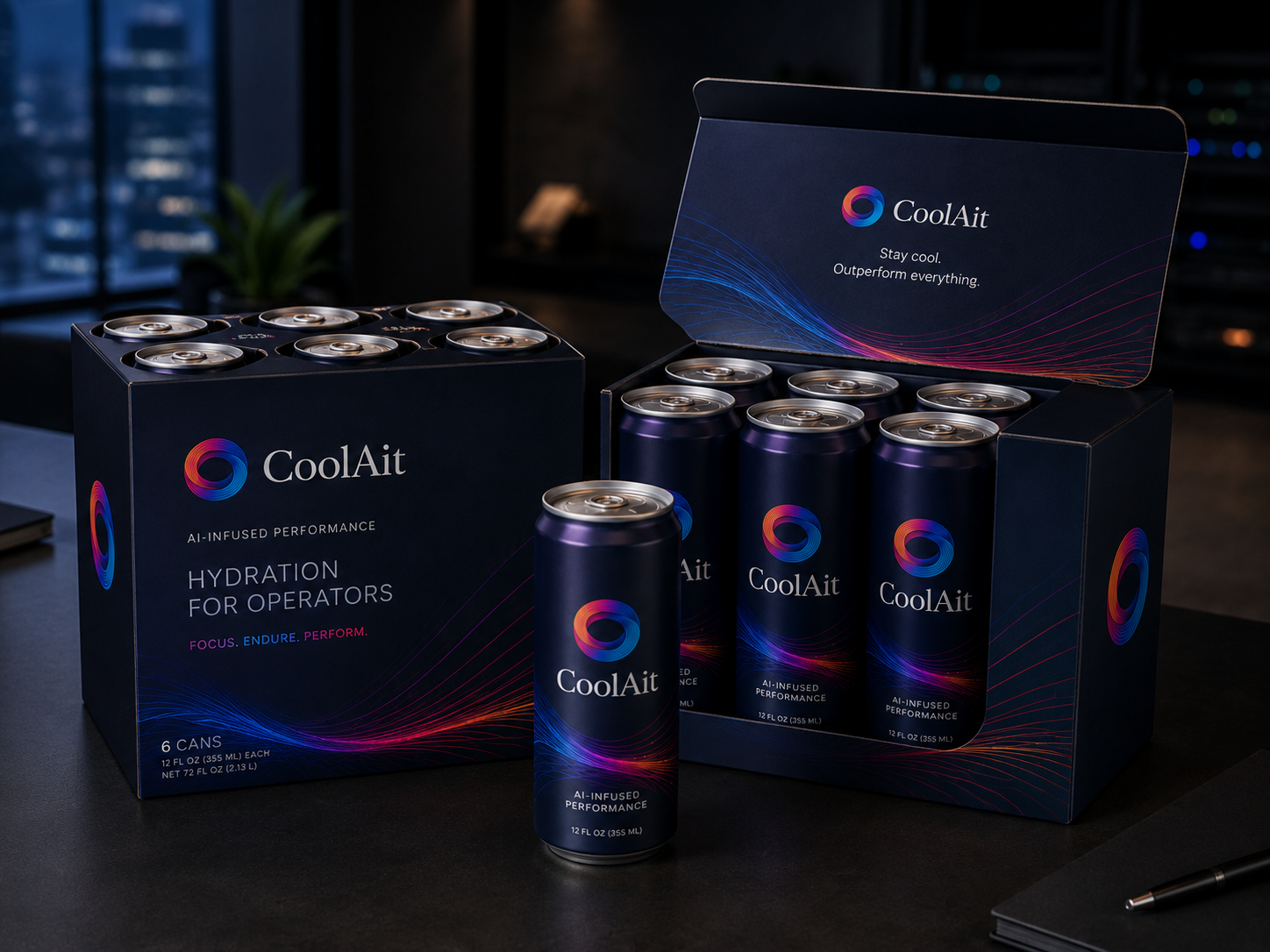
The physical brand extension gives CoolAit its memory. Hydration cans, six-pack boxes, operator cool kits, audit cards, sales leave-behinds, QR-coded thermal reports, swag, and mascot-driven campaign visuals turn the brand into something people can hold, open, scan, wear, drink, and talk about.
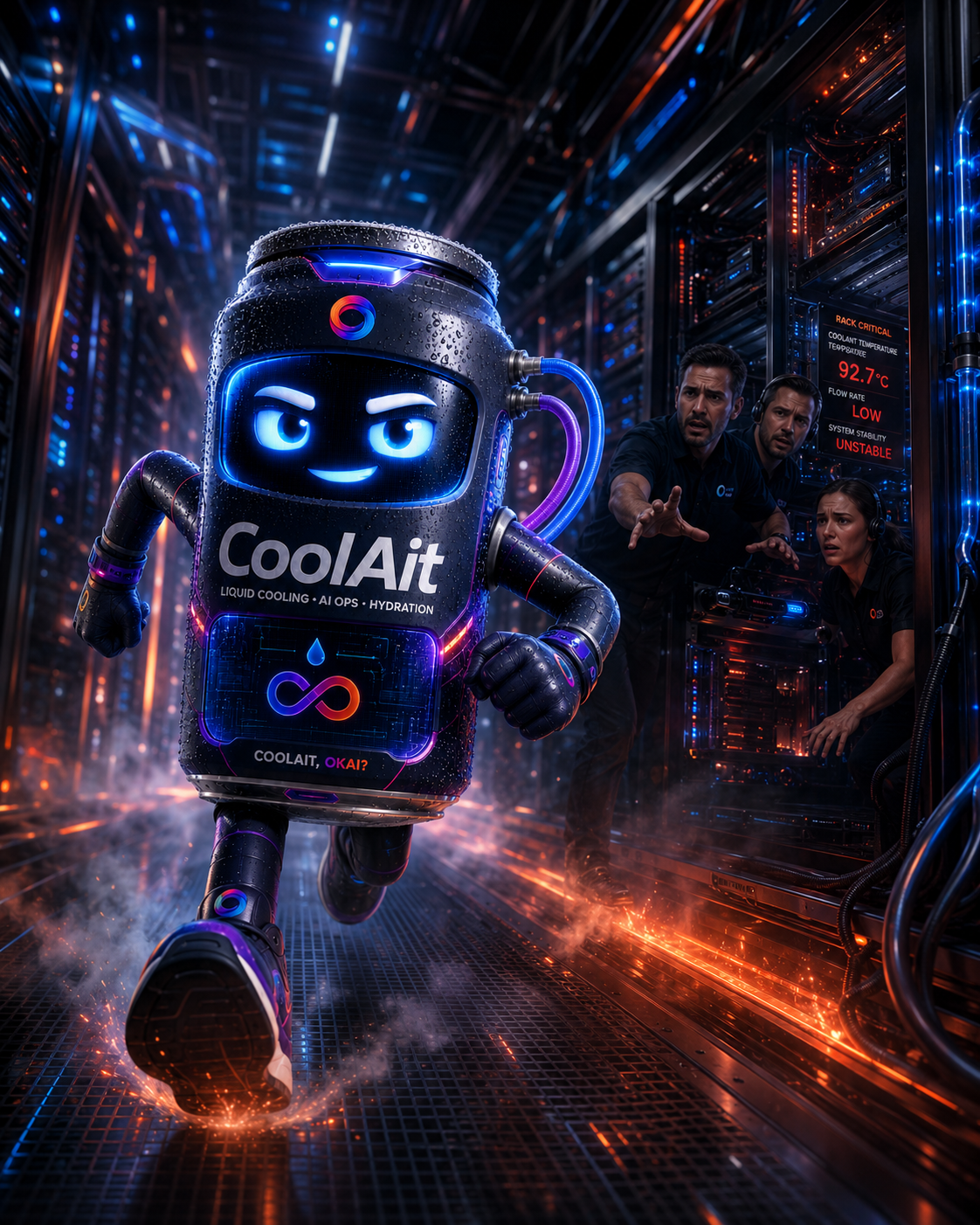
That difference is important. A dashboard can explain the product, but a physical brand touchpoint can make the company stick in someone’s mind after the meeting ends.
In B2B infrastructure, where so many companies sound nearly identical, memorability becomes a commercial advantage.
The Beverage Extension Is Not Random Merch
At first glance, an AI infrastructure brand that also sells hydration beverages sounds intentionally absurd. That is part of the hook, but it is not the whole strategy.
The beverage idea works because it is connected to the same emotional reality as the software product. AI data centers are running hot, and the operators managing them are often under pressure. The cooling system protects the machines, while the hydration system speaks to the people responsible for keeping those machines online.
That makes the beverage extension more than promotional merchandise. It becomes a relationship layer.
A CoolAit hydration can can appear inside an operator kit, on a sales table, in a trade show booth, in a field audit package, inside a client onboarding box, or as part of a campaign around data center operations. It makes the brand more human without making it less technical.
This is the kind of move more B2B brands should think about. Not every technical company needs a beverage, obviously, but every technical company needs to understand the human moment around the problem it solves.
CoolAit owns a very specific moment: the moment when systems are heating up, alerts are firing, and everyone in the room is trying to stay calm.
That is where the line comes in:
COOLAIT, OKAI?
It is deliberately a little ridiculous, but that is what gives it energy. It turns a dry technical category into something people can repeat, and repeatability is one of the most underrated ingredients in brand building.
Building a Mascot for an AI Infrastructure Brand
The latest addition to the CoolAit concept is a mascot, which gives the brand another layer of campaign potential.
Most infrastructure companies would never think to create a mascot because the category tends to reward seriousness, restraint, and technical credibility. That instinct is understandable, but it also creates a sea of brands that all look and sound like they were assembled from the same enterprise software starter pack.
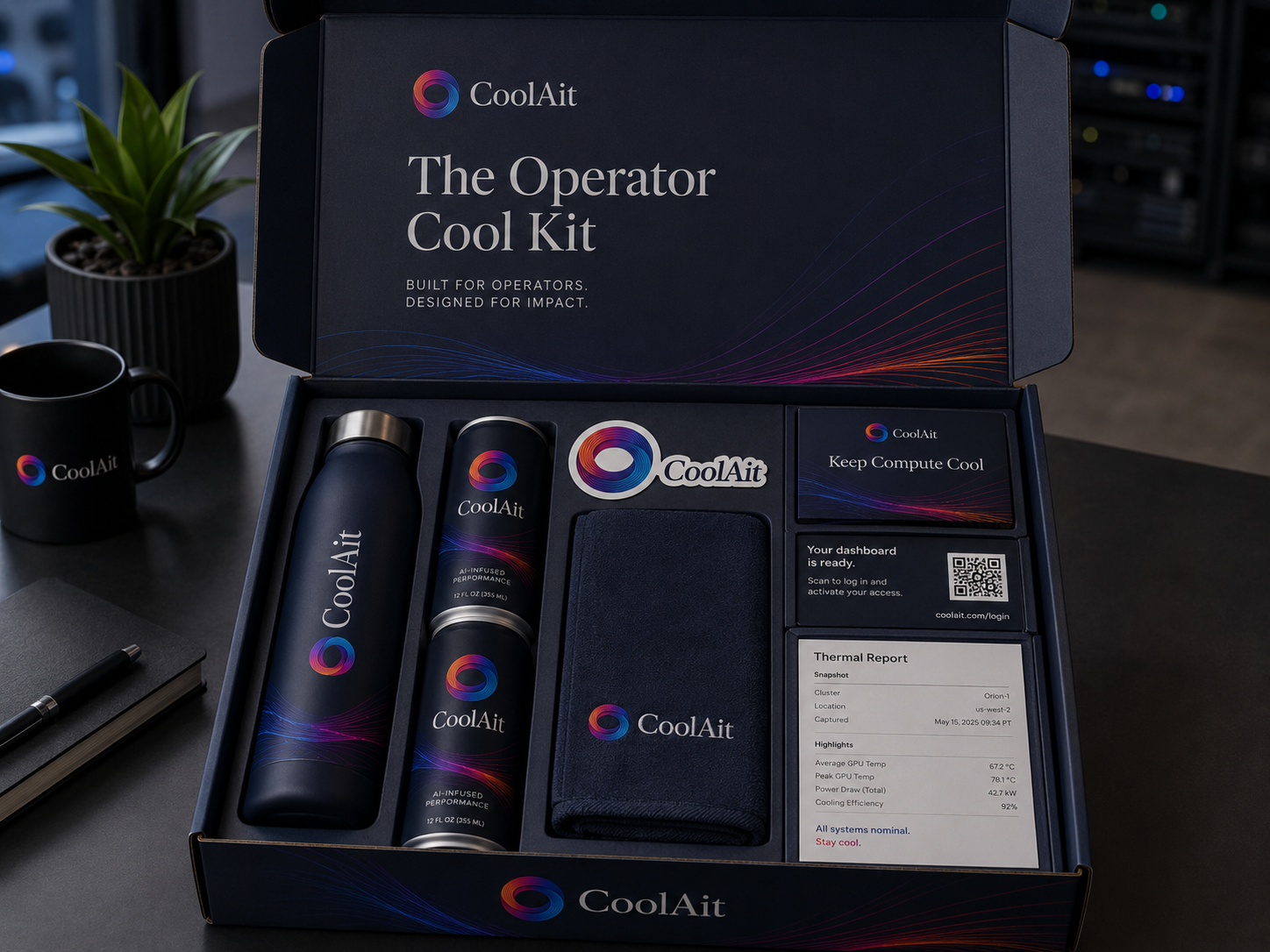
The CoolAit mascot was created to break that pattern while still staying inside the visual world of the brand. It uses the same dark navy base, electric blue, magenta, orange, and violet gradients, and futuristic product language as the rest of the identity system. The character is not meant to turn CoolAit into a children’s brand; it is meant to give the company a recognizable face that can carry campaigns, social content, beverage packaging, operator kit visuals, and animated brand stories.
One of the concept visuals shows the mascot running through overheated data racks toward a group of desperate operators. The image is dramatic, slightly chaotic, and very intentionally over-the-top. That is the point. It transforms the abstract idea of “incident response” into a scene people can understand immediately.
The mascot gives the platform personality. The beverage gives the brand physicality. The dashboard gives it credibility. The name gives it structure. Together, these elements create a brand system that feels more complete than a typical pre-built identity concept.
What the CoolAit Brand System Includes
The CoolAit system was developed as a complete AI infrastructure brand identity and commercial concept, not as a single logo direction.
It includes a premium logo and wordmark direction built around thermal flow, coolant loops, operational movement, and AI infrastructure. The visual identity uses a dark enterprise base with luminous gradients to balance technical seriousness with enough visual energy to stand out in the category.
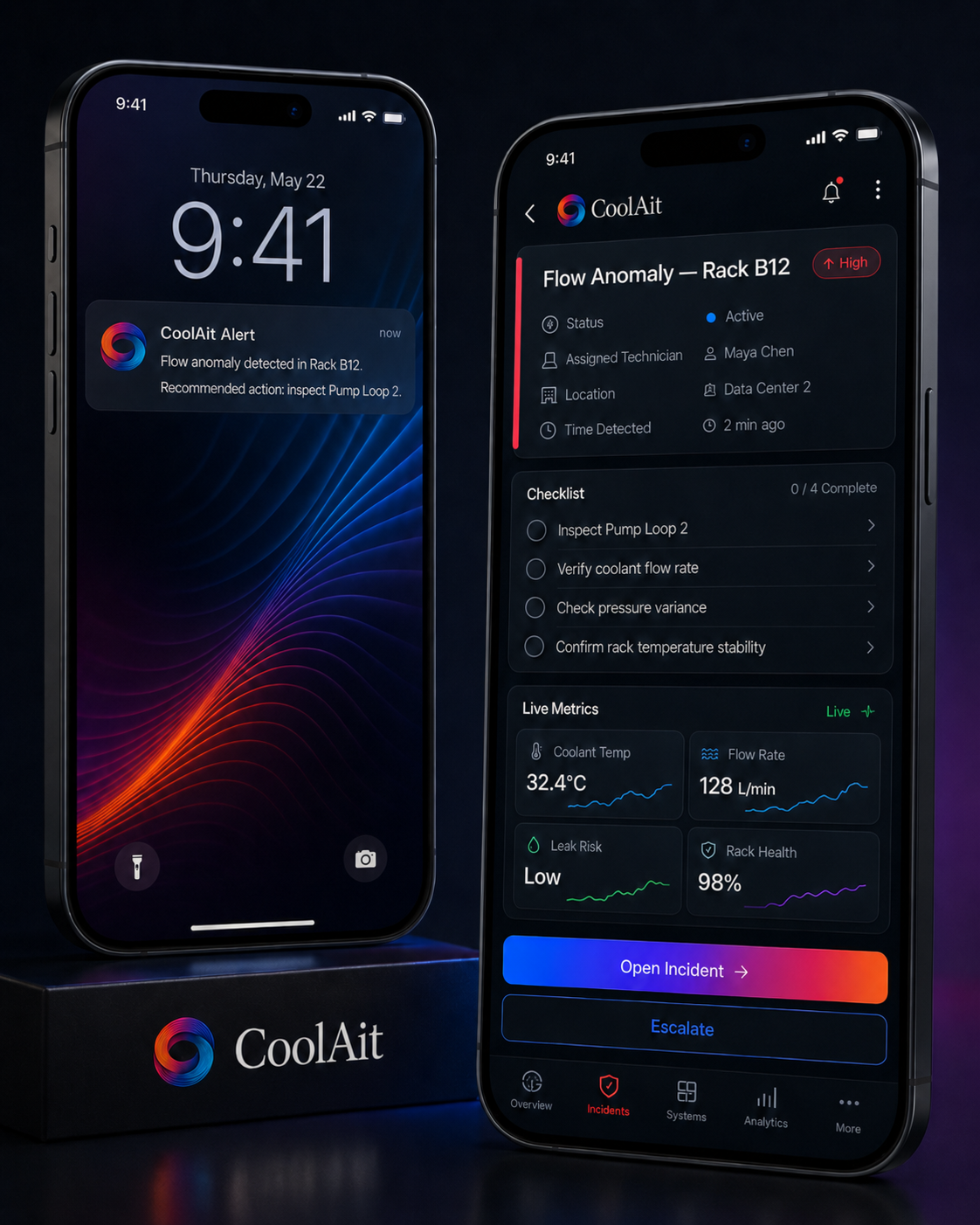
The landing page concepts position CoolAit as a liquid cooling operations platform for AI data centers, with layouts designed to explain the product clearly while making the company feel established. The dashboard and mobile UI concepts show real-time monitoring, incident alerts, coolant metrics, rack health, leak risk, and operator response workflows.
The hardware and rack monitoring mockups place the brand inside physical data center environments, which helps make the concept feel more operational and less theoretical. This is especially important for infrastructure brands because the buyer needs to believe the company understands the physical environment, not just the software layer.
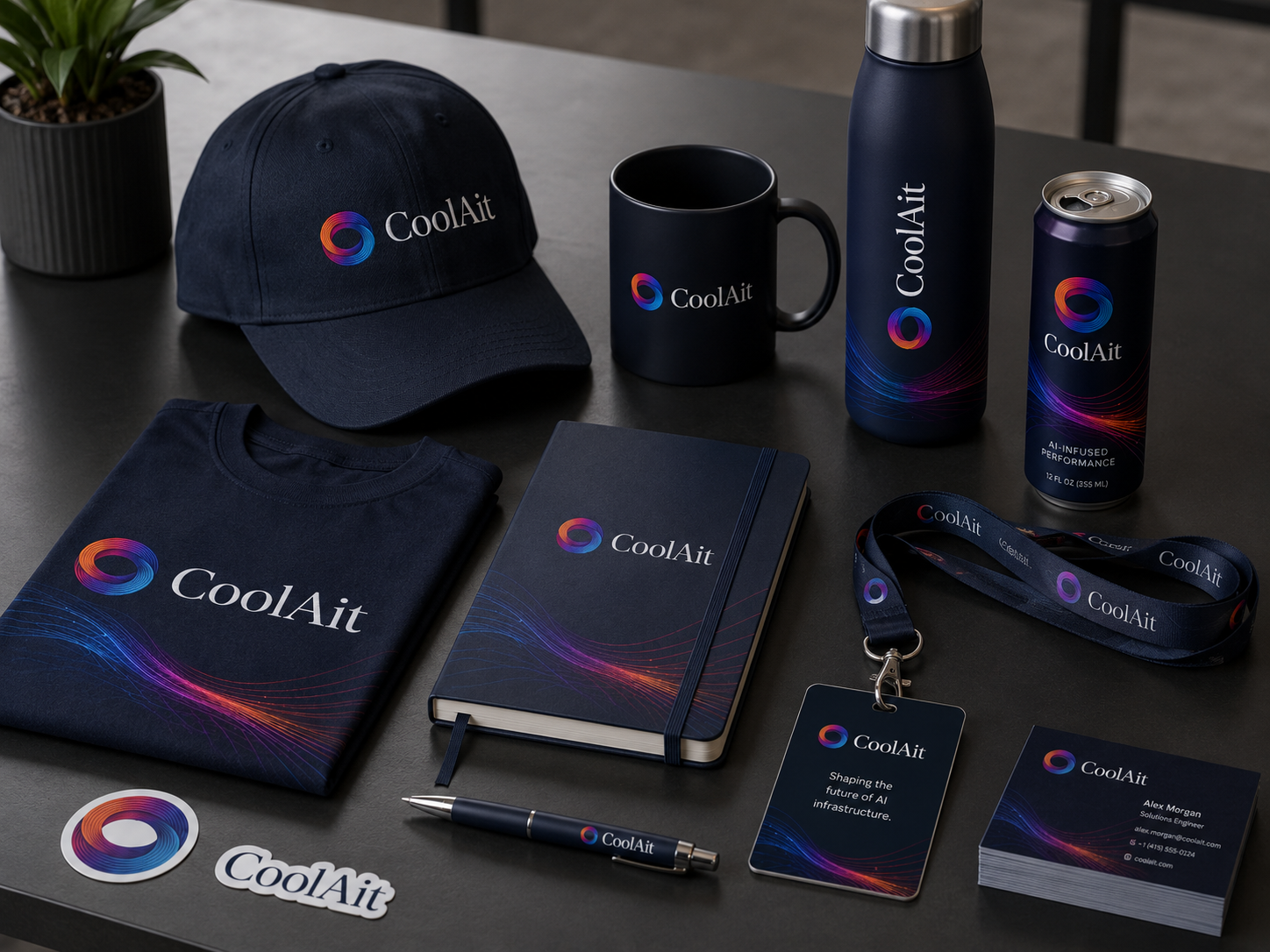
The physical brand system includes hydration cans, six-pack beverage packaging, operator cool kits, insulated bottles, business cards, audit cards, ROI calculator cards, thermal risk checklists, QR-coded reports, apparel, stickers, mugs, and field-ready swag.
Finally, the mascot gives CoolAit a campaign asset that can be used across video, social content, product launches, packaging, trade shows, and promotional materials.
Who CoolAit Is For
CoolAit is designed for founders, investors, studios, and operators interested in the AI infrastructure, data center cooling, liquid cooling operations, thermal monitoring, or infrastructure intelligence space.
It could be especially relevant for a startup building software around cooling operations, a hardware company moving into monitoring and analytics, a data center services company looking to reposition around AI infrastructure, or an investment studio exploring opportunities in high-density compute and operational resilience.
The concept is also useful as a pitch asset because it gives a future company the ability to show a complete market-facing identity before building everything from scratch. Instead of presenting a dry technical idea with a few slides and a vague product description, CoolAit makes the business feel tangible from the beginning.
That does not replace the need for real technology, real operations, or real commercial validation, of course. A strong brand cannot compensate for a weak business forever. But at the early stage, when perception influences conversations, meetings, investor interest, and buyer confidence, a fully developed brand system can create serious leverage.
Why This Kind of Pre-Built Brand Matters
The reason I build pre-built brand concepts like CoolAit is not because companies need more logos. They do not.
The real value is speed, clarity, and perception.
Most early-stage companies lose time trying to explain what they are building before they have a visual system that makes the idea feel real. They spend weeks or months moving between positioning documents, moodboards, half-developed landing pages, incomplete pitch decks, and visual directions that do not quite match the seriousness of the market.
A pre-built system changes that starting point.
It gives the founder or operator a structured identity, a clear visual direction, a commercial story, and enough mockup depth to present the idea with confidence. Instead of starting from a blank page, they start from something that already looks like it belongs in the market.
In CoolAit’s case, that matters because the category itself is complex. AI infrastructure, liquid cooling, thermal monitoring, and data center operations are not instantly simple to most people. A stronger brand system helps compress the explanation and make the opportunity easier to understand.
Available for Acquisition
The full CoolAit brand concept is available for acquisition.
The standard acquisition price is $20,000, with a current Patreon promotional price of $4,999, available on a first come, first served basis.
The acquisition includes the developed brand direction, logo and wordmark concept, visual identity system, landing page direction, dashboard and mobile UI concepts, rack monitoring mockups, beverage packaging direction, operator kit concept, sales material mockups, mascot concept, and strategic positioning foundation.
For acquisition or customization details, visit:
Final Thought
CoolAit began as a brand concept for liquid cooling operations in AI data centers, but the more the idea developed, the more it became clear that the real opportunity was not just in making another serious infrastructure brand.
The opportunity was in making a serious infrastructure brand that people could actually remember.
That is why the concept combines software, thermal intelligence, beverage packaging, operator kits, mascot design, and a campaign line into one connected system. It treats AI infrastructure as a technical category, but it also recognizes the human pressure behind it.
The servers need cooling. The operators need cooling. The brand needs to make both ideas visible.
That is CoolAit.
And when the systems heat up?
COOLAIT, OKAI?