

The Coca-Cola logo is one of those rare logo’s that doesn’t just sit on a package — it runs the room.
You can spot it on a bottle, a billboard, or the side of vending machines from across the street and your brain still goes: “Yep. That’s coca cola.”
That kind of recognition isn’t magic. It’s repetition, legality, and a mark that was built to survive reality: messy printing, tiny labels, big signage, copycats, and a category full of soda competitors (hello, Pepsi).
And the funniest part? The story of the Coca-Cola identity starts in the 1880s, in the era of patent medicine, when drinks were sold like cures and branding was basically “write something that looks official and pray.” In that world, the Coca-Cola company didn’t win by acting modern. It won by looking memorable and then defending that look like a business asset.
This is the evolution of the Coca-Cola mark — the early years (1886, 1887, 1889, 1890, 1891, 1893), the legal milestones (1892 filing, 1893 registration), and why the current design — color, script, and system — still works today.
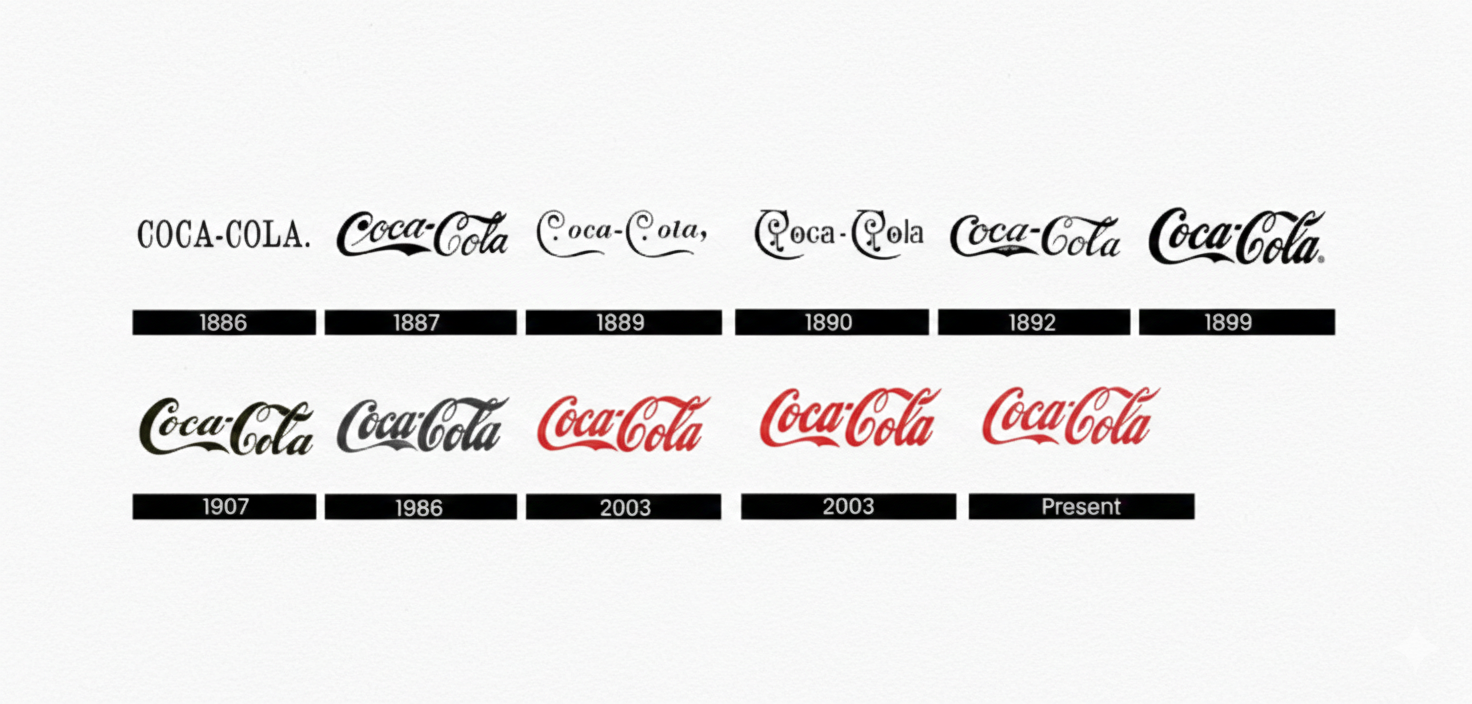
Why the Coca-Cola Brand Looked “Finished” Before Branding Was a Thing
A lot of brands treat a logo like a fashion item. New season, new vibe, new font.
Coca-Cola treated the coca-cola logo like infrastructure: pick a strong wordmark, lock it in, scale it everywhere, and protect it with trademark rights.
That’s why the evolution of the Coca-Cola logo is mostly refinement, not reinvention. The mark didn’t become iconic because it changed. It became iconic because it didn’t.
Related read: If you want the same ‘built-to-last’ approach for your own brand identity development, start here: Brand Identity Development: Crafting a Unique and Memorable Brand.
Coca-Cola: The Origin Before the Logo (1885–1886)
Before it was a global beverage, it was closer to a pharmacist’s experiment.
In 1885, John Pemberton created Pemberton’s French Wine Coca, influenced by Vin Mariani — the coca wine trend of the time. This world included coca-leaf ingredients (including the notorious historical detail: cocaine from the coca leaves) and stimulant-era formulations.
Add kola nuts (a source of caffeine) and you get the early product logic that eventually becomes Coca-Cola.
Then 1886 arrives — and pressure from prohibition and early prohibition laws helps push the drink toward the non-alcoholic direction that can scale widely.
Now branding matters. Because now it’s not just a tonic. It’s a product that must compete.
Coca-Cola Logo: 1886 — The First Mark and the First Problem
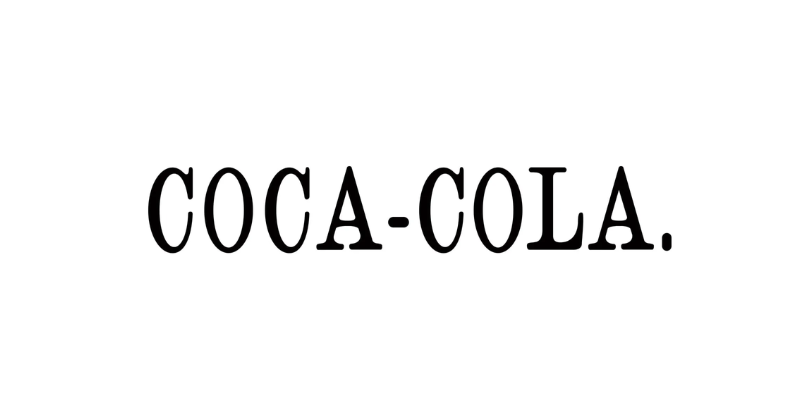
1886
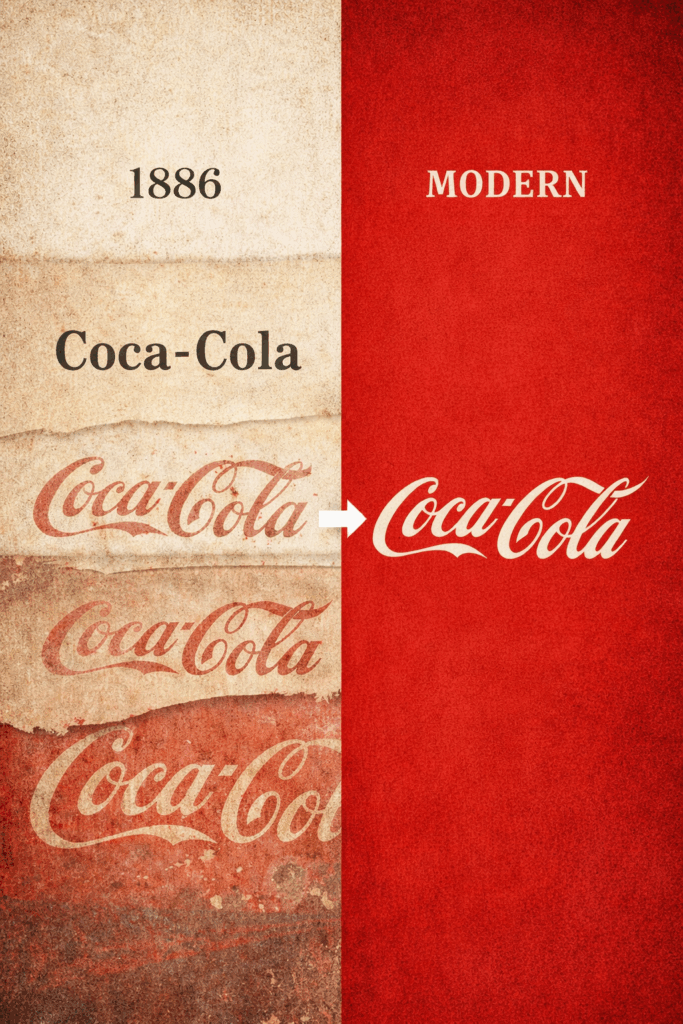
The early coca-cola logo is often shown as a simple typographic treatment — a straightforward mark used while the brand was still forming.
Think of this as Coca-Cola’s “version 0.9.” It’s a logo, but not yet the one that prints into culture.
Coca-Cola Logo: 1887 — Robinson, Spencerian Script, and the Coca-Cola Script
1887
This is the turning point.
Frank Mason Robinson — the bookkeeper/partner figure tied to the name Coca-Cola — is credited with pushing the signature Spencerian / Spencerian script approach that becomes the classic coca-cola script.
Why that matters:
- Spencerian script was a widely used formal writing style in the U.S. in that era.
- It created a distinctive visual identity when most patent medicine brands looked generic.
- It made the coca-cola name feel like a signature, not a label.
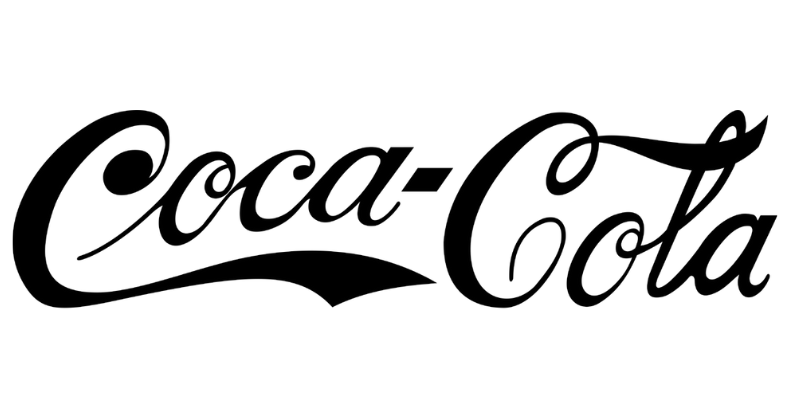
This is where “Coca-Cola” stops being text and becomes a wordmark with personality.
More info: For the deeper breakdown on why typography choices (and perception) matter this much, read Typography and Color Psychology: How Design Impacts Your Brand Perception
Coca: The Early Variations Before Standardization
1889
In 1889, the mark appears in variant forms in advertising and usage — a normal reality before strict brand standards. The core insight is that the brand was still converging on the look that would scale best.
1890
In 1890, there’s a famously decorative detour — more ornamental, more “look at me,” almost Art Nouveau in vibe. It didn’t last.
From a BBDirector lens: the 1890 moment is the brand learning (fast) that decoration doesn’t equal recognition. Clean reproduction wins.
1891
By 1891, the identity pulls back toward the script direction that stabilizes through the 1890s.
Coca Cola: 1892–1900 — Trademark, Patent Office, and the Logo Becomes Property
1892
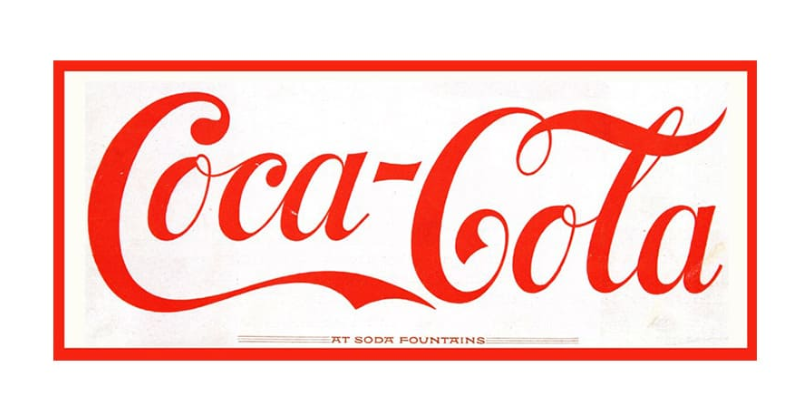
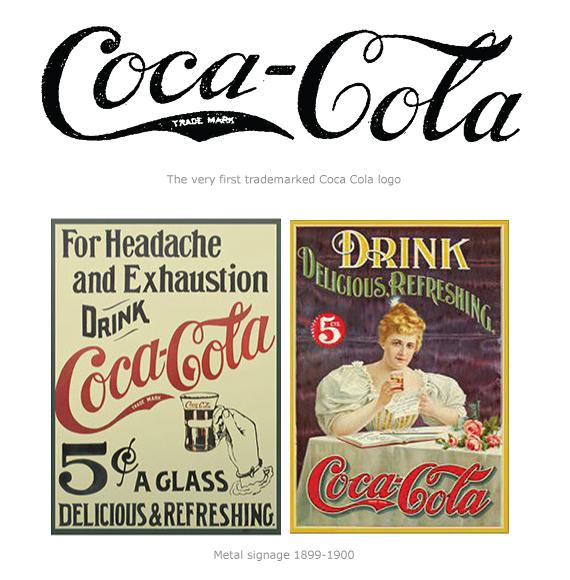
A huge, overlooked step in the evolution of the Coca-Cola logo: the trademark application. Sources note a trademark application filed with the U.S. patent office in 1892 (May 14 is commonly cited).
This is where the company stops treating the mark as “art” and starts treating it as a protected asset.
1893
Then 1893 is the legal lock-in: the trademark “Coca-Cola,” used since 1886, was registered in the United States Patent Office on January 31, 1893.
Some versions even display “trademark” near the script — basically the brand saying: hands off.
This is how trademark rights turn a logo into leverage.
Coca-Cola’s Distribution Reality: Syrup, Signage, and the Need for Consistency
Coca-Cola didn’t scale like a boutique product. It scaled like a system.
Coca-Cola syrup distribution meant the mark had to reproduce across:
- storefront signage
- printed ads
- packaging
- partner materials
- machines and retail environments
If your identity can’t survive that, it fractures. That’s why Coca-Cola’s script wasn’t just pretty — it was practical.
Also: in a market full of black cherry-style claims, tonics, and loud competitor messaging, a consistent script becomes a trust signal.
Bottle and Contour: When the Logo Gets a Physical Body
A logo can be copied. A shape is harder to fake.
Coca-Cola’s iconic contour bottle is tied to a patent granted on November 16, 1915 (Root Glass Company, under the name of designer Earl R. Dean / Samuelsson patent filing context is often discussed).
Now you get a two-part identity system:
- the coca-cola logo (the script)
- the bottle (the contour)
That pairing becomes one of the strongest brand recognition engines ever built.
1914, 1919, 1923: When Coca-Cola Becomes the Flagship Soft Drink Brand
The early 20th century is where the identity stops being “a known soda” and becomes flagship.
By 1914, Coca-Cola is operating at a scale where packaging, bottling, and brand consistency become non-negotiable (and the bottle/contour direction is on the horizon).
By 1919, the brand system is mature enough that the identity travels — same script, same recognition, same asset discipline.
By 1923, the Spencerian-era logic is effectively “locked” into the culture; the mark is no longer a design choice — it’s the best-known visual shorthand for a soft drink.
(Those dates matter less as “redesign years” and more as “scale years.” The identity isn’t changing — the world around it is.)
Raymond Loewy and the Mid-Century Refinement Layer
Coca-Cola didn’t need a new logo to feel modern. It updated the experience layer.
Raymond Loewy is associated with Coca-Cola design work including vending machines and a 1950s refinement of the contour bottle presentation (notably, updating embossing/lettering approaches and product experience cues).
That’s the mature-brand move:
Keep the core mark. Modernize the ecosystem.
Coca-Cola Logo Today: Current Color, Design, and Why It Still Works
The modern Coca-Cola identity is a masterclass in “simple, owned, and instantly readable.”
Color
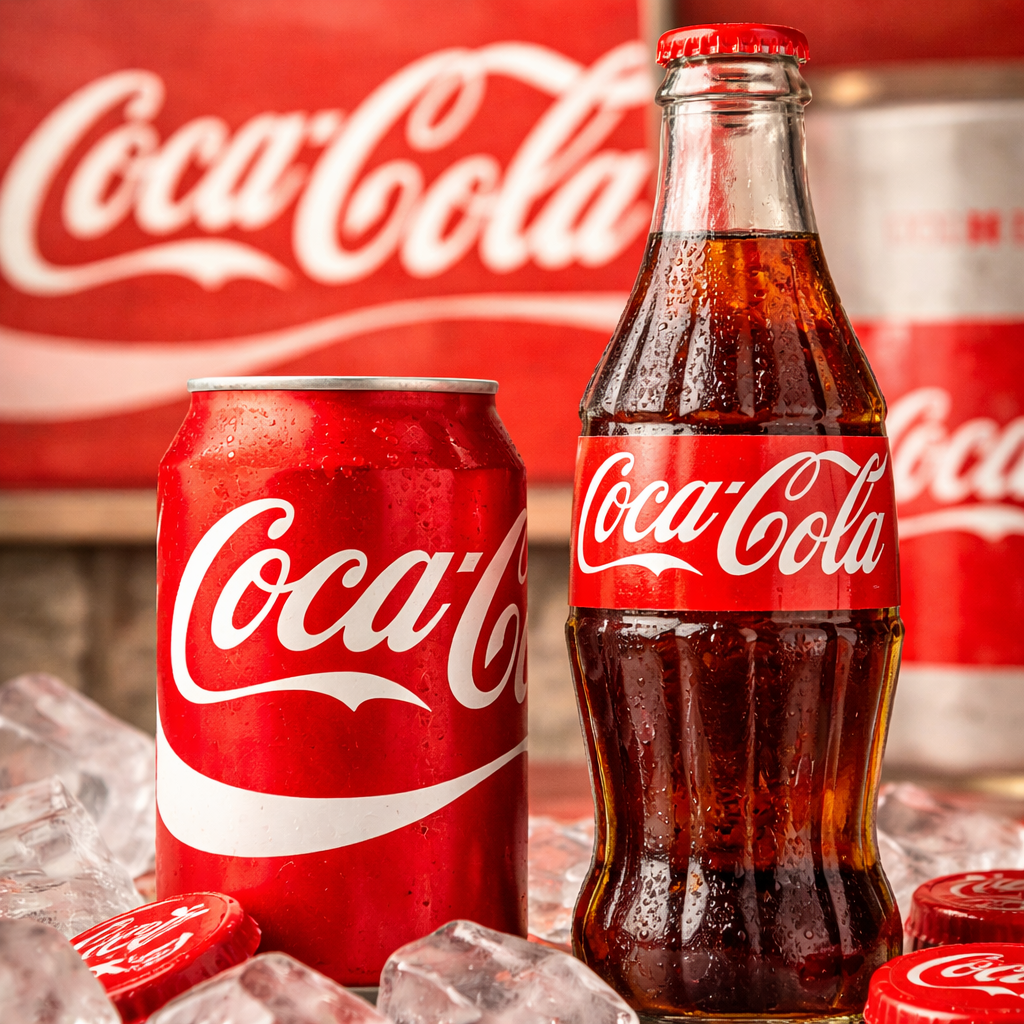
That saturated Coca-Cola red isn’t decoration — it’s a recognition shortcut. Red + white script creates maximum contrast at distance, on shelves, and in motion.
Wordmark and Lettering
The coca-cola script remains the anchor. Even when the brand uses “coke” or sub-brands like diet coke, the master identity stays legible and emotionally familiar.
System, Not Just a Logo
Coca-Cola’s current design is a system of:
- the script wordmark
- the red field
- packaging layout conventions
- bottle silhouette cues
- omnipresent placement consistency
In a world of geometric minimal logos that blur together, the Coca-Cola script stands apart because it’s not trying to be neutral. It’s trying to be recognized.