

Importance of a Strong Logo in Enterprise Branding
In 2026, a logo is one of the most strategically leveraged brand assets inside enterprise organizations. It is not a decorative stamp. It is not a cool logo for marketing campaigns. It is infrastructure.
For large brands, the brand logo becomes the anchor for everything:
- Investor perception
- Market trust
- Internal alignment
- Global recognition
- Product ecosystem coherence
When we talk about logo design trends for 2026, most discussions focus on aesthetics. But enterprise branding operates differently. For large brands, a logo must do three things consistently:
- Establish authority
- Maintain recognition across decades
- Adapt without losing brand equity
That is why the most effective enterprise logo design in 2026 prioritizes clarity, restraint and scalability over novelty.
Logo Ideas and Brand Strategy in Enterprise Environments
In startup environments, logo ideas often lean playful or experimental. In enterprise environments, logo ideas must align with brand strategy at scale.
A corporate logo in 2026 must function:
- Across global markets
- Across digital and physical platforms
- Across subsidiaries and product lines
- Across time
The adidas logo is a strong example of evolution without losing brand equity. It adapted forms over time while preserving recognizability. That is enterprise-level brand discipline.
A static logo that does not adapt to digital ecosystems will fail. But constant reinvention destroys recognition. The balance is strategic evolution.
This is where professional design differs from surface-level execution.
Enterprise logo design requires:
- Structured brand audits
- Competitive landscape analysis
- Long-term scalability planning
- Governance documentation
A large organization cannot simply “create a logo.” It must design effectively for global longevity.
2026 Logo Design Trends for Enterprise Brands
Among the key logo design trends shaping 2026:
- Minimalist design for clarity
- Typography-led brand logos
- Modular systems that function across brand touchpoints
- Motion-ready systems
- AI-supported exploration (without relying fully on AI logo generators)
Large brands are not chasing trends. They are applying 2026 logo design trends selectively to reinforce a clear brand stand.
A well-designed logo in 2026 must:
- Be adaptable across brand environments
- Maintain a consistent brand identity
- Work across digital dashboards and legacy print
- Preserve recognition without losing brand equity
That is why minimalist design continues to dominate enterprise branding. It scales. It survives. It performs.
Why a Strong Logo Matters More in 2026 Than Ever
In a digital-first world dominated by AI-generated visuals, differentiation matters more than ever.
A strong enterprise logo:
- Signals credibility instantly
- Reduces friction in trust-building
- Reinforces brand stand
- Strengthens recall across competitive markets
Logo design trends in 2026 reflect this reality. Design trends for 2026 are not about being louder. They are about being clearer.
Because when markets are noisy, clarity wins.
The logo is the face of a brand.
And in enterprise branding, that face must remain consistent, confident and recognizable — across decades.
Below are five corporate logo design examples and services that reflect the key logo design trends for 2026, showing how strategic logo design builds long-term brand recognition and helps large brands stand out without losing brand clarity.
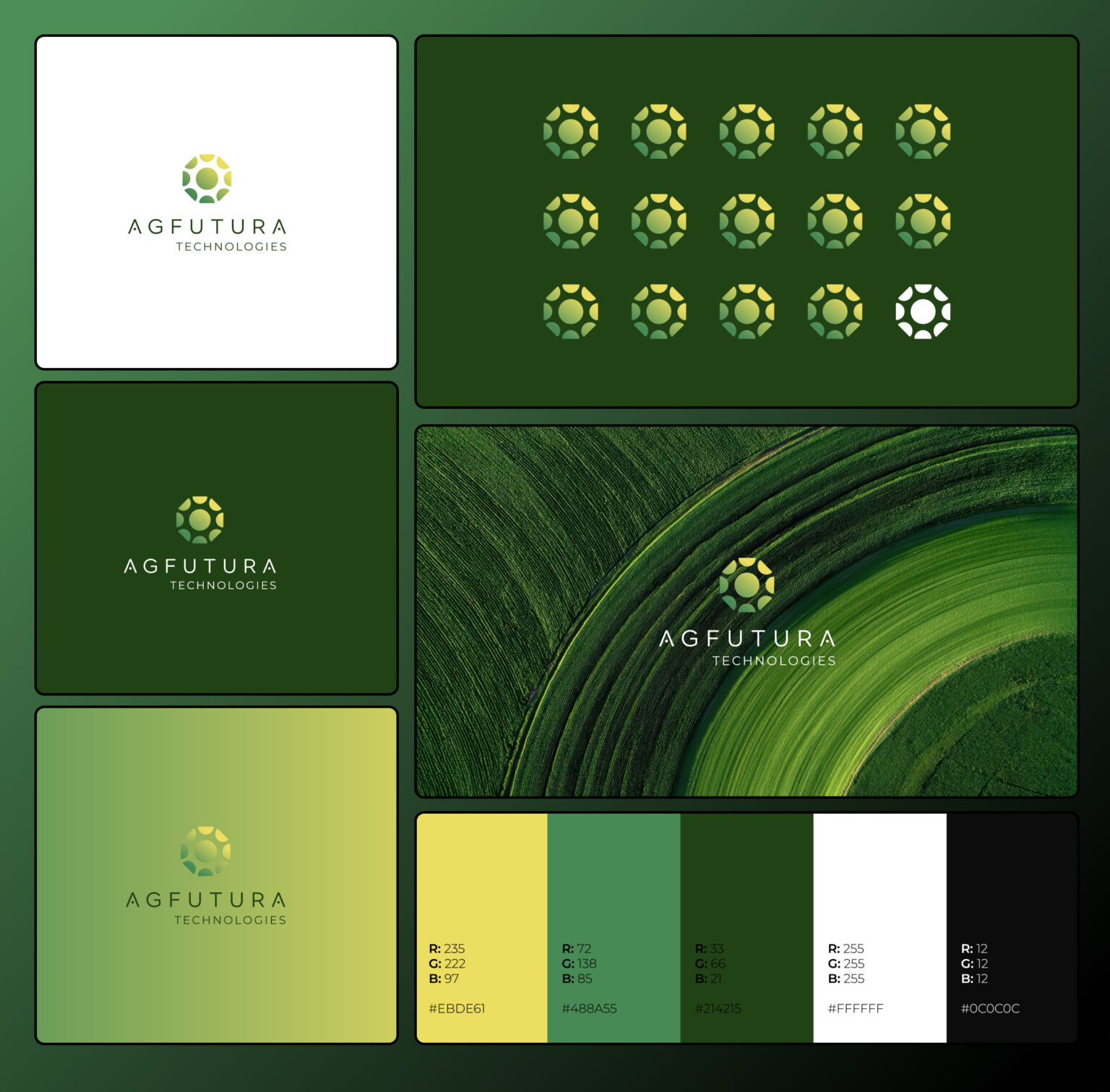
1. Simple & Memorable Corporate Logo Design (The Core of 2026 Logo Design Trends)
One of the most consistent logo design trends for 2026 is strategic reduction.
Superside’s corporate logo examples reinforce that clarity outperforms complexity. Brands that scale globally tend to:
- Use limited color palettes
- Lean on clean typography
- Avoid ornamental design elements
- Prioritize legibility across platforms
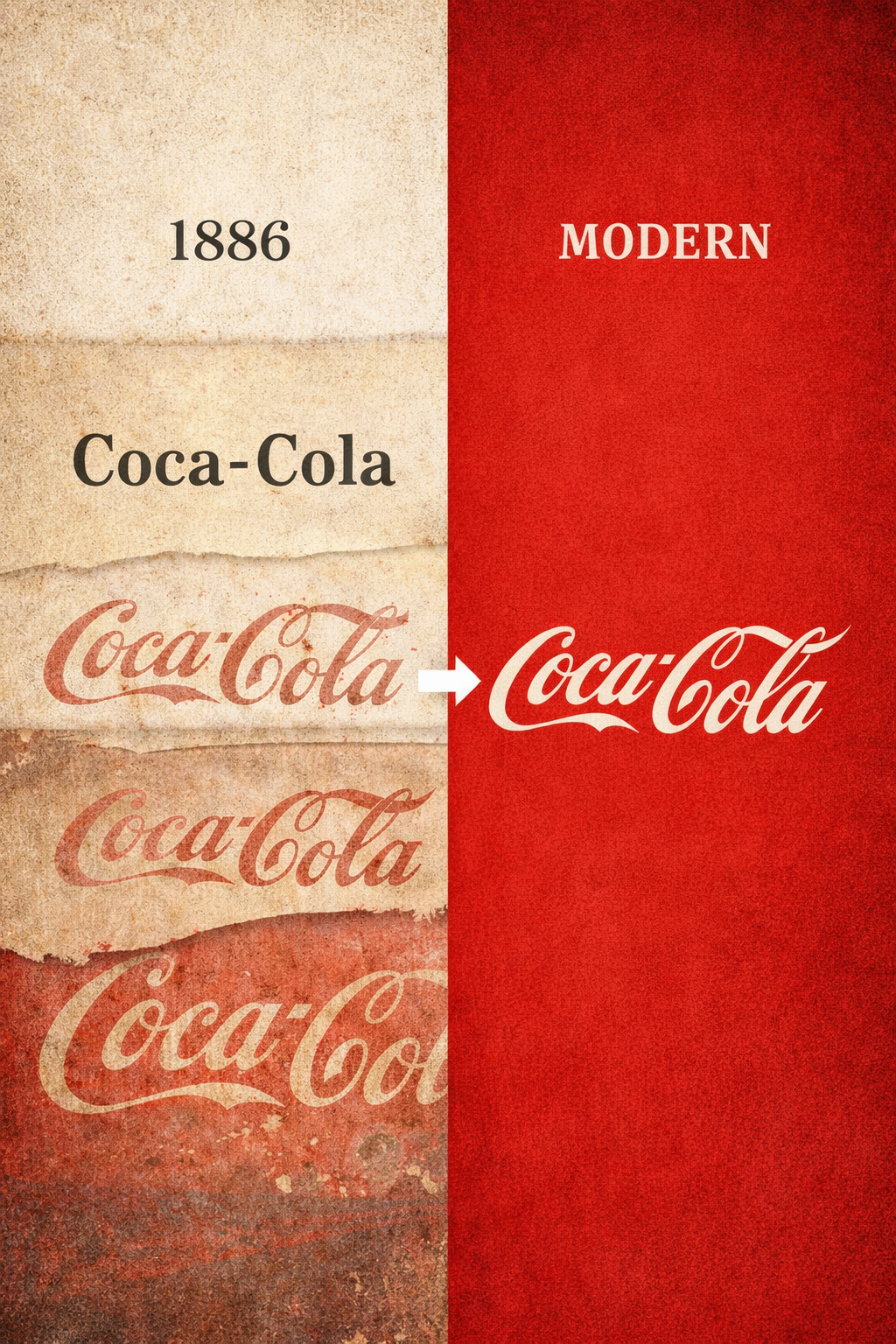
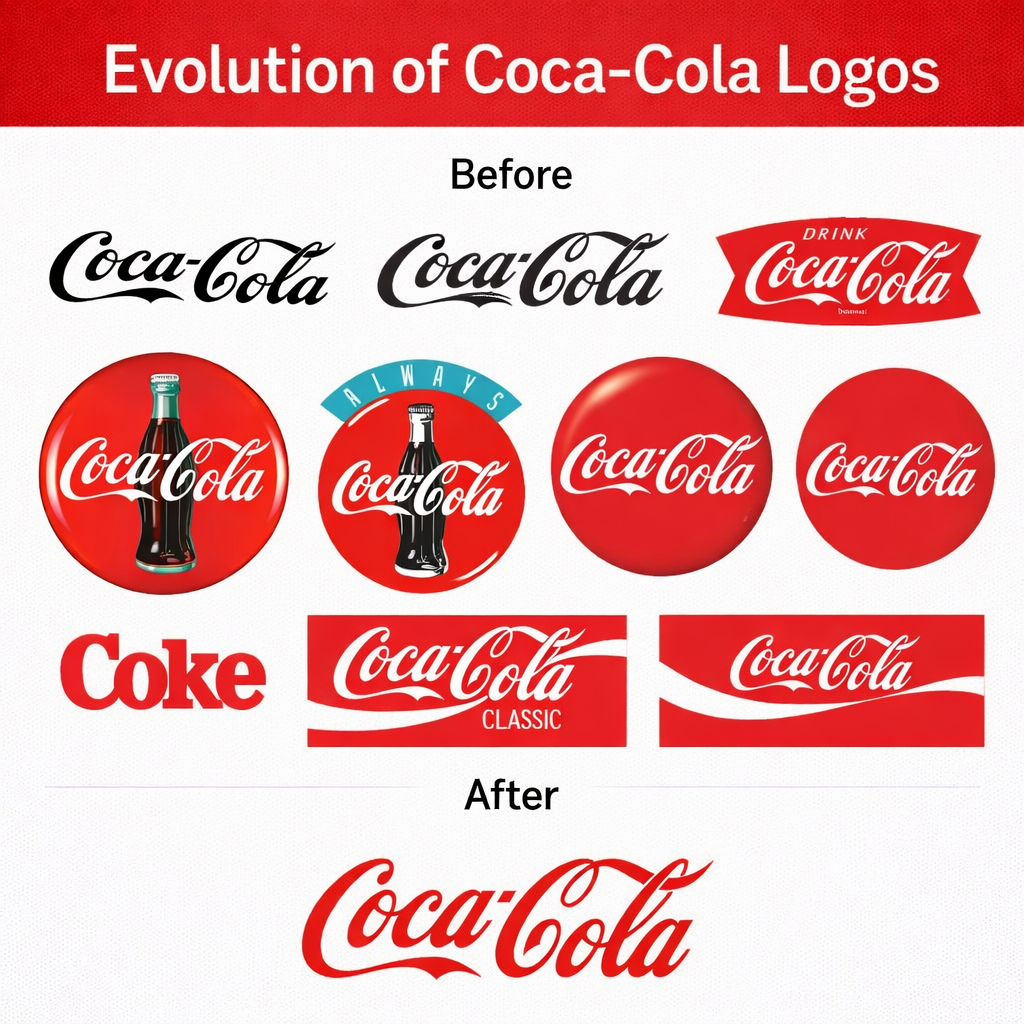
Look at Coca-Cola. The logo is over a century old. It hasn’t survived because it’s trendy — it survived because it’s distinctive and memorable.
Now compare that with overdesigned startup logos filled with gradients, shadows, and micro-details. Those don’t scale. They collapse in real-world use.
In logo design in 2026, your mark must function in:
- Website headers
- App icons
- Social profile thumbnails
- Investor pitch decks
- Packaging and print
- UI design systems
Minimalism is not aesthetic preference. It’s operational efficiency.
Practical Audit Framework (2026 Edition)
Ask:
- Does the logo survive grayscale conversion?
- Is it recognizable at 24px?
- Can it be embroidered without losing detail?
- Does it animate cleanly in motion design?
If not, simplify.
This is where strong brand strategy intersects with logo execution. At BBDirector, logo design is not approached as isolated graphic design. It is tested inside:
- Presentation systems
- Website wireframes
- Investor materials
- Digital advertising mockups
Because a logo that looks good in Illustrator but fails in a sales deck is not a strong logo.
2. Aligning Logo Design With Brand Identity (Design That Reflects Positioning)
Another dominant theme in logo design trends for 2026 is alignment.
Superside emphasizes that the best corporate logo design examples don’t exist in isolation — they reflect brand identity clearly.
A strong corporate logo should communicate:
- Authority or accessibility
- Innovation or heritage
- Stability or disruption
- Enterprise-grade trust or creative flexibility
Consider:
- Apple — minimal, premium, controlled
- Nike — dynamic, movement-oriented
- Traditional finance brands — structured, conservative typography
A logo that reflects nothing but “current logo trends” will age quickly.
A logo grounded in brand positioning will compound over time.
Alignment Diagnostic
Before designing a logo, serious design companies ask:
- What market are we entering?
- Who are we competing against?
- What emotional trigger matters most?
- What archetype defines this brand?
This is where BBDirector differentiates from surface-level logo design companies. Instead of starting with aesthetics, logo design begins with:
- Strategic brand workshops
- Archetype definition
- Category mapping
- Investor perception analysis (for B2B and capital-heavy brands)
Superside delivers scalable creative support.
BBDirector integrates logo development into full strategic brand architecture, especially for SaaS, fintech, enterprise and institutional brands.
Because in 2026, logo design is no longer about style — it’s about signaling competence instantly.
For a deeper look at how logos, typography, colors, and visual systems come together into a unified brand, see our guide on Building Visual Identities That Scale
3. Choosing the Right Corporate Logo Type (Wordmark, Symbol, or Combination?)
Superside’s breakdown of logo types aligns with one of the biggest 2026 logo design trends: clarity through structure.
Common types include:
- Wordmark
- Lettermark
- Pictorial mark
- Abstract mark
- Combination mark
In logo design in 2026, wordmarks are increasingly popular because they reinforce brand recognition immediately.
If your company name is strong, distinctive, and pronounceable, a wordmark may outperform a symbol.
When to Choose Each Type
Wordmark
- Strong name
- Early-stage brand
- B2B focus
- Enterprise positioning
Symbol
- High brand equity
- Strong recognition already established
Combination mark
- Transitional brands
- Digital-first companies
- App-heavy ecosystems
Nike’s swoosh works because decades of investment built recognition. Most companies don’t have that luxury.
Professional logo design companies guide this decision early.
BBDirector treats logo type selection as a strategic positioning decision tied directly to growth trajectory and recognition goals.
A logo type chosen purely on aesthetic trend will force redesign later.
In 2026 logo design trends, discipline beats novelty.
To understand how font choices and color palettes influence perception, brand trust, and recognition, explore our guide on Typography and Color Psychology in Branding
4. What Corporate Logo Design Services Actually Include in 2026
Superside makes a critical point: modern companies do not buy “just a logo.”
They buy:
- Brand positioning
- Visual identity systems
- Typography frameworks
- Color palette architecture
- Usage guidelines
- Motion-ready adaptations
In 2026, logo design services typically include:
- Responsive logo systems
- Dark-mode variants
- Favicon versions
- Social media optimization
- UI-ready assets
- Brand governance documentation
Because logos live inside ecosystems.
Top design companies understand that:
- Design influences perception
- Perception influences trust
- Trust influences revenue
According to McKinsey’s Design Index, companies integrating design into strategy significantly outperform peers in revenue growth and shareholder return.
Design is no longer decorative. It’s competitive advantage.
Superside offers scalable creative subscriptions ideal for high-output marketing teams.
BBDirector offers strategic brand identity development tailored to high-stakes industries — where logo design must align with investor materials, capital raises, and institutional credibility.
That distinction matters.
If a logo company only offers “quick turnaround,” you are buying execution — not strategy.
5. When to Redesign Your Corporate Logo (Strategic Evolution, Not Trend-Chasing)
Superside outlines common triggers for redesign:
- Market expansion
- Strategic repositioning
- Digital transformation
- Mergers and acquisitions
- Simplification needs
Notice what is not listed: “We’re bored.”
The logo trends of 2026 show simplification across industries. Brands are:
- Flattening designs
- Removing gradients
- Tightening typography
- Enhancing digital adaptability
But redesign must follow strategy.
Redesign Checklist
Redesign if:
- Your logo no longer reflects positioning
- It performs poorly across platforms
- Recognition is weak
- You’re entering new markets
Do not redesign because a competitor changed theirs.
Superside emphasizes structured redesign workflows.
BBDirector integrates redesign into full rebrand strategy frameworks, ensuring identity changes support narrative shifts, investor confidence, and market expansion.
A corporate logo redesign is surgery.
Do it deliberately.
If you’re considering a logo refresh or full identity shift, use our Rebranding Strategy Guide to plan the change without losing brand recognition