
How Much Does a Logo Design Cost in 2026? Pricing Tiers and What a Logo Actually Buys

Brand strategist, ex advertising. 14 years experience building and pitching brands across critical industries. White belt in BJJ & Fly fishing.

Proudly serving clients in critical industries across the US

Rebel Sys black
OXOS LOGO black
FirstVitals black
Gator black
Detail PlaceMakers black

The question “how much does logo design cost” is usually asked too early—and answered too loosely.

In 2026, logo design pricing ranges from effectively zero to six figures. That range exists not because designers can’t agree on a price, but because the word logo is doing far too much work. Sometimes it means a simple logo image created by an online logo maker. Other times it means a governed logo design system that must survive legal review, procurement, scaling, and years of reuse.

A logo typically gets attention at the wrong moment:

  • when an organization is under review,
  • when something expands and the logo no longer fits, or
  • when inconsistency becomes visible across documents, products, or systems.

This article examines logo design cost in 2026, logo pricing tiers, factors influencing logo design pricing, and why the cost of a logo depends less on style and more on risk, scope, and usage reality.

What Drives the Logo Cost?

Across industries, logo cost is driven by three variables. Their weight, however, changes by sector.

  • Decision density
    • Tech: product, marketing, founders
    • Finance: executives, compliance, legal, boards
    • Consumer: brand and marketing leadership
    • Regulated: procurement, legal, auditors, external bodies
  • Usage breadth
    • Tech: product UI, app icons, decks, partner integrations
    • Finance: documentation, portals, reports, signage
    • Consumer: packaging, retail, advertising, social
    • Regulated: forms, labels, manuals, signage, systems
  • Failure tolerance
    • Tech: medium
    • Consumer: relatively high
    • Finance / regulated: extremely low

As tolerance drops, pricing rises—not for style, but for certainty.

Logo Pricing Tiers in 2026

Pricing tiers are best understood as risk bands, not quality rankings. Each tier has a legitimate role—and predictable limitations.

Free – $0 to $20: Entry-Level Tools

This tier exists for speed and experimentation. It is useful when the logo is provisional, internal, or expected to change.

The limitation is not visual quality. It is durability. These outputs rarely arrive with the rules, variants, or file discipline needed once the logo starts circulating beyond its original context.

$20 – $100: Template-Based Platforms

Here, you’re paying for convenience and marginally better control. For small, local, or short-lived uses, this can be sufficient.

The trade-off is sameness. Template logic produces logos that look acceptable in isolation and indistinct in a crowded field—particularly in industries where trust is earned slowly.

$200 – $500: Freelance Designers

At this level, you’re buying judgment. A freelance designer can interpret context, simplify choices, and produce something more specific than a template.

Where problems arise is rarely talent. It’s handoff. Without clear variants, spacing rules, and usable master files, the logo often degrades as soon as others start using it.

$500 – $2,000: Boutique Studios

This is often the first tier where the logo is treated as part of a system rather than a standalone graphic.

You’re paying for coherence: a mark that holds up in presentations, documents, basic signage, and digital environments without constant adjustment. For many growing organizations, this tier represents a practical balance between cost and reliability.

$5,000 – $10,000+: Agencies

At this point, pricing reflects accountability more than output.

Agencies in this range typically handle internal alignment, review cycles, and documentation more rigorously. The value lies in reducing ambiguity—so the logo behaves predictably across teams, vendors, and time.

This tier makes sense when the logo will be seen by people paid to notice inconsistencies.

$50,000 – $100,000+: Elite Agencies

Here, the logo is rarely the core deliverable. It is one component of a broader identity and rollout effort involving governance, legal review, and organizational change.

If your organization doesn’t have that level of complexity, this tier is unnecessary. If it does, the cost is often lower than the cumulative cost of inconsistency at scale.

More explored in Brand Equity 101: How to Build and Maintain a Valuable Brand

how much a logo design cost in 2026 - article image

Famous Logos and Why Price Tags Mislead

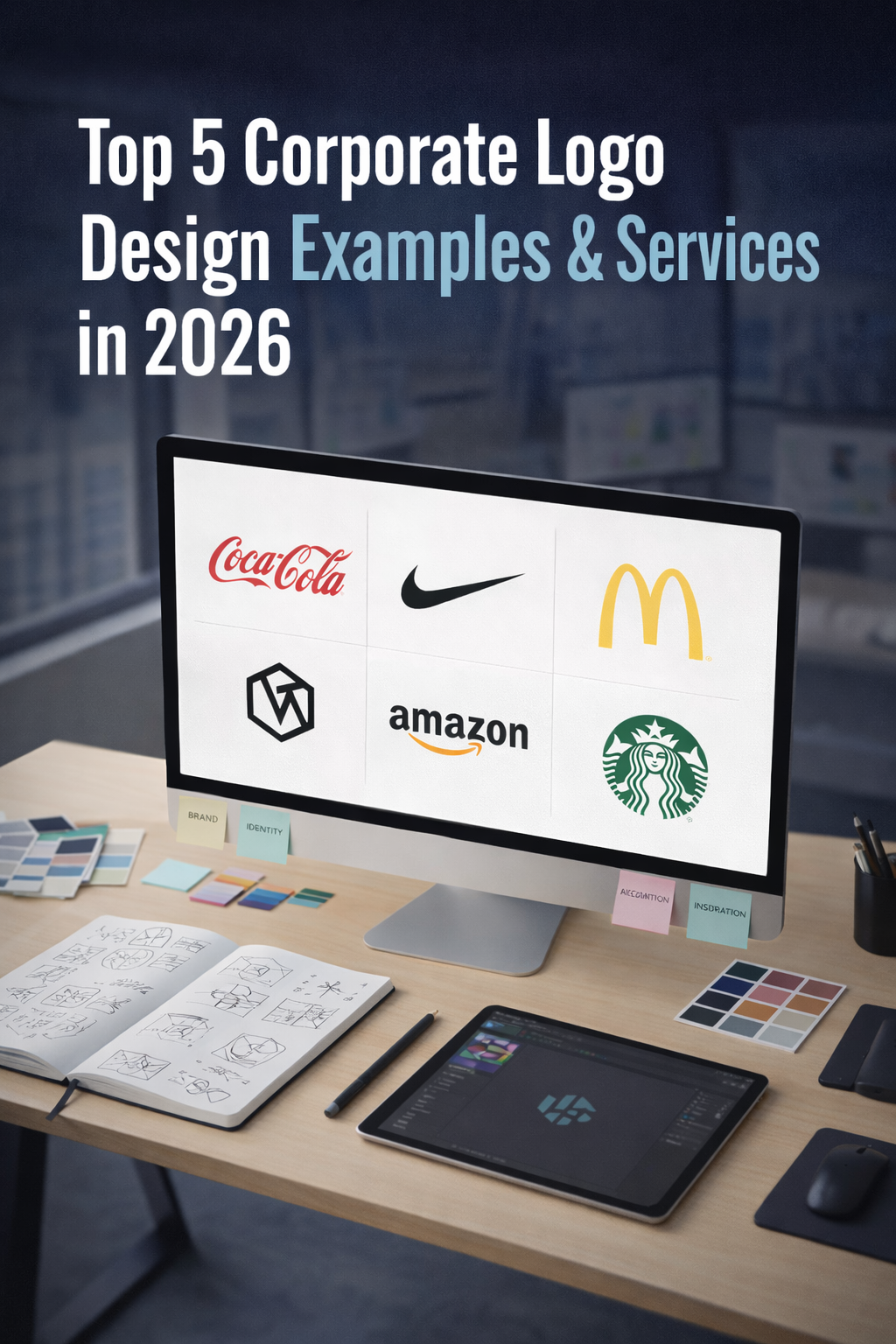
Famous logos are often used as shorthand for pricing arguments. “Nike spent X.” “Coca-Cola paid Y.” The implication is that the number explains the outcome. It doesn’t.

What these logos demonstrate is not the logo design cost, but the cost of brand consistency over time. Marks like Nike, Apple, Coca-Cola, McDonald’s, IBM, or JPMorgan Chase didn’t become valuable because of a single design fee. They became valuable because the identity was treated as a system—governed, protected, and applied with discipline. That distinction sits at the center of any serious discussion about brand identity development.

This is why “price tags” mislead. They collapse lifecycle cost into creation cost, and those are not the same thing. A low-cost logo can look economical on day one and still cost more over two years because it forces rework, exceptions, and quiet inconsistency. The underlying mechanism is familiar: once the identity is inconsistent, trust doesn’t collapse dramatically—it erodes. That’s the same slow drift explained in how to build brand equity, where value compounds through repeated, reliable exposure.

In practice, many organizations misdiagnose what’s “wrong.” When a logo starts feeling dated or awkward, the reflex is often redesign. But frequently the issue isn’t the mark—it’s how the mark is being used. Before approving a new logo design project, it’s worth treating the situation like an evaluation problem, not a taste problem, and running a structured review. A brand audit makes that distinction clear: is the logo failing, or is the system failing?

Famous logos also benefit from something most pricing conversations ignore: the effect of repetition. Nike’s Swoosh or Coca-Cola’s script would not be “approved” today in a vacuum. They work because they’ve been reinforced through decades of consistent use, distribution, and context. That’s why recognition is less about originality and more about differentiation that holds up in real conditions—covered more directly in how to differentiate your brand.

The cleaner takeaway is not “how much did they pay?” but:

  • How tightly was the identity governed after launch?
  • How consistently did the logo behave across new channels and vendors?
  • How quickly were inconsistencies corrected before they became standard?

Those questions point away from myths and toward the mechanics of identity systems: the kind of decisions documented in how to create a brand style guide and the quiet operational discipline behind how to design a cohesive brand identity.

In short, famous logos don’t justify high prices. They justify long-term thinking. The real lesson isn’t to spend like a global brand—it’s to treat the logo as a controlled asset inside a broader strategy, which is why decisions about cost tend to sit closer to branding strategy than to aesthetics.

The most common logo costs appear after delivery:

  • Rebuilding files because originals aren’t production-ready
  • Redesigning because the logo fails at small sizes or in monochrome
  • Internal inconsistency due to missing usage rules
  • Ownership or licensing uncertainty that surfaces too late

Lower upfront cost increases the importance of clarity around files, rights, and deployment.

If you’re reassessing an existing logo rather than creating a new one, a brand audit is often the more useful starting point. It clarifies whether the issue is the mark itself or how it’s being applied. A relevant read here is How To Conduct a Brand Audit, which outlines how to evaluate identity performance before investing in redesign.

What’s Changing in Logo Pricing

Basic marks are becoming cheaper. That part is undeniable.

What is not becoming cheaper is:

  • decision-making
  • governance
  • coordination across real-world use cases

As distribution channels multiply and scrutiny increases, logos that behave well as systems retain their value quietly.

Choosing the Right Logo Investment

Instead of asking “How much should I pay?”, ask:

  • Where will this logo live in the next two years?
  • Who will touch it after it’s delivered?
  • How costly would it be to change under pressure?
  • Do we need a mark—or a controlled identifier?

The right tier is the one that matches the consequences.

Final Thoughts: Cost Is About Endurance

A logo is not an aesthetic decision. It’s an operational one.

In low-stakes environments, speed and affordability are rational. In high-visibility or long-cycle contexts, restraint and system thinking tend to outperform novelty. The price difference reflects how much uncertainty the logo is expected to carry—and how long it’s expected to do so without complaint.

BBDirector specializes in branding for high-trust, high-stakes industries. Our work focuses on brand systems designed to survive scrutiny, scale, and long decision cycles.
FAQ

Logo design cost in 2026 can range from under $100 to well over $50,000, depending on scope, usage, and review complexity.

For low-risk contexts, yes. For regulated or scaled environments, logo makers often lack system depth.

The average cost for logo design sits in the low-thousands when basic system deliverables are included.

Because agency logo design includes governance, review management, and long-term usability—not just the logo created.

At minimum: vector files, image exports, monochrome versions, and clear usage rules.

What do you think?

More notes