
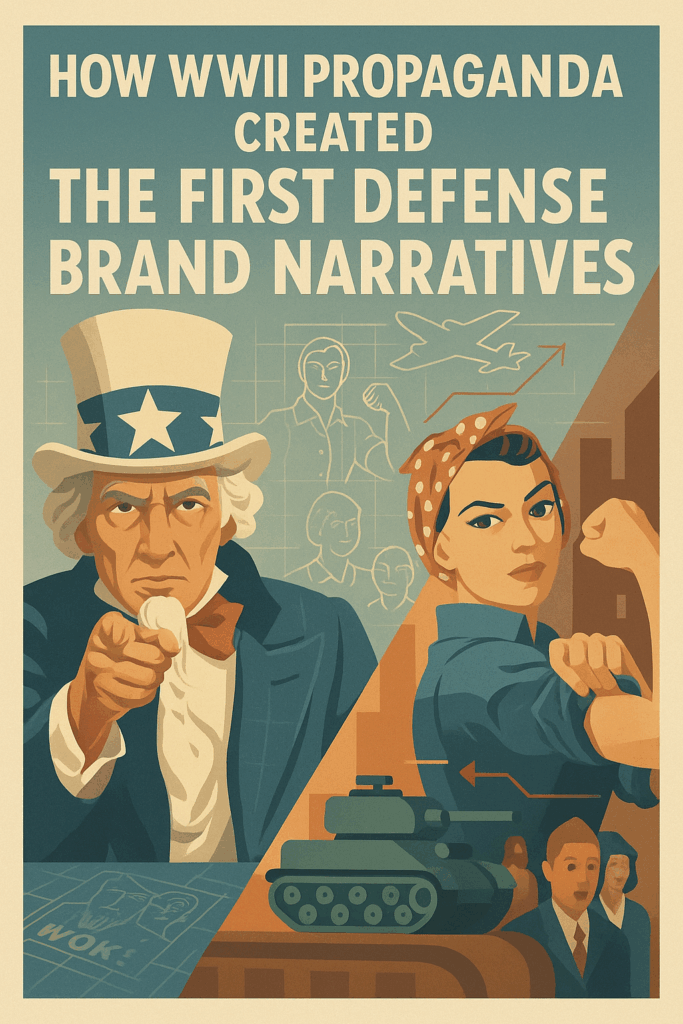


The most memorable WWII propaganda did not merely tell people what was happening. It told them what their role was supposed to be.
A recruitment poster asked for service. A factory poster turned industrial labour into participation in the war effort. A war bond campaign turned personal savings into national contribution. Warnings about careless talk made ordinary conversation feel connected to operational security. Rosie the Riveter turned a worker into a symbol.
That is why propaganda during World War II remains so useful to study from a communication perspective. The lesson is not that modern companies should imitate wartime manipulation. It is that large organisations become easier to understand when complicated objectives are translated into clear roles, memorable symbols and consistent narratives.
Deep tech companies do not need to be dumbed down; they need to be translated.
The same principle matters in modern aerospace and defense. A buyer may understand the engineering and still fail to understand the larger strategic position. WWII propaganda shows what happens when communication relentlessly connects abstract strategy with something an audience can see, remember and act upon.
This article examines the poster systems, recruitment communication, home front mobilisation, Office of War Information, war bonds, factory narratives and Allied propaganda of the Second World War, then separates the useful communication principles from the coercive machinery of propaganda itself.
What You’ll Read
- Why did propaganda during World War II rely so heavily on the poster?
- How did the Office of War Information coordinate wartime communication?
- Why were recruitment posters so effective at creating personal responsibility?
- How did Rosie the Riveter turn factory work into identity?
- How did war bond posters make participation tangible?
- Why did wartime slogans work so well on the home front?
- How did Allied propaganda differ from Nazi propaganda and other Axis communication?
- What did poster art teach us about turning strategy into visual communication?
- How did WWII communication influence later defense narratives?
- What should modern defense brands learn from wartime propaganda without copying it?
Why Did Propaganda During World War II Rely So Heavily on the Poster?
A poster solved an enormous communication problem with very little space.
During the Second World War, governments needed millions of people to understand military recruitment, industrial production, ration requirements, operational security, war finance and civilian responsibility. Most citizens did not need a fifty-page explanation of national logistics. They needed to know what was expected of them next.
The poster was remarkably efficient at providing that translation.
An image established the emotional context. A slogan supplied the instruction. Placement provided repetition. The message could appear in a factory, railway station, school, government office or shop and still function without somebody standing next to it explaining the campaign.
That made wartime posters a distributed communication system.
A single propaganda poster might ask somebody to enlist, purchase a war bond, conserve resources or avoid discussing sensitive information. Thousands of war posters, however, created something much larger: a repeated environment in which individual behaviour was constantly connected with national objectives.
The poster therefore worked because it reduced strategic distance.
An enormous war happening across continents could be connected to the decision a civilian made that afternoon.
For modern aerospace storytelling, the principle is still useful. Complicated systems become easier to understand when the audience can see the relationship between capability, consequence and action.
How Did the Office of War Information Coordinate Wartime Communication?
After the attack on Pearl Harbor brought the U.S. directly into the conflict, federal communication expanded rapidly. In 1942, the Office of War Information was established to coordinate domestic and overseas war information.
The OWI worked across more than one medium. Posters mattered, but so did radio broadcasts, films, photography, news material and pamphlet distribution. The strategic importance was not any individual format. It was coordination.
A war bond message could be reinforced through a poster, radio propaganda, public events and other communication. Recruitment, morale and production messages could appear repeatedly through different channels while still supporting the same larger war effort.
That consistency is one reason propaganda in World War II became so pervasive.
The American public did not encounter one isolated campaign and then forget about it. People encountered related messages while working, travelling, reading, listening to radio or participating in community activities.
This is where the OWI becomes genuinely useful for modern strategists to study.
Not because it was a government “branding agency,” which would flatten some fairly important historical distinctions, but because it understood coordinated communication.
A modern defense brand strategy faces a much smaller but structurally similar problem. Leadership, sales, websites, trade shows, recruitment material and corporate communication should not provide five unrelated explanations of the organisation.
Coordination creates recognition.
Recognition makes meaning accumulate.
Why Were Recruitment Posters So Effective at Creating Personal Responsibility?
Recruitment communication worked best when it transformed national need into individual responsibility.
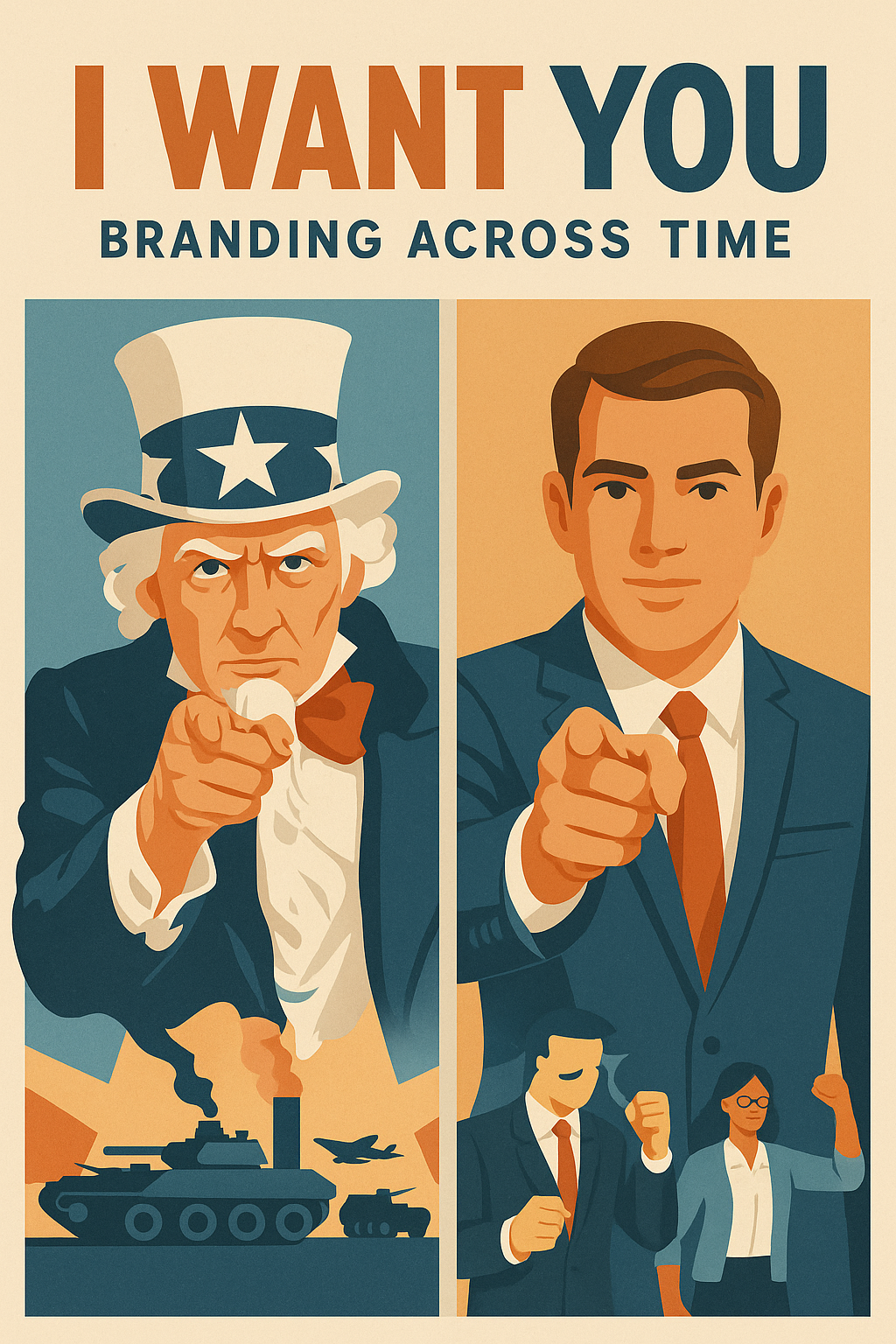
The famous Uncle Sam image is an obvious example. The underlying design predates the Second World War, but its continued use demonstrates the strength of direct address. Instead of describing military manpower requirements abstractly, the recruitment poster makes the viewer the subject.
You are needed.
That is a powerful change in perspective.
The same principle appeared across American posters and Allied recruitment communication. Soldiers were presented through duty, courage, service and belonging. The visual and verbal language connected personal identity with a larger collective mission.
Recruitment therefore became more than information about joining an organisation.
It offered a role.
This matters because people respond differently to a message about what an institution does and a message about what they can contribute.
The poster closes that gap.
Modern defense companies obviously operate in a completely different context, but the identity principle remains relevant in employer communication. Our guide to employer branding in defense addresses the same challenge from a contemporary perspective: technically skilled people are not choosing only a war job or engineering position; they are also deciding what kind of mission, organisation and leadership they want their work associated with.
The communication becomes stronger when the person’s role in the mission is specific.
How Did Rosie the Riveter Turn Factory Work Into Identity?

Few symbols demonstrate identity-based communication better than Rosie the Riveter.
As American war production expanded, industry needed huge numbers of workers. Women entered industrial occupations in greatly increased numbers, including work connected to aircraft, ships, vehicles, ammunition and other wartime manufacturing.
The communication challenge was not merely telling people that factory vacancies existed.
The larger challenge was changing the meaning attached to that work.
Rosie the Riveter helped make industrial participation visible, confident and culturally recognisable. The worker was no longer presented simply as somebody operating machinery. She became part of the national war effort.
That transformation is strategically important.
A factory can be described as a building containing production equipment.
Or it can be framed as one of the places where national capability is being created.
The physical work has not changed.
Its meaning has.
The War Production Board and wider mobilisation effort repeatedly connected industrial output with military outcomes. A rivet, aircraft component or production target could be presented as contributing directly to troops overseas.
That helped mobilize the home front because participation became tangible.
For modern defense and aerospace businesses, there is a useful employer-brand lesson here. People doing technical work need to understand the relationship between their daily contribution and the wider organisational mission. When that relationship is absent, “mission-driven” becomes another phrase on the careers page.
When it is visible, internal culture becomes stronger because the work has context.
How Did War Bond Posters Make Participation Tangible?
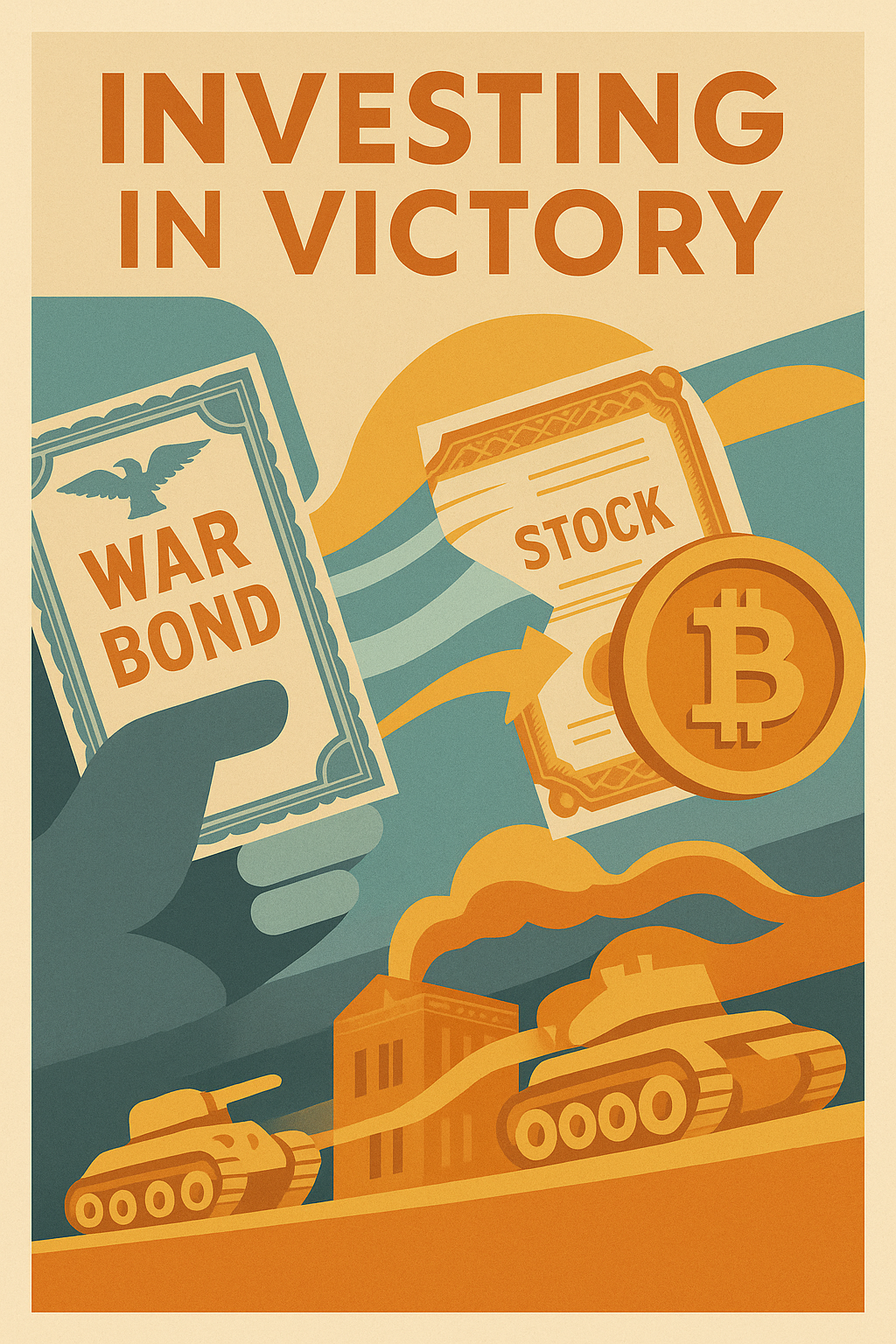
War required extraordinary public expenditure, and war bond communication turned financing into something ordinary civilians could participate in.
The important idea was translation again.
National finance is abstract.
Buying war bonds is specific.
A war bond poster could connect purchasing war bonds with aircraft, ships, soldiers or victory. Instead of asking citizens to understand the complete financial structure of wartime mobilisation, the communication connected personal money with national participation.
That gave civilians on the home front another role.
Some enlisted.
Some worked in a factory.
Some conserved food or fuel.
Others contributed by buying bonds.
The propaganda campaign made these different behaviours feel connected to the same larger objective.
This is one reason the poster collections preserved by institutions such as the National Archives are so useful for understanding wartime communication. The individual design may focus on one action, but the full war poster collection reveals an interconnected system of behavioural messages.
The National WWII Museum also provides a wider historical context in which these materials can be understood as wartime artefacts rather than isolated pieces of advertising inspiration.
The strategic lesson is straightforward: if you want people to support a large objective, show them the action through which their participation becomes real.
“Support our mission” is abstract.
“Here is what your role changes” is useful.
Why Did Wartime Slogans Work So Well on the Home Front?

Good wartime communication was often extremely compressed.
A slogan needed to survive repetition, imperfect attention and a wide range of literacy and educational contexts. It had to be remembered after the poster was no longer visible.
“Loose Lips Sink Ships” is perhaps the clearest example.
The phrase turns operational security into cause and effect. Careless speech is connected directly with the possibility of ships being lost. Other warnings around sensitive information used similar logic.
In Britain, illustrator Cyril Kenneth Bird, better known as Fougasse, produced memorable careless-talk posters using humour and simple scenarios. Different governments and agencies approached the problem differently, but the communication principle remained consistent: make the consequence of behaviour immediately understandable.
The familiar “lips sink ships” construction works because it has rhythm, imagery and consequence.
It is not a paragraph about security policy.
It is a mental trigger.
The same logic appeared in messages about ration behaviour, factory output and morale. A wartime slogan reduced complexity into language that could circulate through everyday life.
That does not mean modern brands should start writing everything like recruitment propaganda.
It means important ideas need verbal structure.
If the company’s central message requires six minutes of explanation before anybody understands what it means, the strategic problem probably sits upstream from copywriting.
How Did Allied Propaganda Differ From Nazi Propaganda and Other Axis Communication?
It is tempting to reduce wartime communication into a neat contrast between “good” Allied propaganda and “bad” Axis propaganda.
History is more complicated than that.
All major participants used selective framing, emotional appeals, stereotyping and persuasion. American and British material could be highly manipulative, and some wartime imagery relied on racist caricatures, particularly in depictions of Japan. Japanese propaganda developed its own narratives around empire, sacrifice and anti-Western themes.
Nazi propaganda deserves particular distinction because it was embedded within the ideological machinery of Nazi Germany and used extensively to promote antisemitism, racial hierarchy, dictatorship, territorial aggression and the cult around Adolf Hitler.
The comparison therefore should not be reduced to graphic style.
Different political systems were using propaganda toward different ideological ends.
Allied propaganda frequently centred freedom, national survival, collective duty and resistance to Axis aggression, but it was still propaganda: communication designed to influence beliefs and behaviour in wartime.
That nuance matters when extracting lessons for modern communication.
The useful lesson is not “propaganda works, therefore copy it.”
The useful lesson is that narrative, repetition, symbolism and identity can influence hearts and minds at enormous scale—and precisely because those tools are powerful, the ethics of how they are used matter.
What Did Poster Art Teach Us About Turning Strategy Into Visual Communication?
Poster art succeeds when visual information and verbal information do different jobs.
The image creates recognition and emotion.
The slogan clarifies meaning.
Hierarchy controls what the viewer notices first.
Colour, typography, illustration and composition make the message legible at speed.
World War II posters had to work in environments where people might see them only briefly. That forced designers to prioritise.
The best wartime poster is therefore useful to study not because contemporary defense companies should copy 1943 illustration styles, but because the design exposes the underlying communication hierarchy.
One idea.
One dominant image.
One action or conclusion.
This is still a useful discipline for a technical company trying to explain something complicated.
Modern defense color psychology and visual communication naturally uses very different design systems, but the strategic question is identical: what should the audience understand first?
Too many technical brands attempt to communicate every feature simultaneously.
The result is often visually sophisticated confusion.
A poster designer working in 1942 did not have that luxury.
Neither should a homepage.
How Did WWII Communication Shape Later Defense Narratives?
The Second World War did not create modern defense branding in one clean historical step.
But it did demonstrate the enormous power of coordinated national communication around military technology, industrial capability, service and collective identity.
Those patterns continued in different forms after the war.
The Cold War connected technological achievement with national prestige. Aerospace programs became symbols of scientific capability. Space exploration turned engineering milestones into cultural narratives.
The media environment changed again with television.
By the time of the Persian Gulf War, military technology and public perception were being mediated through live global news rather than the poster, radio broadcast and newsreel system of World War Two.
Our analysis of CNN and Gulf War media coverage shows that transition clearly. The medium became faster, the audience more immediate and the ability to control interpretation substantially more complicated.
But one principle survived.
Technology acquires meaning through communication.
A machine may have measurable performance characteristics, but the public, customer or partner still experiences those characteristics through language, imagery, evidence and narrative.
That remains relevant to modern defense company branding, particularly for organisations working with technologies that most of their stakeholders will never personally operate.
The communication layer matters because it connects capability with comprehension.
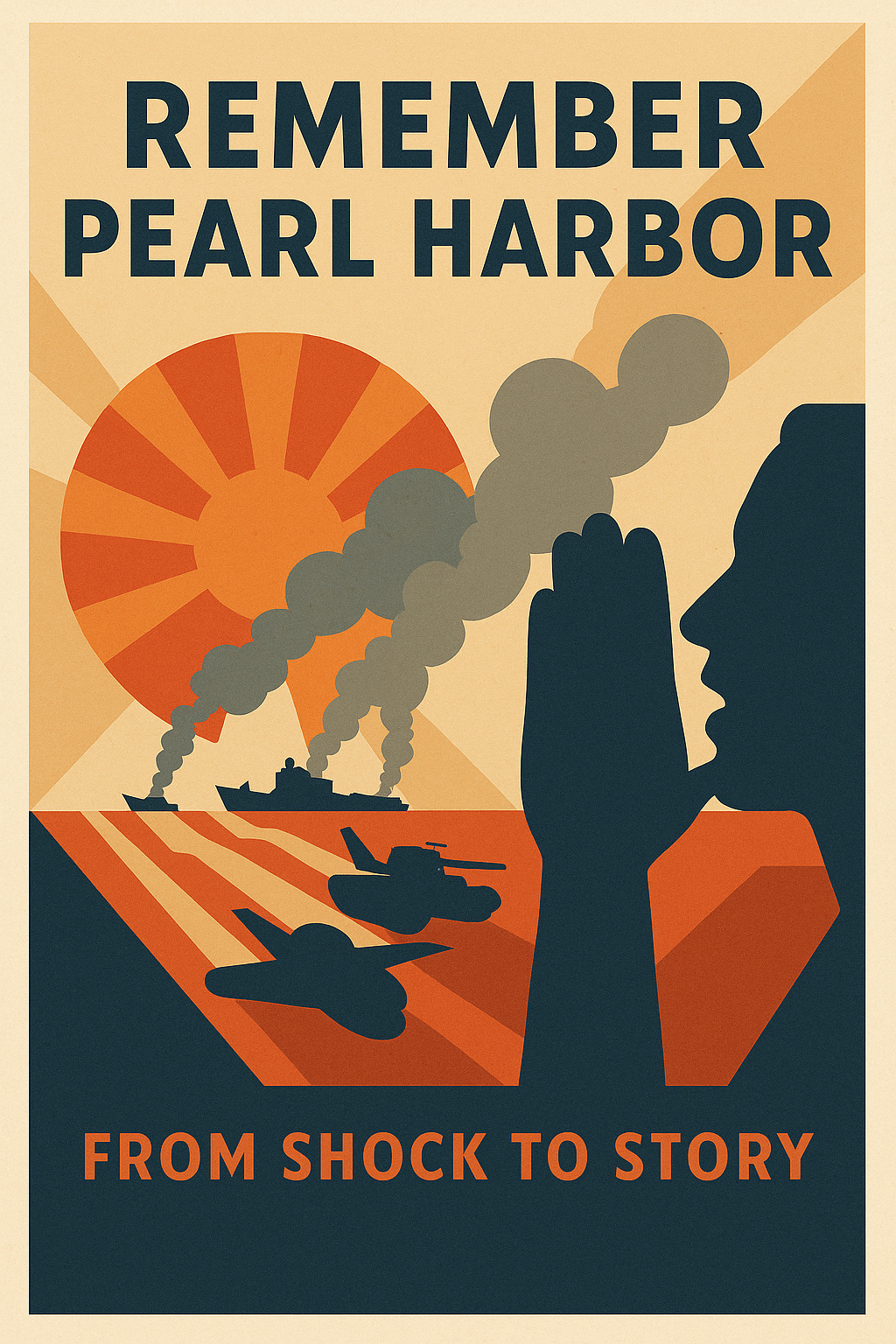
What Can Modern Defense Brands Learn From Wartime Propaganda Without Copying It?
The first lesson is clarity of role.
WWII communication repeatedly told audiences what they could do: enlist, work, ration, save, remain vigilant, purchase bonds or contribute to the war in another concrete way.
Modern companies should apply the principle without the coercive framework.
Tell customers what changes when they use the technology.
Tell partners what they contribute.
Tell employees how their work connects with the mission.
Tell investors why the capability matters commercially.
The second lesson is message consistency. The Office of War Information did not rely on one poster. Communication appeared across radio broadcasts, film, pamphlet material, print and public events.
A modern defense company similarly needs one strategic position expressed coherently across leadership, sales, recruitment, digital communication and industry events.
The third lesson is symbolic compression.
Rosie the Riveter, Uncle Sam and memorable wartime slogans compressed larger ideas into forms people could immediately recognise.
A modern company does not need a mascot or patriotic slogan, but it does need memorable ways to communicate what it stands for.
The fourth lesson is evidence and ethics.
Propaganda demonstrates how easily communication can move from explanation into manipulation. Modern technical businesses depend on credibility, particularly in defense, aerospace and other high-consequence sectors.
A strong deep tech brand strategy should therefore translate the technology without manufacturing certainty, hiding limitations or using emotional language to compensate for weak proof.
That is how you build a brand around clarity rather than spectacle.
What Should Brand Strategists Remember About WWII Propaganda Posters?
- The poster worked because it translated large national objectives into specific individual actions.
- Propaganda during World War II operated as a coordinated communication system rather than a collection of isolated war posters.
- The Office of War Information, created in 1942, worked across posters, films, radio, photography and pamphlet communication.
- Recruitment communication made participation personal by connecting individual identity with collective mission.
- Rosie the Riveter helped turn factory work and war production into culturally meaningful participation.
- War bond campaigns made national finance tangible by connecting purchasing war bonds with contribution to the war effort.
- Ration messaging and other home front campaigns worked because civilians were given specific behaviours through which they could participate.
- Memorable slogans such as “Loose Lips Sink Ships” compressed complicated security ideas into simple cause and effect.
- Allied propaganda should not be romanticised. American posters and other wartime communication also used manipulation, stereotyping and emotionally charged framing.
- Nazi propaganda was deeply tied to the racial ideology, authoritarianism and persecution of Nazi Germany, which makes moral context essential when comparing propaganda systems.
- Poster art demonstrates the value of hierarchy: one dominant idea, clear imagery and a message understood quickly.
- WW2 communication evolved into very different media environments after the war, from Cold War aerospace narratives to live television coverage of later conflicts.
- Modern defense brands can borrow structural lessons—clarity, consistency, role, symbolism and repetition—without borrowing propaganda’s coercive methods.
- If you want to build a brand around complex technology, start by deciding what the audience needs to understand, not how much information the organisation wants to say.
- The central principle remains unchanged: deep tech companies do not need to be dumbed down; they need to be translated. WWII propaganda is historically important because it shows both the extraordinary power of that translation and the responsibility that comes with controlling it.